










Where to Start with Derek Robinson
For readers new to Derek Robinson’s dry, satirical, and historically meticulous world, there are two primary runways to choose from. Your starting point depends entirely on which global conflict you want to explore first.
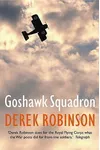
Option A: Goshawk Squadron (1971). This is Robinson’s Booker Prize-nominated debut and the book that established his reputation as a master of anti-romantic military fiction. If you want to experience his signature style at its most concentrated, start here. It introduces Major Stanley Woolley, a harsh, abusive, yet pragmatically realistic commander who is determined to keep his young pilots alive by teaching them to fight dirty.
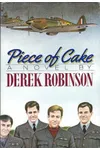
Option B: Piece of Cake (1983). If you prefer World War II aviation or want a wider, more ensemble-focused narrative, start here. It follows Hornet Squadron during the Phoney War and the Battle of Britain. It is Robinson’s most famous novel, adapted into a critically acclaimed 1988 television miniseries, and offers a perfect blend of dark humor, tragedy, and intense aerial action.
The RFC (World War I) Trilogy
Robinson's Royal Flying Corps (RFC) novels follow the exploits of a fictional squadron during the first air war. While published out of order over nearly three decades, they are tightly connected. The primary thread is the character of Stanley Woolley, who evolves from a young pilot into the cynical commander of the final book. You can read them in two ways:
Chronological Reading Order (Recommended for Character Arcs)
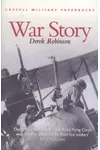
- War Story (1987) – Set in 1916, this book depicts the squadron's trials during the build-up to the Battle of the Somme, showing the early innocence and rapid disillusionment of the pilots.
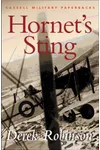
- Hornet's Sting (1999) – Set in 1917, the story covers the bloody battles around Arras and Passchendaele, introducing a younger Captain Stanley Woolley and highlighting the dangerous mechanical failures of early aircraft.
- Goshawk Squadron (1971) – Set in 1918, the final year of the war. Major Woolley is now the battle-weary, hard-drinking commander of a squadron flying S.E.5a fighters.
Publication Reading Order
- Goshawk Squadron (1971)
- War Story (1987)
- Hornet's Sting (1999)
Reading Caveat: While publication order is how early fans experienced the trilogy, reading chronologically from War Story to Goshawk Squadron provides a far more satisfying look at the emotional toll of the war and Woolley's descent into cynicism.
The RAF & Cold War (World War II and Beyond) Books
Robinson’s World War II and Cold War aviation books can be divided into two main threads: the wartime exploits of Hornet Squadron and the career of Flight Lieutenant Silk.
The Hornet Squadron WWII Timeline
The WWII iteration of Hornet Squadron is the focus of two major novels, which should be read in publication order:
- Piece of Cake (1983) – Covers the squadron's transition from the lazy days of the Phoney War in 1939 to the high-stakes survival of the Battle of Britain in 1940.
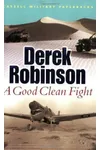
- A Good Clean Fight (1993) – Set in 1942, this book follows Hornet Squadron as they redeploy to the grueling North African campaign, battling both the Desert Fox and their own command.
The Flight Lieutenant Silk Books
Flight Lieutenant Silk is a recurring pilot who survives dozens of bombing missions but, in classic Robinson fashion, never manages to get promoted. His story spans two books:
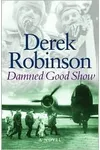
- Damned Good Show (2002) – Set between 1939 and 1942, following the chaotic early years of RAF Bomber Command.
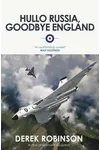
- Hullo Russia, Goodbye England (2008) – Moving into the nuclear age of the early 1960s, a veteran Silk returns to fly the massive Avro Vulcan nuclear bombers during the height of the Cold War.
The Historical Counterpoint
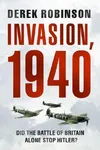
- Invasion, 1940 (2005) – A companion novel that explores the realistic threat of a German invasion of Britain, highlighting the logistical and military realities that clashed with popular myths.
The Luis Cabrillo (Double Agent) Series
Moving away from the cockpits, Robinson also penned a brilliant four-book espionage series featuring Luis Cabrillo. Cabrillo is a young, creative Spaniard who invents a completely fictional spy network called "Eldorado" to cheat German military intelligence for profit while nominally working for the British. Read this series in publication (and chronological) order:
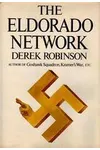
- The Eldorado Network (1980) – Introduces Cabrillo as he builds his fake spy ring during World War II in Madrid and Lisbon.
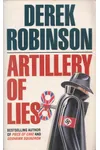
- Artillery of Lies (1991) – Cabrillo scrambles when the Germans begin to suspect that their star spy ring is compromised.
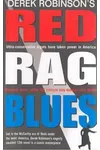
- Red Rag Blues (2006) – Set in 1953, Cabrillo finds himself in McCarthy-era New York, crossing paths with his wartime past and historical figures like Kim Philby.
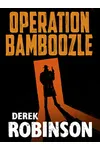
- Operation Bamboozle (2010) – The final espionage caper concluding Cabrillo's career of elaborate fabrications.
Standalone Novels
If you want to sample Robinson's style outside of his major series, these standalones cover everything from Cold War spy rings to pioneer history:
- Rotten with Honor (1976) – A gritty spy thriller featuring a British plot to dismantle a Soviet espionage ring in London.
- Kramer's War (1977) – A dark comedy set in 1944 on the German-occupied island of Jersey, focusing on a washed-up American bomber pilot who disrupts the delicate peace.
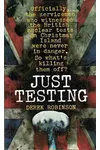
- Just Testing (1985) – A satirical and tragic look at the British atomic test programs of the 1950s.
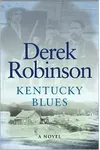
- Kentucky Blues (2002) – A sprawling historical novel tracing two families in a frontier Kentucky community from the 1820s to the 20th century.
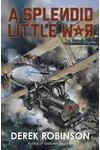
- A Splendid Little War (2012) – Set in 1919, following a volunteer RAF squadron deployed to fight in the chaotic Russian Civil War.
- Holy Smoke (2018) – A fast-paced, comedic caper set in Allied-occupied Rome in 1944.
What to Know Before You Start
Derek Robinson served in the RAF as a fighter plotter in the 1950s and holds a history degree from Cambridge. His novels are famous for their historical accuracy—he uses real technical manuals, reports, and diaries to detail the mechanical realities of the planes. Expect dark comedy, pitch-black irony, and highly flawed characters. Robinson actively rejects the romanticized "knight of the sky" myth, showing instead the fear, incompetence, bureaucratic absurdity, and sheer luck that defined wartime survival.