


Where to Start with Dexter Palmer
If you are new to Dexter Palmer, you do not need to worry about strict chronological timelines or multi-book character arcs. All of his novels are completely standalone works set in distinct worlds. However, because his style shifts from high-concept steampunk to hard-science temporal drama and satirical historical fiction, choosing the right entry point is key to enjoying his bibliography.
We highly recommend starting with Version Control (2016). It is his most critically acclaimed and emotionally resonant novel, serving as an excellent bridge between contemporary literary fiction and mind-bending speculative science fiction. For readers who prefer rich world-building, high-concept machinery, and alternate history, his debut novel, The Dream of Perpetual Motion (2010), is another fantastic starting option.
Dexter Palmer Books in Publication Order
For those who want to see the evolution of Palmer's style—moving from a baroque, literary steampunk aesthetic to grounded near-future realism, and finally to historical realism mixed with philosophical absurdity—reading in publication order is highly rewarding.
Standalone Novels
- The Dream of Perpetual Motion (2010)
- Version Control (2016)
- Mary Toft; or, The Rabbit Queen (2019)
Notable Short Fiction & Anthologies
- "Daydreamer by Proxy" (published in the anthology The Bestiary: A Modern Bestiary of Untrue Tales, edited by Ann VanderMeer, 2015)
An In-Depth Look at His Books
The Dream of Perpetual Motion (2010)
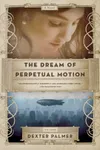
Palmer's debut novel is a breathtaking, stylistic reimagining of William Shakespeare's The Tempest set in a retro-futuristic, steampunk-inspired alternate mid-20th-century city. The story is narrated by Harold Winslow, a clerk who finds himself imprisoned aboard a massive, luxurious zeppelin. Winslow is forced to write the biography of Prospero Taligent, a brilliant but reclusive inventor who has designed a city run by perpetual motion machines and robotic servants.
As Harold unravels the history of the Taligent family and his own childhood connection to Miranda (Prospero's daughter), the novel explores the consequences of unchecked technological progress, the nature of memory, and the loneliness of the human spirit. It is written in a dense, gorgeous prose style that establishes Palmer's literary credentials early on.
Version Control (2016)
Often described as a time-travel novel that rejects the standard tropes of the genre, Version Control is a slow-burn domestic drama wrapped in speculative science. The story centers on Rebecca Wright and her husband, Philip, a physicist who has spent years trying to build a "causality violation device" (a time machine) in his university laboratory. Philip's colleagues view the project as a failure, but Rebecca is plagued by a persistent feeling that something is fundamentally wrong with the world around her, as if her life has been subtly rewritten.
Rather than focusing on action-packed trips to the past or future, the novel deeply investigates the emotional aftermath of personal tragedy, the creeping influence of technology on daily life (including self-driving cars and algorithms), and how our relationship with the past defines our present. It is a masterpiece of modern speculative fiction that reads like a high-concept literary novel.
Mary Toft; or, The Rabbit Queen (2019)
Palmer shifts from the future to the past with his third novel, which is based on a real-world historical medical hoax from 1726. The book tells the story of Mary Toft, a young woman in Godalming, England, who confounds local doctors by seemingly giving birth to dead rabbits. A local surgeon named John Howard and his apprentice, Zachary Walsh, attempt to document and understand this miraculous occurrence, eventually bringing the case to the attention of King George I's court in London.
While the premise sounds bizarre and comical, Palmer approaches the story with empathy and philosophical rigor. The novel examines the historical divide between superstition and early scientific reasoning, the lengths to which people will go to find meaning in a chaotic world, and the public's insatiable appetite for spectacle and deception.
"Daydreamer by Proxy" in The Bestiary (2015)
For readers looking to explore Palmer's shorter speculative works, his notable contribution to the 2015 anthology The Bestiary: A Modern Bestiary of Untrue Tales is a must-read. His short story, titled "Daydreamer by Proxy," deals with bizarre, surreal creatures and was highly praised upon release, eventually being selected for inclusion in The Best American Science Fiction and Fantasy 2016.
What to Know Before You Start
Dexter Palmer holds a Ph.D. in English Literature from Princeton University, where he wrote his dissertation on complex, sprawling literary authors like Thomas Pynchon, James Joyce, and William Gaddis. This academic background heavily informs his writing style. If you are planning to read his books, keep these elements in mind:
- Pynchonian Interconnectedness: Palmer's plots are intricately structured, with details, themes, and minor characters weaving together in unexpected ways.
- Speculative Themes, Literary Tone: While his books utilize classic science fiction and fantasy premises (time machines, mechanical cities, historical oddities), they prioritize character depth, philosophical dialogue, and literary prose over fast-paced action.
- Pacing: His novels, particularly Version Control, are deliberate, slow-burn narratives. They require patience but reward readers with profound thematic payoffs.