
How to Read Diane McKinney-Whetstone’s Novels
Diane McKinney-Whetstone is celebrated for her poetic prose, multi-generational family dynamics, and rich historical settings. Crucially, all of her novels are standalone works. She does not write interconnected series, recurring character arcs, or sequels. Instead, the connective tissue binding her bibliography is her hometown of Philadelphia, which functions as a living, breathing character in every story.
Because her books are standalones, you can read them in any order you choose. However, readers generally follow one of two paths: Publication Order (to witness her growth as a writer over three decades) or Chronological Setting Order (to travel through Philadelphia's history from the Reconstruction era to the modern day).
The Recommended Starting Points
If you are new to McKinney-Whetstone's work, we recommend starting with one of these two entry points:
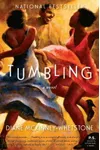
- Start with Tumbling (1996): Her award-winning debut novel remains her most iconic work. Set in the 1940s and 1950s, it perfectly introduces her signature style: lyrical language, deeply complex characters, and a community fighting to preserve its soul in South Philadelphia.
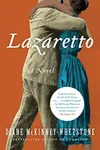
- Start with Lazaretto (2016): If you love sweepingly grand historical fiction, this post-Civil War epic is the perfect choice. It centers on the tight-knit community surrounding Philadelphia's historic quarantine station and highlights her mastery of historical drama.
Option 1: Publication Order
Reading in publication order allows you to experience her shift from historical neighborhoods to contemporary settings and eventually into magical realism.
- Tumbling (1996): Set in South Philadelphia during the 1940s and 1950s, following Noon and Herbie as they navigate love, foster parenting, and the threat of gentrification.
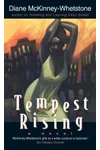
- Tempest Rising (1998): Set in West Philadelphia in the mid-1960s, focusing on three upper-class sisters who are thrown into foster care after their father’s sudden disappearance and their mother’s breakdown.
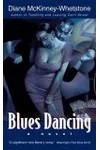
- Blues Dancing (1999): A narrative shifting between the 1970s and 1990s, detailing a woman's struggle between the stable life she rebuilt and the passionate, turbulent college love that once led her into heroin addiction.
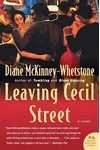
- Leaving Cecil Street (2004): Set in the summer of 1969 in West Philadelphia, exploring the tight bonds, secrets, and consequences of a crisis shared between teenage friends and their families.
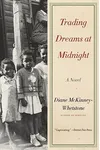
- Trading Dreams at Midnight (2008): A non-linear story beginning with a young girl's disappearance in 1984, following the repercussions on her sister and grandmother two decades later.
- Lazaretto (2016): A post-Civil War historical epic starting at the time of Abraham Lincoln's assassination, exploring the lives of the staff at the Delaware River quarantine hospital.
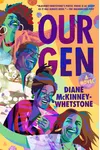
- Our Gen (2022): A contemporary story focused on the friendships, rivalries, and active lives of sexagenarians living in an upscale over-55 active-living community.
- Family Spirit (2025): A present-day novel introducing a touch of magical realism, centering on a Philadelphia family of clairvoyant Black women who share an inherited gift known as "the Knowing."
Option 2: Chronological Setting Order
If you want to read her novels based on the historical eras they depict, you can follow this timeline:
- Lazaretto (Set in 1865 and the Reconstruction Era): The earliest period in her work, capturing the immediate aftermath of the Civil War and the lives of Black workers at the quarantine station.
- Tumbling (Set in the 1940s and 1950s): Captures the post-WWII migration era, neighborhood solidarity, and the early ripples of urban gentrification.
- Tempest Rising (Set in the mid-1960s, c. 1965): Explores class divisions within Philadelphia's Black community and the realities of the foster care system during this decade.
- Leaving Cecil Street (Set in the summer of 1969): Captures the transition of cultural consciousness at the end of the 1960s, framed by lively block parties and family dramas.
- Blues Dancing (Set in the early 1970s and early 1990s): Moves between the student political movements and drug culture of the 1970s and the stable middle-class realities of the 1990s.
- Trading Dreams at Midnight (Set in 1984 and the mid-2000s): Investigates family secrets, childhood trauma, and healing across a twenty-year span starting in the mid-1980s.
- Our Gen (Set in the contemporary 2020s): A modern look at retirement, aging, and lasting friendships in a senior living community.
- Family Spirit (Set in the present day): While it features ancestral memories dating back to the late 18th century, the core plot is set in the modern era, focusing on the battle to protect family legacies and culture.
What to Know Before You Start
Before diving into Diane McKinney-Whetstone's bibliography, keep these elements in mind:
The Spirit of Philadelphia
McKinney-Whetstone was born and raised in West Philadelphia, and her intimate familiarity with the city shines through. Her writing maps the city's actual streets, landmarks, and cultural shifts (such as the transition from neighborhood block parties to modern urban development). Reading her books is as much an exploration of Philadelphia's Black history as it is a journey with her characters.
Lyrical and Poetic Prose
Her style is heavily character-driven and written with a poetic, musical cadence. She often weaves multiple perspectives and non-linear timelines to slowly reveal secrets. If you prefer fast-paced, plot-heavy thrillers, her books may require a shift in reading pace; they are designed to be savored for their emotional depth and dialogue.
A Turn to Magical Realism
While her first seven novels are strictly grounded in historical realism and contemporary drama, her eighth novel, Family Spirit (2025), introduces elements of the supernatural. The hereditary gift of "the Knowing" brings a fresh, speculative dimension to her established themes of family bonds and legacy.