







Where to Start Reading Dietrich Bonhoeffer
Because Dietrich Bonhoeffer was both a brilliant academic theologian and a practical pastor involved in the underground resistance against Adolf Hitler, his works range from dense philosophical dissertations to warm, accessible devotional guides. If you are new to his writings, starting chronologically is not recommended. Instead, the best entry point depends on your interests.
Option A: The Devotional & Community Path (Easiest Start)
If you want a warm, deeply pastoral introduction to Bonhoeffer's faith, start with Life Together (1939). Written during his time leading an underground seminary for the Confessing Church in Finkenwalde, this short book offers practical, beautiful advice on Christian community, communal prayer, fellowship, and personal devotions. It is highly accessible and remains a staple for small groups and individual reflection.
Option B: The Radical Discipleship Path (Most Famous Work)
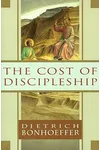
If you are looking for Bonhoeffer's most influential and challenging message, start with The Cost of Discipleship (1937) (also translated as Discipleship). In this masterpiece, Bonhoeffer famously distinguishes between "cheap grace" (grace without discipleship, the cross, or Jesus Christ) and "costly grace" (the grace that cost God the life of His Son and demands our absolute, obedience-driven follow-ship). It is an intense but deeply rewarding read that challenges readers to live out their faith courageously.
The Definitive Critical Edition: Dietrich Bonhoeffer Works English (DBWE)
For decades, readers relied on fragmented translations of Bonhoeffer's work. Today, the definitive standard is the Dietrich Bonhoeffer Works English (DBWE) edition published by Fortress Press. This 16-volume critical series (plus an index volume) compiles his complete writings with comprehensive historical introductions, annotations, and scholarly commentary. The volumes are arranged in a structured, semi-chronological sequence:
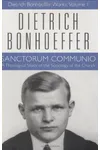
- Volume 1: Sanctorum Communio (Written as his doctoral dissertation, focusing on the sociology of the church)
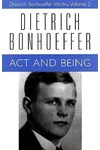
- Volume 2: Act and Being (His post-doctoral habilitation thesis, exploring transcendental philosophy and theology)
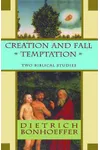
- Volume 3: Creation and Fall (A theological exposition of Genesis 1–3, delivered as lectures in Berlin)
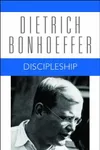
- Volume 4: Discipleship (The definitive translation of The Cost of Discipleship)
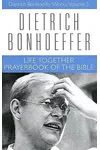
- Volume 5: Life Together and Prayerbook of the Bible (His reflections on seminary community combined with his study of the Psalms)
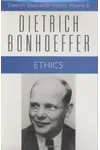
- Volume 6: Ethics (Bonhoeffer's unfinished magnum opus on moral responsibility in a broken world)
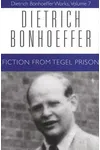
- Volume 7: Fiction from Tegel Prison (Unpublished drama and novel fragments written during his imprisonment)
- Volume 8: Letters and Papers from Prison (His world-famous correspondence containing his late-stage theology)
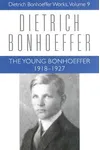
- Volume 9: The Young Bonhoeffer: 1918–1927 (Early letters, essays, and journals)
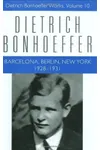
- Volume 10: Barcelona, Berlin, New York: 1928–1931 (Writings from his early travels and academic posts)
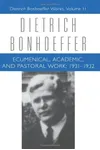
- Volume 11: Ecumenical, Academic, and Pastoral Work: 1931–1932 (Sermons and essays from a key transitional period)
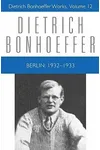
- Volume 12: Berlin: 1932–1933 (Writings written as the Nazi party rose to power)
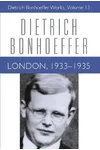
- Volume 13: London: 1933–1935 (Writings from his time pastoring German-speaking congregations in England)
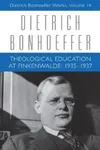
- Volume 14: Theological Education at Finkenwalde: 1935–1937 (Lectures and documents from the underground seminary)
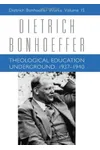
- Volume 15: Theological Education Underground: 1937–1940 (Materials from the illegal collective pastorates after Finkenwalde was shut down)
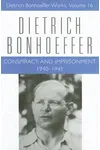
- Volume 16: Conspiracy and Imprisonment: 1940–1945 (Documents from his time in the German military intelligence service (Abwehr) acting as a double agent, leading up to his arrest)
- Volume 17: Indexes and Supplementary Materials (The final index volume for the entire critical series)
Note for General Readers: The full DBWE critical volumes are heavily annotated and designed for scholars. For casual reading, Fortress Press publishes Reader's Editions of the four primary texts: Discipleship, Life Together, Ethics, and Letters and Papers from Prison. These contain the same modern translations but strip out the extensive academic footnotes.
The Evolution of Bonhoeffer's Theology: A Chronological Progression
If you want to track how Bonhoeffer's thought adapted to the rising crisis of Nazi Germany, you can read his major works in the order they were written. This sequence shows a shift from highly academic ecclesiology to radical resistance theology, and finally to his prison concepts of "religionless Christianity" and the "church for others":
- Sanctorum Communio (1930) – The young academic explores what it means for the church to exist as a concrete social community of faith.
- Act and Being (1930) – A highly technical, philosophical study on the nature of human consciousness, revelation, and systematic theology.
- Creation and Fall (1937, based on 1932 lectures) – An exposition of the first chapters of Genesis, written just as the political storm in Germany was brewing.
- Discipleship / The Cost of Discipleship (1937) – Written during the rise of Hitler and the complicity of the mainstream German church, calling for radical obedience to Christ.
- Life Together (1939) – A practical blueprint for Christian fellowship, written while teaching seminarians in exile.
- Ethics (Written 1940–1943, published 1949) – His unfinished attempt to build a modern Christian ethic centered on concrete actions in a crisis, rather than abstract rules.
- Letters and Papers from Prison (Published 1951) – A collection of letters written to his friend Eberhard Bethge and his family, showcasing his final thoughts on suffering, courage, and faith in a world "come of age."
What to Know Before You Start: Context and Biographies
Bonhoeffer's theology cannot be separated from his biography. His books were forged in response to the rise of National Socialism, the creation of the anti-regime Confessing Church, and his eventual involvement in the conspiracy to overthrow Adolf Hitler. Because of this, reading a biography alongside his works is highly recommended.
The definitive biography is Dietrich Bonhoeffer: A Biography by Eberhard Bethge. Bethge was Bonhoeffer's closest friend, student, and the recipient of most of his prison letters. While Bethge's work is exhaustive, shorter and highly reliable alternatives include Dietrich Bonhoeffer: A Brief Life by Renate Bethge and Theologian of Resistance by Christiane Tietz. Readers should exercise caution when reading some popular trade biographies, which have been criticized by historians for distorting Bonhoeffer's theology to serve modern political narratives.