
How to Read Dmitry Glukhovsky's Books
Dmitry Glukhovsky is a master of modern speculative fiction, best known for creating the gritty, subterranean world of the Metro franchise. His stories blend visceral survival horror with sharp political allegory and introspective psychological depth. To fully appreciate his work, readers should follow the core Metro trilogy in publication order before exploring his standalone novels and separate post-apocalyptic projects.
The Core Metro Trilogy Reading Order
The Metro trilogy is Glukhovsky's signature contribution to science fiction. The novels follow a continuous timeline and are best read in the order they were published. The story primarily follows Artyom, a young survivor who must brave the deadly tunnels of the Moscow Metro to save his home station and uncover the secrets of the surface world.
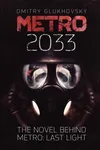
- Metro 2033 (Originally published online in 2002; printed in Russian in 2005; English translation in 2010) – The book that launched the franchise. Artyom leaves his isolated home station of VDNKh on a desperate quest to reach the central station of Polis and deliver a warning about a terrifying new threat known as the Dark Ones.
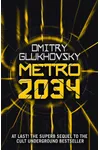
- Metro 2034 (Published in Russian in 2009; English translation in 2014) – A shift in perspective that takes place in a different section of the subway network. It follows the hardened soldier Hunter, the chronicler Homer, and a young woman named Sasha. It features a more melancholic, philosophical tone and explores the moral compromises of survival.
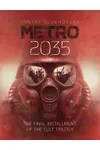
- Metro 2035 (Published in Russian in 2015; English translation in 2016) – The final chapter brings Artyom back as the main protagonist. This book connects the events of the previous two novels and serves as a dark, cynical resolution to the trilogy, heavily mirroring real-world political struggles.
Companion Story: The Gospel According to Artyom (2011) is a canon short story that serves as an epilogue to Metro 2033 and provides critical context for Artyom's state of mind and motivations leading into Metro 2035.
How the Metro Video Games Fit into the Reading Order
The hit video games developed by 4A Games—Metro 2033, Metro: Last Light, and Metro Exodus—tell a parallel version of Artyom's journey. Glukhovsky was deeply involved in writing the games, creating a unique relationship between the text and the screen:
- Metro 2033 (Game): Follows the plot of the first novel closely, though it focuses more on action and combat.
- Metro: Last Light (Game): An original story that serves as a bridge. Glukhovsky has noted that the book Metro 2035 is actually a sequel to the events of Last Light rather than a direct sequel to the novel Metro 2034. Key characters from the game are integrated into the final book.
- Metro Exodus (Game): Serves as the chronological continuation of Artyom's story after the end of Metro 2035. While the final novel concludes his journey within Moscow, the game follows Artyom and his crew as they escape the ruins on a locomotive to find life across the Russian continent.
The Universe of Metro 2033 (Shared Franchise)
Glukhovsky opened up his post-apocalyptic world to other writers under the project name Universe of Metro 2033 (and later Universe of Metro 2035). This massive shared universe contains over a hundred novels, novellas, and short story collections written by international authors exploring how cities like St. Petersburg, Rome, and London survived the apocalypse. Since these are side stories written by different authors, they can be read in any order after you finish Metro 2033. However, only a few of these spin-offs have official English translations, such as Tullio Avoledo's The Roots of Heaven.
The Outpost (Post) Series
Separate from the Metro universe, Glukhovsky created another post-apocalyptic series titled Outpost (published as Post in Russian). Originally released as an audio-first serial on Storytel in 2019, it was later published in print and divided into two main volumes:
- Outpost: Season 1 / Volume 1 (2019) – Set in a ruined, post-civil war Russia where the borders of the Moscow Empire end at the Volga River. A remote outpost guards the only bridge spanning the poisoned river, keeping watch against the horrors of the fog-covered lands beyond.
- Outpost: Season 2 / Volume 2 (2021) – Continues the survival journey of the characters as the mystery of what lies across the bridge begins to crash down upon the outpost.
Dmitry Glukhovsky's Standalone Novels
Outside of post-apocalyptic survival fiction, Glukhovsky has written several acclaimed standalone books that showcase his range as a psychological thriller writer and political satirist:
- Sumerki (Twilight / Dusk) (2007) – A dark urban fantasy thriller about a translator who is hired to translate a conquistador's historic diary, only to realize that the terrifying events documented in the text are beginning to happen in modern Moscow.
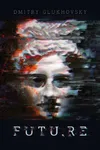
- FUTU.RE (2013) – A bleak sci-fi novel set in a future where aging has been eradicated. The state strictly controls overpopulation by requiring any citizen who wants to have a child to give up their own immortality.
- Text (2017) – A contemporary psychological thriller. It follows a young man wrongfully imprisoned who, upon release, kills the police officer who framed him and takes over the dead man's phone, living the officer's life and interacting with his family via text message.
- Stories of Motherland (2010) – A satirical short story collection that targets Russian bureaucracy, politics, and culture through a surreal, science-fictional lens.
What to Know Before You Start
Glukhovsky's books are highly political and thematic, reflecting his background as a journalist and social critic. While the Metro video games lean into action-horror, the novels are character-driven, filled with philosophical monologues, and offer a cynical commentary on tribalism and humanity's self-destructive nature. Readers should expect dark, mature themes, heavy atmospheric prose, and complex political factions representing neo-fascism, communism, and extreme capitalism inside the Moscow subway system.