

The Recommended Donna Tartt Reading Path
Because Donna Tartt famously takes about ten years to craft each of her novels, she has a select bibliography. Her three major novels are completely standalone works set in different environments, with no overlapping characters or storylines. While you can read them in any order, the recommended path for new readers is a hybrid of popularity and accessibility rather than strict publication chronology.
- The Secret History (1992): Start here. It is Tartt's debut and remains her most iconic, genre-defining work. It serves as the perfect introduction to her atmospheric style, complex psychological depth, and intellectual themes.
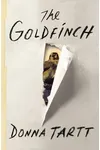
- The Goldfinch (2013): Move next to her Pulitzer Prize-winning third novel. This sprawling, Dickensian epic showcases her mature style, combining art theft, grief, and a coming-of-age journey across New York, Las Vegas, and Amsterdam.
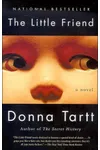
- The Little Friend (2002): Read this last. While beautifully written and rich in Southern Gothic atmosphere, it has a slower pace and a polarizing, unresolved mystery that is best appreciated once you are already familiar with Tartt's stylistic tendencies.
Detailed Breakdown of the Novels
The Secret History (1992)
Set at the fictional, elite Hampden College in Vermont, The Secret History follows a small, isolated group of classics students under the influence of their charismatic professor, Julian Morrow. The story is a "whydunit" told from the perspective of Richard Papen, an outsider who is slowly admitted into the inner circle. The group's obsession with ancient Greek philosophy and bacchanalian rituals leads to a moral decay that culminates in the murder of one of their classmates, Bunny Corcoran. It is widely credited with establishing the modern "dark academia" literary subgenre.
The Little Friend (2002)
Shifting focus from New England to the American South, Tartt's second novel is set in Mississippi during the 1970s. It centers on twelve-year-old Harriet Dufresnes, a precocious and determined girl growing up in the shadow of her brother Robin's unsolved murder, which took place when she was an infant. Driven by grief and a quest for justice, Harriet decides to investigate the crime herself, targeting a local family involved in the drug trade. The novel is a rich, Southern Gothic exploration of childhood, class divisions, and the loss of innocence.
The Goldfinch (2013)
Winner of the 2014 Pulitzer Prize for Fiction, The Goldfinch is a massive, character-driven epic. The novel begins with thirteen-year-old Theo Decker, who survives a terrorist bombing at the Metropolitan Museum of Art in New York City—a tragedy that kills his mother. In the chaos of the aftermath, he escapes the museum with a small, priceless Dutch Golden Age painting, Carel Fabritius's The Goldfinch. The painting becomes both a source of comfort and a dangerous burden as Theo grows up, moving between New York, Las Vegas, and the criminal underworld of Amsterdam.
Short Fiction, Anthologies, and Essays
While Tartt has not compiled her shorter works into a standalone collection, she has published several notable pieces in magazines and anthologies over the years. Readers looking to explore her entire output should seek out these hard-to-find stories and essays:
- Short Fiction: Notable pieces include "Sleepytown: A Southern Gothic Childhood, with Codeine" (Harper's Magazine, 1992), "A Christmas Pageant" (Harper's Magazine, 1993), "Tam-O'-Shanter" (The New Yorker, 1993), "A Garter Snake" (GQ, 1995), and "The Ambush" (The Guardian, 2005).
- Anthologies: Tartt's works have appeared in collections such as A Very Southern Christmas (2003), The Best American Short Stories 2006 (2006), The Virago Book of the Joy of Shopping (2007), and the interview compilation The Writer's Library (2020).
- Introductions and Essays: She has written numerous introductions for classic novels and philosophical works, including an essay for the collection The Novel, Spirituality and Modern Culture and the introduction to J.F. Martel's Reclaiming Art in the Age of Artifice.
Audiobooks and Narration
For audiobook enthusiasts, Donna Tartt's works offer a unique listening experience because she has personally narrated some of them. Listening to the author read her own words adds an intimate, authentic layer to the characters' voices, though her distinctive southern-tinged cadence has received polarized reactions from audiences.
- The Secret History: Available as an unabridged audiobook narrated by Tartt, which highlights the gothic, intellectual tone of Hampden College.
- The Little Friend: An abridged audiobook version read by Tartt was released, capturing the heavy, humid Mississippi atmosphere.
- True Grit: In addition to her own works, Tartt narrated the audiobook for Charles Portis's classic novel True Grit, displaying her deep affection for classic Southern storytelling.
The Adaptation Saga: Page to Screen
The transition of Donna Tartt's novels to the screen has been met with mixed results and a legendary string of development difficulties. Fans of The Secret History have long clamored for an adaptation, but the project has faced what some call a "curse." In the early 1990s, director Alan J. Pakula acquired the rights, with Joan Didion hired to write the script, but Pakula's tragic death in 1998 halted progress. A later attempt in the 2000s by Gwyneth and Jake Paltrow was abandoned following the death of their father, Bruce Paltrow. A 2013 television miniseries attempt by Bret Easton Ellis and Melissa Rosenberg also fell through. Conversely, The Goldfinch was adapted into a major feature film in 2019 directed by John Crowley, though it was critically and commercially unsuccessful, reportedly leaving Tartt dissatisfied with the adaptation process.
What to Know Before You Start
Before diving into Donna Tartt's books, it is helpful to keep a few characteristics of her writing style in mind. First, her prose is exceptionally descriptive and slow-paced; she is a writer who prioritizes world-building, character depth, and mood over fast-moving plots. Second, all of her novels deal heavily with themes of grief, isolation, class privilege, and the moral consequences of secrets. Finally, because her books are long—frequently running over 500 pages, and over 700 pages in the case of The Goldfinch—reading her bibliography is a marathon, not a sprint, making her works perfect for immersive, slow-reading sessions.