


Where to Start Reading Doris Lessing
Doris Lessing was a prolific and fearlessly experimental writer whose work spans realistic fiction, psychological drama, science fiction, and autobiography. Because her writing style changed dramatically over her six-decade career, the best starting point depends largely on your personal taste.
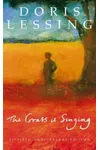
The Accessible Entry Point: The Grass Is Singing (1950)
For readers who prefer a traditional, tightly structured narrative, Lessing's debut novel, The Grass Is Singing, is the ideal starting place. Set in colonial Southern Rhodesia (now Zimbabwe), this short, intense novel explores race, gender, and psychological unraveling on a failing farm. It is highly accessible, gripping, and introduces the sharp social critique that defined Lessing's entire career.
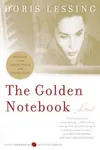
The Literary Masterpiece: The Golden Notebook (1962)
If you want to dive straight into the book that cemented Lessing's global literary reputation, start with The Golden Notebook. This complex, experimental novel tells the story of Anna Wulf, a writer who keeps four distinct notebooks tracking her political, personal, and creative lives, before attempting to tie them together in a fifth, golden notebook. It is a seminal text of 20th-century literature and a profound exploration of mental fragmentation, politics, and female independence.
The Chronological Epic: Martha Quest (1952)
If you enjoy long-term character development and historical sweeps, start with Martha Quest, the first book in her monumental five-novel sequence. This path is perfect for readers who want to follow a single protagonist's growth alongside major political and social shifts in the 20th century.
The Children of Violence Series (Martha Quest Quintet)
This semi-autobiographical series follows the life of Martha Quest from her adolescence in colonial Africa to her middle age and eventual death in a dystopian future London. The books must be read in chronological order to appreciate Martha's personal and political evolution.
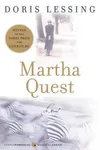
- Martha Quest (1952): Introduces Martha as a rebellious teenager living on a farm in Southern Rhodesia, longing to escape her provincial life.
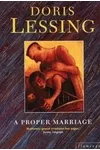
- A Proper Marriage (1954): Follows Martha's entry into colonial society, her conventional marriage, and her growing disillusionment with conventional family life during World War II.
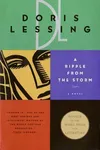
- A Ripple from the Storm (1958): Focuses on Martha's involvement with a local communist group and her second marriage to a radical political activist.
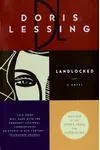
- Landlocked (1969): Captures Martha's feelings of stagnation and anticipation as she waits in Africa for the war to end and plans her departure for England. (Note: While first published in the UK in 1965, it is frequently cataloged under its later compilation or US release date of 1969).
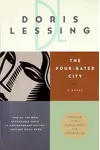
- The Four-Gated City (1969): The massive final volume follows Martha in post-war London. The narrative shifts from realistic social commentary into visionary, post-apocalyptic science fiction, chronicling the collapse of mid-century society.
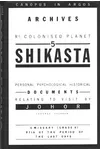
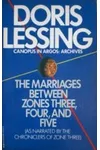
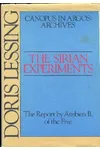
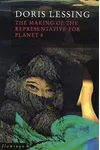
Canopus in Argos: Archives (Science Fiction Sequence)
In the late 1970s, Lessing surprised the literary establishment by shifting to speculative fiction. This five-book space opera sequence views Earth's history through the lens of advanced cosmic civilizations (such as Canopus and Sirius) conducting evolutionary experiments. While they share a universe, they are highly distinct in tone and style and can technically be read as standalones, though publication order is recommended.
- Re: Colonised Planet 5, Shikasta (1979): Framed as a series of study documents for Canopean students, detailing the history of Earth (Shikasta) and the cosmic struggle between beneficial and parasitic alien empires.
- The Marriages Between Zones Three, Four, and Five (1980): A poetic, mythic fable about the forced marriage of rulers from different metaphysical zones, exploring gender relations and spiritual growth.
- The Sirian Experiments (1980): Retells the events of Shikasta from the perspective of a bureaucratic administrator from the rival Sirian Empire.
- The Making of the Representative for Planet 8 (1982): A bleak, philosophical story of a planet slowly dying during a sudden ice age, inspired by Robert Falcon Scott's Antarctic expedition.
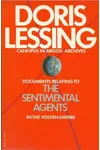
- The Sentimental Agents in the Volyen Empire (1983): A satirical look at political rhetoric and emotional manipulation in a declining planetary empire.
The Diaries of Jane Somers (The Pseudonym Experiment)
In the early 1980s, Lessing wrote two novels under the pseudonym Jane Somers to demonstrate the difficulties faced by unknown writers and to escape the labels attached to her name. Both books were rejected by her regular publishers, and when they were printed, they received very little attention until Lessing revealed her authorship. They follow Janna Somers, a successful fashion editor who is forced to confront aging, mortality, and domestic responsibility.
- The Diary of Good Neighbour (1983): Details Janna's transformative friendship with Maudie Fowler, an impoverished, fiercely independent octogenarian.
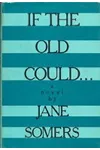
- If the Old Could... (1984): Follows Janna's complex romantic and familial relationships as she navigates middle age.
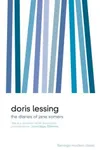
- The Diaries of Jane Somers (1983): The compiled omnibus edition containing both books, later published under Lessing's real name.
The Fifth Child Duology
This two-book series shifts into psychological horror and social realism, exploring the domestic terror of a family whose fifth child is born different, aggressive, and seemingly alien to human nature.
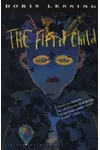
- The Fifth Child (1988): The chilling story of Harriet and David Lovatt, whose idyllic domestic life is shattered by the birth of their abnormal, violent son, Ben.
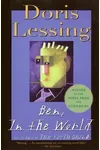
- Ben, In the World (2000): The direct sequel follows Ben as an adult, showing his struggles to survive in a hostile, uncomprehending society that exploits his differences.
The Mara and Dann Duology
Set thousands of years in the future during a new ice age, this speculative duology follows two orphaned siblings wandering through a frozen, post-apocalyptic Africa (now called Ifrik).
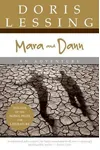
- Mara and Dann (1999): Introduces the siblings as children running from political violence, embarking on a dangerous journey north in search of water and survival.
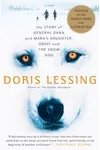
- The Story of General Dann and Mara's Daughter, Griot and the Snow Dog (2005): Follows Dann as a grown military general struggling with trauma, and the next generation's attempt to rebuild civilization.
What to Know Before You Start
When approaching Lessing's work, keep in mind that she did not believe in forcing herself through books that felt dry. She famously remarked that timing is everything, and that a book which bores you in your youth may open doors for you decades later. If you find her experimental work like The Golden Notebook or her cosmic sci-fi in Canopus in Argos difficult to get into, try her realistic standalones like the politically charged The Good Terrorist (1985) or the mid-life crisis drama The Summer Before the Dark (1973).