
How to Read Duncan Tonatiuh’s Books
Duncan Tonatiuh is a highly acclaimed Mexican-American author and illustrator whose work stands out for its unique artistic style inspired by Pre-Columbian Mixtec codices. Because his books are standalone picture books, illustrated biographies, and historical retellings rather than a serialized narrative, there is no single "correct" reading order. Instead, the best way to explore his catalog is by starting with his most celebrated works and then branching out into specific thematic categories.
Where to Start: The Recommended Entry Points
Depending on the age of the reader and their primary interests, we recommend starting your journey with one of three entry points:
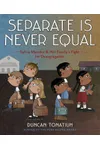
- For Social Justice and History: Begin with Separate Is Never Equal: Sylvia Mendez and Her Family’s Fight for Desegregation (2014). This is Tonatiuh's most celebrated work, chronicling the landmark court case that ended school segregation in California years before Brown v. Board of Education. It perfectly showcases how he blends rigorous historical research with accessible storytelling.
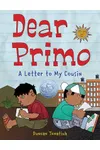
- For Younger Readers and Culture: Begin with Dear Primo: A Letter to My Cousin (2010). As Tonatiuh's debut book, it uses a simple, comparative structure to show the lives of two cousins—one living in rural Mexico, the other in an American city. It is an excellent introduction to his bicultural themes.
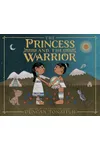
- For Mythology and Folklore: Begin with The Princess and the Warrior: A Tale of Two Volcanoes (2016). This book retells the classic Mesoamerican myth of Iztaccíhuatl and Popocatépetl, providing a wonderful gateway into ancient Mexican folklore.
Complete Book List in Publication Order
While his books can be read in any order, reading them chronologically by publication allows you to trace the evolution of Tonatiuh’s digital-collage art style, which grows increasingly intricate and textured over time. This list includes both his self-authored books and books written by other authors that he illustrated.
- Dear Primo: A Letter to My Cousin (2010) — Self-authored and illustrated. A comparison of daily life between cousins across the US-Mexico border.
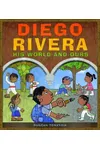
- Diego Rivera: His World and Ours (2011) — Self-authored and illustrated. A children's biography of the legendary Mexican muralist.
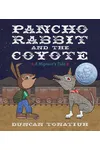
- Pancho Rabbit and the Coyote: A Migrant's Tale (2013) — Self-authored and illustrated. An allegory of the dangers faced by undocumented migrants, told through animal characters.
- Separate Is Never Equal: Sylvia Mendez and Her Family’s Fight for Desegregation (2014) — Self-authored and illustrated. The history of the Mendez v. Westminster desegregation case.
- Salsa: Un poema para cocinar / A Cooking Poem (2015) — Illustrated by Tonatiuh, written by Jorge Argueta. A bilingual picture book celebrating the culinary tradition of making salsa.
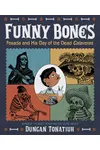
- Funny Bones: Posada and His Day of the Dead Calaveras (2015) — Self-authored and illustrated. A biography of José Guadalupe Posada, the artist behind the iconic Day of the Dead skeletons.
- Esquivel!: Space-Age Sound Artist (2016) — Illustrated by Tonatiuh, written by Susan Wood. A biography of the Mexican composer Juan García Esquivel.
- The Princess and the Warrior: A Tale of Two Volcanoes (2016) — Self-authored and illustrated. A retelling of the Aztec legend explaining the origin of Mexico's two famous volcanoes.
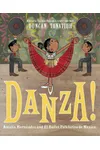
- Danza!: Amalia Hernández and the Folkloric Ballet of Mexico (2017) — Self-authored and illustrated. A biography of the dancer and choreographer who founded the Ballet Folklórico de México.
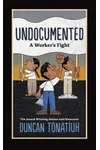
- Undocumented: A Worker's Fight (2018) — Self-authored and illustrated. An accordion-fold book (mimicking ancient codices) detailing the struggles of an undocumented immigrant restaurant worker.
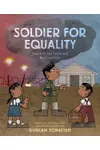
- Soldier for Equality: José de la Luz Sáenz and the Great War (2019) — Self-authored and illustrated. The biography of a Mexican-American activist and teacher who fought in WWI and helped found LULAC.
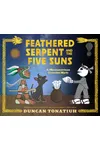
- Feathered Serpent and the Five Suns: A Mesoamerican Creation Myth (2020) — Self-authored and illustrated. The story of Quetzalcoatl and the creation of the modern world.
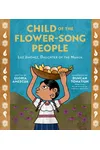
- Child of the Flower-Song People: Luz Jiménez, Daughter of the Nahua (2021) — Illustrated by Tonatiuh, written by Gloria Amescua. A biography of an Indigenous Nahua woman who preserved her culture as a model and language teacher.
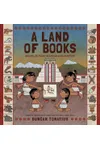
- A Land of Books: Dreams of Young Mexihcah Word Painters (2022) — Self-authored and illustrated. A look at how books and codices were created in the Aztec empire.
- Día de Muertos (2023) — Self-authored and illustrated. An exploration of the Day of the Dead holiday.
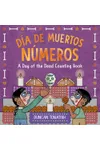
- Día de Muertos: Números / Numbers (2023) — Self-authored and illustrated. A bilingual concept counting book based on the Day of the Dead.
- ¡Fiesta!: A Festival of Colors (2024) — Self-authored and illustrated. A bilingual concept book introducing colors through a Mexican street festival.
- ¡Felicidades!: A Celebration with Shapes (2024) — Self-authored and illustrated. A bilingual concept book exploring shapes at a birthday party.
- Vida: The Mice, the Cat, and the Alebrije (2025) — Self-authored and illustrated. A fable about two mouse siblings who meet a mythical alebrije in their dreams.
Thematic Reading Guide
To help educators and parents choose what to read next, we have categorized Duncan Tonatiuh's books into four main themes:
1. Historical Nonfiction and Biographies
These books focus on real historical figures and events, highlighting their contributions to art, civil rights, and cultural heritage. They are ideal for classroom units on history and social studies.
- Diego Rivera: His World and Ours (Artist biography)
- Separate Is Never Equal (Civil rights history)
- Funny Bones (Art history and biography)
- Danza! (Dance and culture)
- Soldier for Equality (Civil rights and military history)
- Child of the Flower-Song People (Indigenous history and language preservation)
2. Myth, Folklore, and Indigenous Heritage
In these books, Tonatiuh focuses on Mesoamerican myths and the rich traditions of pre-Columbian cultures, drawing direct artistic and narrative lines to the Aztecs and Mixtecs.
- The Princess and the Warrior
- Feathered Serpent and the Five Suns
- A Land of Books
3. Modern Struggles and Bicultural Life
These stories tackle contemporary issues, such as immigration, border separation, and labor exploitation, helping children empathize with modern challenges.
- Dear Primo: A Letter to My Cousin
- Pancho Rabbit and the Coyote
- Undocumented: A Worker's Fight
4. Concept Books for Early Readers
Designed for younger audiences, these bilingual (English/Spanish) books teach core early learning concepts like counting, colors, and shapes through a lens of Mexican cultural celebrations.
- Día de Muertos: Números / Numbers
- ¡Fiesta!: A Festival of Colors
- ¡Felicidades!: A Celebration with Shapes
What to Know Before You Start
To get the most out of Duncan Tonatiuh’s work, keep a few key concepts in mind:
The Mixtec Codex Art Style: Tonatiuh draws characters in profile (with ears shaped like the letter "U" and stylized eyes), mirroring the art of ancient Mixtec codices. He combines hand-drawn elements with digital textures (such as denim, wood grain, or tin foil) to create a striking bridge between the ancient and the modern.
Don’t Skip the Backmatter: One of the best features of Tonatiuh's books is the extensive backmatter. He regularly includes author's notes, historical timelines, glossaries of Nahuatl or Spanish words, and photographs of the real people featured in his books. These sections provide invaluable context for older readers and educators.