




The Recommended Reading Path: Where to Start
If you are looking to dive into the work of Earl Derr Biggers, the clear and undisputed starting point is his iconic Charlie Chan detective series. The series consists of six core novels written by Biggers before his death in 1933. While each novel presents a self-contained, episodic mystery that can technically be read as a standalone, we highly recommend reading them in publication order.
Following the publication order allows you to appreciate the steady character development of the Honolulu detective. Over the course of the books, Charlie Chan rises in rank, grows more confident in his investigative methods, and frequently references his expanding family (which eventually grows to include eleven children). It also allows you to experience the evolution of Biggers' writing style as he refines the classic Golden Age detective formula.
The Charlie Chan Series in Publication Order
Here is the complete order of the core Charlie Chan mysteries written by Earl Derr Biggers, followed by the notable post-canon addition:
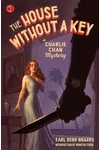
- The House Without a Key (1925): The debut novel that introduces readers to Charlie Chan. Set in historic Honolulu, the story centers on the murder of a wealthy Bostonian. Chan begins as a humble detective assisting the local police, sharing the spotlight with a young Boston relative investigating the crime.
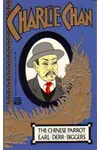
- The Chinese Parrot (1926): Chan travels to mainland California (specifically San Francisco and the Mojave Desert) to oversee the delivery of a valuable pearl necklace, only to get caught in a web of identity theft and murder.
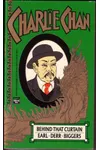
- Behind That Curtain (1928): Set in San Francisco, this story explores a cold case involving the disappearance of a British diplomat's wife, which collides with a fresh murder mystery.
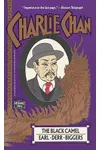
- The Black Camel (1929): Chan returns to his home turf of Hawaii to investigate the murder of a Hollywood actress vacationing in Honolulu. This book is widely regarded as one of Biggers' most atmospheric puzzles.
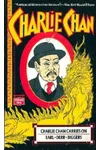
- Charlie Chan Carries On (1930): Chan takes over an international investigation when a member of a cruise tour is murdered in London, with subsequent deaths occurring as the tour moves across the globe, eventually arriving in Honolulu.
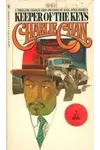
- Keeper of the Keys (1932): Biggers' final completed novel. Set at a secluded estate in Lake Tahoe, Nevada, Chan must solve a murder involving a glamorous opera singer and her multiple ex-husbands.
The Post-Canon Expansion
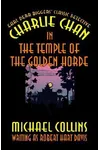
- Charlie Chan in the Temple of the Golden Horde (1974): Written decades after Biggers' death, this short novel was penned by Dennis Lynds under the pseudonym Michael Collins. Originally published in Charlie Chan Mystery Magazine, it is a fun pastiche set in San Francisco, where Chan investigates a mysterious cult. While not part of Biggers' original canon, it is a must-read for completists.
Earl Derr Biggers' Standalone Novels
Before creating Charlie Chan, Biggers was a highly successful playwright and novelist who wrote fast-paced, humorous mysteries and romantic comedies. These standalones are excellent companions to his detective stories:
- Seven Keys to Baldpate (1913): Biggers' first major literary success. A witty, self-referential mystery about a novelist who makes a bet that he can write a book in 24 hours at a locked, snowbound summer resort, only to find himself interrupted by a series of bizarre characters. It was adapted into a hit Broadway play and multiple film versions.
- Love Insurance (1914): A lighthearted comedy of manners and romance. The plot centers on an English lord who takes out an insurance policy on his engagement to an American heiress, only for the insurance agent sent to oversee the wedding to fall in love with the bride. It inspired the film debut of the comedy duo Abbott and Costello in the 1940 movie One Night in the Tropics.
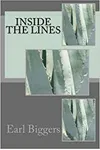
- Inside the Lines (1915): A tense World War I espionage thriller set in Gibraltar, co-authored with Robert Welles Ritchie. The story was adapted from Biggers' own successful Broadway play.
- The Agony Column (1916): A romantic pre-war London mystery where two young Americans correspond using the personal ads ('agony column') of a daily newspaper, leading to a strange murder mystery.
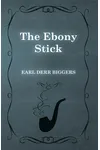
- The Ebony Stick (1916): A shorter crime mystery that was originally serialized in Collier's Weekly. It focuses on a confidence scheme involving a mysterious walking stick.
- Fifty Candles (1921): A foggy murder mystery set in San Francisco and Honolulu. While it does not feature Charlie Chan, it serves as a proto-Chan story, showcasing the Chinese-American themes, atmospheric settings, and puzzle-like plot structures that Biggers would later perfect. (Note: While some bibliographies list the book publication as 1926, the story was serialized and adapted into a silent film in 1921).
Short Story Collections and Anthologies
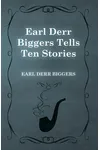
- Earl Derr Biggers Tells Ten Stories (1933): A posthumous collection of Biggers' short stories originally published in The Saturday Evening Post. These tales showcase his range in humor and character-driven drama.
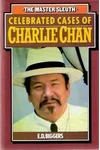
- Celebrated Cases of Charlie Chan (1985): A popular modern omnibus collecting the core Charlie Chan novels for easy reading.
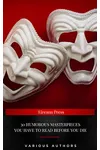
- 30 Eternal Masterpieces of Humorous Stories (2019): A modern anthology containing selected humorous short pieces by Biggers alongside other classic writers.
What to Know Before You Start
The Real-Life Inspiration: Charlie Chan was inspired by Chang Apana, a legendary, real-life Chinese-American detective who served in the Honolulu Police Department. Biggers read about Apana's exploits during a vacation to Hawaii in 1919 and conceived of Chan as a way to counter the xenophobic 'Yellow Peril' stereotypes prevalent in early 20th-century media.
Books vs. Movies: Modern readers should note that the Charlie Chan of the novels is significantly different from the version portrayed in the classic Hollywood films. In Biggers' books, Chan is a dynamic, respected professional who speaks fluent, grammatically correct English (the stilted, grammatically incorrect 'fortune cookie' aphorisms were largely Hollywood inventions). While the books reflect some cultural attitudes of the 1920s and 1930s, Biggers was considered progressive for his era in creating a highly intelligent, heroic Asian-American protagonist.