
Where to Start Reading Ed Yong
If you are new to Ed Yong's writing, you do not need to worry about complex chronologies or overarching storylines. All of Ed Yong's books are standalone works of narrative non-fiction. This means you can read them in any order you choose, depending entirely on which scientific topic captures your curiosity first. However, to get the absolute best experience of his writing, we recommend starting with one of his two main bestsellers:
Option A: The Microscopic Marvels (Start with I Contain Multitudes)
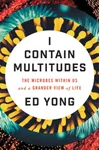
If you are fascinated by biology, health, evolution, and the invisible systems that keep us alive, start with I Contain Multitudes: The Microbes Within Us and a Grander View of Life (2016). In this book, Yong takes readers on a journey through the microbiome—the millions of bacteria, viruses, and fungi that reside within humans and other animals. He explains how these tiny organisms shape our immune systems, influence our behavior, and even build our organs. It is a mind-expanding look at how no creature exists as a single, isolated individual, but rather as a complex ecosystem.
Option B: The Sensory Spheres (Start with An Immense World)
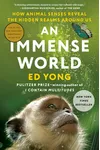
If you prefer wildlife, animal behavior, and learning how other creatures perceive the world around them, start with An Immense World: How Animal Senses Reveal the Hidden Realms Around Us (2022). This book explores the biological concept of the Umwelt—the unique bubble of sensory input that each species experiences. Yong explains how bees see ultraviolet patterns on flowers, how snakes detect the heat of prey, how owls track sounds with offset ears, and how elephants feel low-frequency vibrations through their feet. It is a stunning, beautifully written exploration of sensory biology that will forever change how you look at the natural world.
Ed Yong Books in Publication Order
For readers who want to follow the growth of Ed Yong's career from a popular science blogger to a Pulitzer Prize-winning journalist and author, reading his works in order of publication is a fantastic route. Here is the chronological release order of his primary books and anthology contributions:
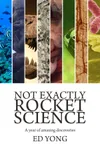
- Not Exactly Rocket Science (2008) – A self-published collection of Yong's early science blog posts, detailing fascinating natural discoveries in a highly accessible format.
- I Contain Multitudes: The Microbes Within Us and a Grander View of Life (2016) – His debut major trade non-fiction book focusing on the symbiotic relationships between hosts and microscopic organisms.
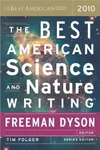
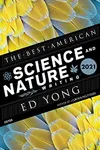
- The Best American Science and Nature Writing 2021 (2021) – A prestigious anthology for which Ed Yong served as the guest editor, selecting the year's best science journalism during the height of the COVID-19 pandemic.
- An Immense World: How Animal Senses Reveal the Hidden Realms Around Us (2022) – His second major trade book exploring the incredible sensory capabilities of the animal kingdom.
Deep Dive into the Standalone Books
I Contain Multitudes (2016)
Yong’s first major book is a masterclass in making microscopic science incredibly engaging. Rather than focusing on microbes solely as pathogens or sources of disease, Yong frames them as essential partners in life. He covers fascinating biological partnerships, such as the bobtail squid that uses bioluminescent bacteria to camouflage itself from predators, and wasps that carry virus-like particles to protect their eggs. The book was highly acclaimed upon release, earning a spot on the New York Times bestseller list, being shortlisted for the Wellcome Book Prize, and winning praise for its combination of rigorous research and witty, accessible prose.
An Immense World (2022)
Widely considered one of the best popular science books of the 21st century, this book takes readers beyond the limits of human perception. Yong structures the book by sense—delving into light, color, pain, heat, contact, vibration, sound, echolocation, electric fields, and magnetic fields. In addition to teaching readers about the incredible ways animals navigate their environments, the final chapters serve as an urgent warning about sensory pollution. Yong highlights how artificial light and human noise disrupt the delicate sensory Umwelten of wild animals, arguing that preserving quiet and darkness is just as important as protecting physical habitats. The book won the Andrew Carnegie Medal for Excellence in Nonfiction and the Royal Society Trivedi Science Book Prize.
The Anthologies and Blog Collections
Not Exactly Rocket Science (2008)
Before writing for major publications like The Atlantic, Yong ran a highly popular science blog called Not Exactly Rocket Science, which launched in 2006. In 2008, he curated his favorite essays from the blog and published them as a print-on-demand book. While it lacks the cohesive narrative arc of his later books, it remains a charming artifact of his early writing career, full of short, punchy, and fascinating science trivia. It is a great read for die-hard fans who want to see where his professional journey began.
The Best American Science and Nature Writing Series
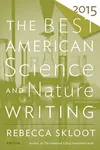
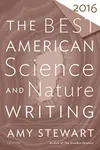
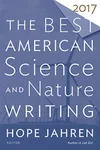
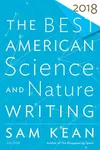
Ed Yong's connection to the annual Best American Science and Nature Writing series is twofold. For many years, his individual investigative articles were featured as standout selections within the anthologies. His relationship with the series culminated when he was invited to be the guest editor for the 2021 volume. Yong curated a powerful collection of essays that documented the tragedy, confusion, and scientific triumphs of 2020. Reading this anthology is highly recommended for those who appreciate long-form science journalism and want to see the pieces Yong himself considers the gold standard of the field.
What to Know Before You Start
When picking up an Ed Yong book, expect a reading experience defined by empathy, wonder, and rigorous reporting. Yong is not a passive narrator; he travels the world to interview researchers in the field, allowing readers to share in the excitement of discovery. He also makes a conscious effort to highlight historically marginalized scientists and diverse voices in his writing.
While his books are deeply educational, they do not read like textbooks. They are filled with vivid descriptions, humor, and a deep appreciation for the natural world. Whether he is discussing how a gut microbe might alter a host's brain or how a dolphin navigates using sonar, Yong’s writing is accessible to general readers and seasoned science enthusiasts alike.