




Where to Start Reading Edgar Pangborn
If you are new to Edgar Pangborn's worlds, your best starting point depends on whether you want to dive into his famous post-apocalyptic future history or experience a self-contained masterpiece. Here are the two recommended entry points:
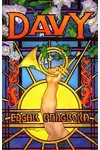
- For the Post-Apocalyptic Masterpiece: Start with Davy (1964). It is his most famous and celebrated novel, offering a rich, picaresque, and deeply human journey through a neo-medieval post-apocalyptic America. It serves as the structural anchor for his shared universe.
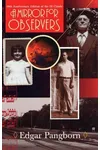
- For a Hugo-caliber Standalone: Start with A Mirror for Observers (1954). This book won the International Fantasy Award and presents a gentle, philosophical conflict featuring secret Martian observers who guide humanity's development. It showcases Pangborn's signature humanist warmth and literary grace.
The Tales of a Darkening World (Davy Universe)
Pangborn's most significant contribution to science fiction is his post-apocalyptic cycle, collectively known as the Tales of a Darkening World (or the Davy series). Set in a North America devastated by a nuclear holocaust known as the "Twenty-Minute War" (occurring in 1993) and subsequent plagues, the stories follow humanity's slide into a neo-feudal, highly religious era ruled by the oppressive Holy Murkan Church.
Because Pangborn envisioned these works as a loose collection of folklore, myths, and independent legends rather than a tightly plotted linear series, the books can easily be read as standalones. However, reading them with an understanding of the timeline enhances the depth of the world-building.
Publication Order vs. Chronological Order
Depending on your reading preferences, you can tackle the Darkening World cycle in one of two ways:
Option A: The Publication Order (Recommended)
This order introduces you to the world at its most developed and immersive, before filling in the historical gaps with prequels and short stories:
- Davy (1964) – The central novel, following a young, free-thinking protagonist who rebels against a strict religious theocracy centuries after the fall of civilization.
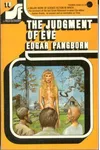
- The Judgment of Eve (1966) – A allegorical fable set shortly after the apocalypse, focusing on three men courting a woman in the wilderness.
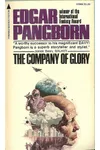
- The Company of Glory (1975) – A prequel set roughly 47 years after the war, following an elderly storyteller who still remembers the world before the bombs fell.
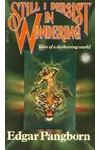
- Still I Persist in Wondering (1978) – A posthumous collection containing seven crucial short stories that flesh out the margins of this post-apocalyptic landscape.
Option B: The Internal Chronological Order
If you prefer to watch the future history unfold chronologically, follow this path:
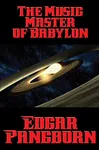
- "The Music Master of Babylon" (1954 short story, collected in Good Neighbors and Other Strangers) – Set in the immediate decades following the nuclear war, focusing on a lonely musician in a ruined New York City.
- The Judgment of Eve (1966 novel) – Explores the initial aftermath and the immediate breakdown of the old world.
- The Company of Glory (1975 novel) – Set approximately 47 years post-war, capturing the transition from living memory of the old world to the birth of new myths.
- Davy (1964 novel) – Set centuries later, when the ruins of "Old Times" are treated with religious fear and superstition.
- Still I Persist in Wondering (1978 collection) – Contains stories (such as "My Brother Leopold") that run concurrently with or slightly after the events of Davy.
Pangborn's Standalone Novels
Outside of his post-apocalyptic universe, Pangborn wrote several diverse novels that showcase his versatility as a storyteller. These works are completely independent of one another and can be read in any order:
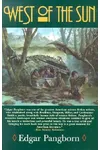
- West of the Sun (1953) – Pangborn's debut science fiction novel. It details the struggles of six shipwrecked human colonists attempting to build a cooperative society on the alien world of Lucifer alongside native species.
- A Mirror for Observers (1954) – A poignant, character-driven story about Martians living quietly among humans, debating whether to save or abandon humanity. It remains one of the defining humanist science fiction novels of the 1950s.
- Wilderness of Spring (1958) – A departure from science fiction, this is a historical novel set in early 18th-century colonial New England, exploring the lives and adventures of two young brothers.
- The Trial of Callista Blake (1961) – A gripping courtroom drama and psychological mystery that centers on a non-conformist woman accused of murder, highlighting the dangers of societal prejudice.
Short Stories and Collections
Pangborn was a master of the short form. Two main volumes contain the bulk of his shorter works:
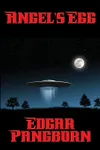
- Good Neighbors and Other Strangers (1973) – This collection compiles many of his early standalone science fiction and fantasy stories, including his famous breakout piece "Angel's Egg" (1951) and the post-apocalyptic cornerstone "The Music Master of Babylon" (1954).
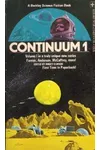
- Still I Persist in Wondering (1978) – An essential companion piece to the Darkening World cycle, collecting stories originally written for anthologies like the Continuum series. Key stories include "The Children's Crusade", "Tiger Boy", and "My Brother Leopold" (which focuses on Davy's brother).
What to Know Before You Start
Pangborn's writing style is defined by a deep, lyrical humanism, musical prose, and a focus on empathy, connection, and the resilience of the human spirit. Unlike many of his contemporaries in the Golden Age of science fiction who focused on hard technology and space opera, Pangborn prioritized the emotional lives of his characters. His background in classical music heavily influences his narratives, with music often serving as a symbol of hope and preserved civilization. Writers like Ursula K. Le Guin have openly credited Pangborn's works with demonstrating how emotional depth and literary sophistication could be woven into science fiction, laying the groundwork for the soft sci-fi movement of the late 1960s and 1970s.