

























Where to Start with Edgar Wallace
With a bibliography spanning over 170 novels, dozens of short story collections, and numerous plays, finding a starting point for Edgar Wallace can feel overwhelming. Fortunately, Wallace wrote in distinct series and highly accessible standalones, meaning you do not need to tackle his massive library all at once. The two best entry points are:
- The Four Just Men (1905): Start here if you want to experience the birth of the modern vigilante thriller. This fast-paced mystery introduces a group of wealthy, highly organized crusaders who execute criminals who escape the reach of the law.
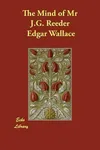
- The Mind of Mr. J.G. Reeder (1925): Start here if you prefer classic, character-driven detective stories. J.G. Reeder is one of Wallace's most memorable creation—a mild-mannered, umbrella-carrying investigator with the self-proclaimed 'mind of a criminal' who works for the Director of Public Prosecutions.
The Four Just Men Series
The Four Just Men is Wallace's most famous creation. The series focuses on a group of vigilantes who use their intellect, vast wealth, and stealth to enforce justice. To get the full narrative arc of the group, it is highly recommended to read these in their strict publication order:
- The Four Just Men (1905)
- The Council of Justice (1908)
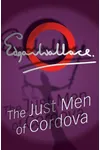
- The Just Men of Cordova (1917)
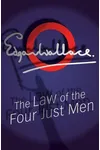
- The Law of the Four Just Men (also published as Again the Three Just Men) (1921)
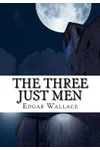
- The Three Just Men (1929)
The J.G. Reeder Series
Mr. John G. Reeder is a brilliant investigator who looks like a harmless, middle-aged bureaucrat but possesses a deep, intuitive understanding of the criminal mind. Unlike the vigilantes of the Just Men, Reeder works within the bounds of the law, bringing dry humor and sharp intellect to his investigations. The recommended reading order is:
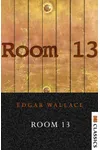
- Room 13 (1924) - Note that Reeder plays a secondary role here before taking center stage in the later collections.
- The Mind of Mr. J G Reeder (also published as The Murder Book of J.G. Reeder) (1925)
- The Casefiles of Mr. J.G. Reeder (1927)
- Terror Keep (1927)
- The Guv'nor (also published as Mr. Reeder Returns) (1932)
- Mr. J.G. Reeder Returns (1932)
- Red Aces (1932)
The African River Adventures: Commissioner Sanders and Lieutenant Bones
Wallace drew on his time as a war correspondent in South Africa to write a series of adventure stories set along a colonial African river. The central characters are Commissioner Sanders, a stern administrator, and Lieutenant 'Bones' Tibbetts, a good-natured, eccentric young officer who provides comic relief. These books are episodic and consist primarily of linked short stories. Reading them in publication order helps track the character developments:
Commissioner Sanders Core Books
- Sanders of the River (1911)
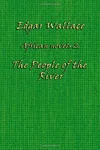
- The People of the River (1912)
- The River of Stars (1913)
- Bosambo of the River (1914)
- Sandi the King-Maker (1922)
- Sanders (also published as Mr. Commissioner Sanders) (1926)
- Again Sanders (1928)
- The Keepers of the King's Peace (1930)
Lieutenant Bones Subseries
Lieutenant Bones became so popular that he received his own spin-off titles, which should ideally be read alongside the Sanders books:
- Bones (1915) - Introduces the character and fits cleanly after Bosambo of the River.
- Bones in London (1921) - Follows Bones as he navigates the financial and social world of London.
- Bones of the River (1923) - Returns Bones to the African setting.
The Inspector Elk Series
Inspector Elk (often starting as Detective Sergeant Elk) represents Wallace's take on the classic Scotland Yard officer. Practical, dryly cynical, and persistent, Elk is the focal point of several of Wallace's best-engineered puzzle mysteries. Follow this order to watch him solve his biggest cases:
- The Fellowship of the Frog (1925)
- The Joker (also published as The Colossus) (1926)
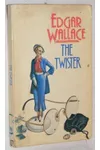
- The Twister (1928)
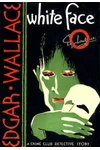
- White Face (1930)
Minor Character Series
Wallace was incredibly prolific and experimented with multiple recurring protagonists. These shorter series are worth exploring once you have read his major works:
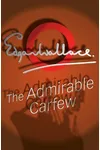
- T.B. Smith: A clever secret service detective who appears in The Nine Bears (1910) and The Admirable Carfew (1914).
- The Ringer: Focusing on Henry Arthur Milton, a master of disguise and escape, this series includes the seminal thriller The Ringer (1925) and the collection Again the Ringer (1929).
- Educated Evans: A comedic series about a London horse-racing tipster who always seems to get into trouble. Read More Educated Evans (1926) followed by Good Evans (1927).
- Superintendent Minter: A short mystery series consisting of Big Foot (1927) and The Lone House Mystery (1929).
Standalone Masterpieces
Because Edgar Wallace wrote so quickly, many of his most famous works are standalone mystery novels that do not require any prior reading. If you want to sample his suspense writing without committing to a series, try these classics in any order:
- The Crimson Circle (1922) - A thrilling mystery about a shadowy syndicate blackmailing wealthy Londoners.
- The Green Archer (1923) - A classic gothic thriller featuring a mysterious, green-clad archer haunting an old castle.
- The Clue of the New Pin (1923) - A locked-room mystery that remains one of Wallace's most famous puzzles.
- The Dark Eyes of London (1924) - A sinister tale involving a home for the blind and a series of mysterious drownings.
What to Know Before You Start
When diving into Edgar Wallace, keep a few historical and literary contexts in mind:
Colonial Themes and Dated Language
The Sanders of the River and Lieutenant Bones books are products of their time, written at the height of the British Empire. They contain colonialist attitudes, racial stereotypes, and patronizing depictions of African populations that modern readers will find highly dated and offensive. Modern readers should approach these books as historical artifacts.
Magazine Serialization and Revision Differences
Many of Wallace's books were compiled from short stories and novellas originally published in weekly magazines. Consequently, you will find multiple titles for the same books (for example, The Murder Book of J.G. Reeder and The Mind of Mr. J.G. Reeder are the same work). Additionally, some books, such as The Nine Bears, were revised and republished under different titles later in his career.
The King Kong Connection
Shortly before his death in 1932, Edgar Wallace traveled to Hollywood, where he worked on the initial screenplay draft for the original 1933 King Kong movie. Although the script was heavily revised after his passing, he is credited as a co-creator, and a novelization based on the screen story was published under his name posthumously.