
The Recommended Reading & Viewing Path
Because Edith Hahn Beer’s literary legacy centers on a single, monumentally important memoir, there is no complex series order to navigate. Instead, the challenge for readers is choosing the best format to engage with her story, as well as deciding how to integrate the accompanying documentary and primary historical archives.
For the complete experience, we recommend the following sequence:
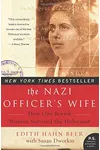
- Step 1: Read the Memoir (Print or eBook) — Begin with the written text of The Nazi Officer's Wife: How One Jewish Woman Survived the Holocaust (1999). Reading the print version allows you to study the photographs and reproduction documents interspersed throughout the text, which are crucial to understanding her false identity.
- Step 2: Listen to the Audiobook — If you prefer audio or want a deep reread, listen to the version narrated by Barbara Rosenblat. It brings a theatrical weight to Edith's voice that changes how the narrative feels.
- Step 3: Watch the Documentary (2003) — Conclude your journey with the documentary film. Directed by Liz Garbus, it features real interviews with Edith Hahn Beer late in her life, alongside narration by Susan Sarandon, bringing visual reality to the places and names mentioned in the book.
Understanding the Work: The Nazi Officer's Wife
Co-authored with playwright and novelist Susan Dworkin, The Nazi Officer's Wife was first published in 1999. The collaboration was vital; Dworkin helped translate Edith's memories and German documents into a structured, narrative English format that preserves the immediacy of the threat she lived under.
The book recounts Edith's life from her days as an law student in Vienna to her forced labor on an asparagus farm in Osterburg, her decision to go underground with false identity papers under the name "Grete Denner," and her subsequent marriage to Werner Vetter, a member of the Nazi Party. The memoir is particularly noted for its complex depiction of Vetter, who was neither a heroic savior nor a stereotypical monster, but a complicated man who kept her secret while serving the regime.
Format Breakdown: Which Version Should You Choose?
Depending on how you prefer to digest historical biographies, different formats of Edith's story offer distinct advantages:
- The Print and Digital Editions: Recommended for history enthusiasts. These editions contain physical photos, letters, and official Nazi documents. Being able to pause and look at the actual papers Edith used to pose as an Aryan adds a chilling level of authenticity.
- The Audiobook: Produced by Jewish Contemporary Classics, this version is narrated by acclaimed voice actor Barbara Rosenblat. Her performance won an Audie Award from the Audio Publishers Association, recognized for its emotional range and pitch-perfect delivery of Edith's tense, understated prose.
- The 2003 Documentary Film: A perfect companion piece rather than a replacement. The film includes archival footage and direct interviews with Edith, her daughter Angela, and others who knew her. It was nominated for a Primetime Emmy Award and provides invaluable visual context.
What to Know Before You Start
Before reading, it is helpful to keep a few key contextual details in mind:
A Story of Documents: Unlike many survival stories that rely purely on memory, Edith's account is uniquely backed by physical evidence. Because she saved her identity cards, letters, and even the yellow stars she was forced to wear, her narrative is one of the most thoroughly documented personal histories of the era. These items are now permanently archived at the United States Holocaust Memorial Museum (USHMM) in Washington, D.C.
Tone and Moral Complexity: The book does not present a simple, sanitized version of survival. Edith is incredibly honest about the compromises she had to make, the constant terror of exposure (such as refusing pain medication during childbirth to avoid talking in her sleep), and the morally gray characters who crossed her path. It is a psychological survival story as much as a historical one.