
Where to Begin Your Journey into Carey's Worlds
Edward Carey is not a conventional novelist. Because he is also a playwright and a professional illustrator, his books are sensory experiences, packed with his own eerie, hand-drawn portraits and sketches that often play tricks on the text. If you want to dive into his work, there are two distinct entry points depending on your preference for reading length.
Option A: The Iremonger Trilogy (For Series Lovers)
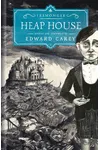
If you prefer a rich, multi-book saga with a continuous cast of characters, start with Heap House. This is the first book of the Iremonger Trilogy, a dark historical fantasy set in an alternate Victorian London. It is Carey's only multi-volume series, and it is the best showcase of his talent for blending Dickensian world-building with Lemony Snicket-style macabre charm.
Option B: Little (For Standalone Readers)
If you want a self-contained masterpiece that showcases Carey's historical depth and artistic brilliance, start with Little. This novel follows the life of Marie Grosholtz, who would eventually become the famous Madame Tussaud. The book is heavily informed by Carey's own real-life job working as a guard at Madame Tussauds in London, and it serves as a wonderful introduction to his atmospheric prose and grotesque visual style.
The Core Series: The Iremonger Trilogy
Set in a sprawling, alternate-Victorian estate surrounded by a literal mountain of London's discarded trash, the Iremonger Trilogy must be read in strict publication order. The narrative follows Clod Iremonger, a boy who can hear the whispers of "birth objects" (everyday items assigned to family members at birth), and Lucy Pennant, an orphan swept into the family's bizarre secrets. The books are:
- Heap House (2013) – Introduces Clod, Lucy, the whispering objects, and the toxic, shifting landscape of the Iremonger estate.
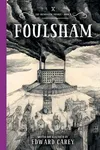
- Foulsham (2014) – Follows the direct aftermath of the first book, exploring the deeper, filth-laden neighborhoods of Foulsham that feed the Heap House.
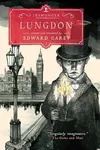
- Lungdon (2015) – The final showdown as the city of London itself begins to be overtaken by the trash heaps and whispering items.
Edward Carey's Standalone Novels in Order
Carey's standalone novels can be read in any order, but reading them in order of publication highlights his artistic evolution. Each standalone features his unique, hand-drawn illustrations of the characters.
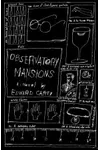
1. Observatory Mansions (2000)
Carey's debut novel is an absurdist, gothic tale set in a crumbling apartment building isolated on a traffic island. The protagonist, Francis Orme, works as a silent living statue in the city, follows a strict rule of wearing white gloves, and secretly steals small, sentimental objects from his neighbors to keep in a hidden basement museum. The status quo is disrupted by the arrival of a blind and optimistic tenant named Anna Tap.
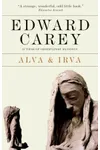
2. Alva & Irva: The Twins Who Saved a City (2003)
Set in the fictional, isolated city of Entralla, this novel tells the story of co-dependent identical twins Alva and Irva Dapps. Alva is an adventurous traveler who maps the city streets, while the agoraphobic Irva stays indoors to build a massive, precise miniature model of Entralla out of plasticine. When a natural disaster threatens their home, their miniature city becomes the key to rebuilding.
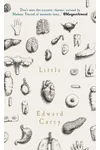
3. Little (2018)
This historical fantasy reimagines the life of Marie Grosholtz (Madame Tussaud) from her childhood as a tiny assistant to a wax modeler in Switzerland to her survival of the French Revolution in Paris. The book is packed with Carey's waxen, unsettling drawings and explores the boundary between life and artifice.
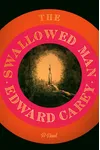
4. The Swallowed Man (2020)
A dark, existential retelling of Pinocchio, told entirely from the perspective of Geppetto. Trapped inside the belly of a giant sea monster (whom he calls the Maria), Geppetto uses a captain's logbook to write his memoirs, record his isolation, and sculpt art from whatever debris the beast swallows, reflecting on the complicated love and regret of fatherhood.
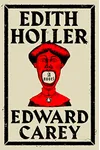
5. Edith Holler (2023)
Set in Norwich, England, in 1901, this novel centers on twelve-year-old Edith Holler, who has lived her entire life inside the Holler Theatre. Her father warns her that the building will collapse if she ever steps outside. When her father becomes engaged to Margaret Unthank, the sinister heiress to a Beetle Spread fortune (made from children's blood), Edith must write a play to save her home, her father, and herself.
Short Stories and Anthologies
Carey has contributed shorter pieces to several key collections, offering bite-sized glimpses into his gothic style:
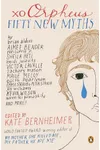
- xo Orpheus: Fifty New Myths (2013) – Edited by Kate Bernheimer, this anthology features Carey's modern retelling of classical mythology alongside other contemporary authors.
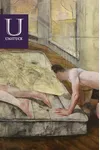
- Unstuck #3 (2014) – A contribution to this literary magazine, which featured early excerpted chapters of his then-upcoming novel Heap House.
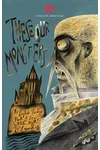
- These Our Monsters: The English Heritage Book of New Folktale, Myth and Legend (2019) – Carey wrote the title story "These Our Monsters," which is inspired by the medieval legend of the Green Children of Woolpit and is set at the ruins of Bury St Edmunds Abbey.
What to Know Before You Start
When picking up an Edward Carey book, keep these three essential tips in mind:
The Art is Part of the Text
Do not skip or ignore the drawings. Carey drafts his characters visually before he finishes writing them. The portraits represent how the characters see themselves, or occasionally contradict the descriptions in the prose to show unreliable narration.
Themes of Obsession and Objects
Nearly all of Carey's characters are obsessive hoarders or creators. Whether it is Francis Orme's secret museum of stolen goods, the Iremongers' whispering birth objects, the twins' plasticine city, Geppetto's stomach-bound sculptures, or Edith's theatrical scripts, Carey uses physical materials to anchor his characters' search for identity and control.
No Co-Authors or Ghost Artists
Unlike many modern illustrated novels, Carey is the sole creator of both the words and the art. His illustrations are drawn using pencil, ink, and occasionally mixed media to match the physical texture of the stories he is telling.