



Where to Start: The Three Reading Paths
Edward P. Jones is a highly deliberate writer who has published a select, exceptionally high-quality body of work: one novel and two short story collections. Because his bibliography is concise, readers can choose from a few distinct paths depending on what kind of reading experience they want. Here are the three recommended ways to navigate his books:
Path 1: The Sibling Parallel Path (Recommended)
This is the most rewarding way to experience his short fiction. Jones designed his two collections, Lost in the City and All Aunt Hagar's Children, as companion volumes. Both contain exactly 14 stories, and they are structured in the exact same thematic order. By reading them in parallel, you can see how characters age, how D.C. changes, and how themes mirror each other across the decades. Under this path, you would read:
- Story 1 of Lost in the City followed immediately by Story 1 of All Aunt Hagar's Children.
- Continue this alternating pattern for all 14 stories.
- Finish with his standalone masterpiece, The Known World.
Path 2: The Publication Path (The Natural Evolution)
If you prefer to see how Jones's style matured and expanded over time, follow the exact publication timeline. This path builds a strong foundation in his local Washington, D.C. setting before taking you back in time to his grand historical epic:
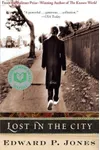
- Lost in the City (1992) – His debut collection establishing his signature D.C. setting.
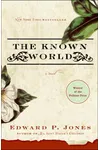
- The Known World (2003) – His Pulitzer-winning historical novel.
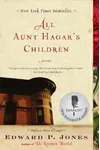
- All Aunt Hagar's Children (2006) – His second collection, which revisits the geography and characters of his debut.
Path 3: The Masterpiece First Path
If you are primarily interested in his most famous and highly acclaimed work, start with his only novel. This path gives you an immediate taste of his deep, historical world-building before you explore his intimate urban portraits:
- The Known World (2003) – Start here to experience his complex narrative structure and profound exploration of American history.
- Lost in the City (1992) – Move here to ground yourself in the mid-to-late 20th-century neighborhoods of Washington, D.C.
- All Aunt Hagar's Children (2006) – Complete your journey by seeing how those urban spaces and families evolve.
The Sibling Collections: A Structural Mirror
One of the most fascinating aspects of Edward P. Jones's bibliography is the structural relationship between his two short story collections, Lost in the City (1992) and All Aunt Hagar's Children (2006). They are not merely two random books of short stories; they are structural siblings that map onto one another in a precise, intentional pattern.
Both collections feature exactly 14 stories, and in both books, the protagonists are ordered by age, starting from the youngest children and ending with the elderly. Furthermore, the stories in the second collection act as companion pieces to the stories in the first collection. For example, the first story of Lost in the City, "The Girl Who Raised Pigeons," mirrors the first story of All Aunt Hagar's Children, "In the Forest of the Guntowns." Similarly, character arcs span across the collections; Caesar Matthews appears as a troubled youth in "Young Lions" (from the first collection) and returns as an older man trying to piece his life together in "Old Boys, Old Girls" (from the second collection).
This mirror design creates a deeply satisfying, novelistic continuity across his short fiction, transforming separate tales of working-class D.C. residents into a unified epic of twentieth-century African-American life.
Detailed Breakdown of the Core Books
Lost in the City (1992)
Jones's debut collection contains 14 stories set in the mid-twentieth century in Washington, D.C. Unlike the monumental, political D.C. of monuments and politicians, Jones focuses entirely on the working-class Black residents who make up the soul of the city. The stories range from a young girl caring for her pigeons to an elderly woman facing the loss of her home, capturing the quiet dignity, struggles, and resilient community of the capital's neighborhoods.
The Known World (2003)
This historical masterpiece earned Jones the 2004 Pulitzer Prize for Fiction. Set in the fictional Manchester County in antebellum Virginia, the novel explores the complex, devastating paradox of Black slaveholders. The narrative centers on Henry Townsend, a former slave who becomes a wealthy planter and slave owner himself. Jones utilizes a non-linear, omniscient narrative voice that leaps forward and backward in time, revealing the fates of characters decades into the future and creating an incredibly rich, sprawling portrait of a society built on the brutal commodity of human lives.
All Aunt Hagar's Children (2006)
Fourteen years after his debut, Jones returned to the streets of Washington, D.C. with this collection. The 14 stories here expand on the landscape of the first collection, featuring the descendants, neighbors, and older versions of the characters introduced in Lost in the City. The title references a common African-American idiom for the collective struggles and heritage of Black people, and the stories deal heavily with themes of migration from the South, family obligations, and the ghosts of the past.
Anthologies, Curated Works & Guest Editing
In addition to his primary books, Edward P. Jones's work has been featured in several major literary anthologies. For readers looking to see his editorial taste or find his individual stories alongside other contemporary voices, these volumes are worth exploring:
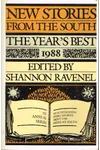
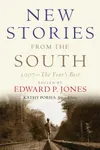
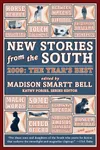
- New Stories from the South: The Year's Best 2007 – Jones served as the guest editor for this prestigious annual anthology, selecting the year's best Southern fiction and contributing a highly personal introduction about his own identity as a Washingtonian with deep Southern roots.
- The Scribner Anthology of Contemporary Short Fiction – This anthology contains Jones's acclaimed short story "Marie," which is also the final, oldest-protagonist story in Lost in the City.
- The Art of the Story – This international anthology features his widely anthologized story "First Day," a touching story about a mother enrolling her daughter in school.
- The World Split Open (2014) – A collection of lectures and essays on writing where Jones contributes "Finding the Known World," offering invaluable insights into how he researched and wrote his Pulitzer-winning novel.
What to Know Before You Start
Before you begin reading Edward P. Jones, it helps to understand his unique approach to storytelling. His prose style is deliberately slow-paced, requiring readers to slow down and savor the language. He rarely writes in a straightforward, linear path; even within a single short story, the narrative voice might suddenly jump twenty years into the future to tell you how a minor character dies before returning to the present moment. This gives his writing a mythic, timeless quality, where the past, present, and future coexist. Additionally, you should know that his depiction of Washington, D.C. is deeply personal, rooted in the streets he walked growing up, making the geography of the city feel like a major character in its own right.