
How to Read Edward Wilson’s Books
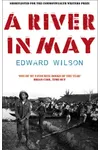
Edward Wilson has carved out a unique niche in modern spy fiction, writing cerebral, historically grounded espionage novels that challenge the traditional, elitist tropes of the genre. His central work is the William Catesby series, which spans the height of the Cold War and beyond. In addition to this flagship series, Wilson has written a critically acclaimed standalone novel, A River in May, drawing on his personal experiences in the Vietnam War.
When approaching Edward Wilson's bibliography, readers generally choose between two primary paths: the Publication Order and the Chronological Order. While both have their merits, there is a clear consensus on which offers the most rewarding experience for newcomers to the world of Catesby.
The Publication Order (Recommended)
We highly recommend reading the William Catesby books in publication order. Even though the later novels plunge back in time to explore Catesby's early life and wartime recruitment, they were written with the assumption that the reader is already familiar with his older, cynical, and battle-weary self. Reading in publication order allows you to appreciate the organic development of Wilson's writing style, his deepening themes of anti-establishment skepticism, and the gradual peeling back of Catesby's complex history.
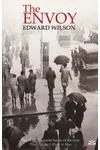
Furthermore, the series' debut, The Envoy, does not actually feature William Catesby as the main protagonist. Instead, it centers on Kit Fournier, a CIA Station Chief in London, with Catesby playing a critical supporting role. Starting here establishes the geopolitical landscape and recurring characters—such as Catesby's enigmatic boss, Henry Bone—before Catesby takes center stage in the sequel, The Darkling Spy.
- The Envoy (2008)
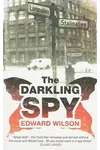
- The Darkling Spy (2010)
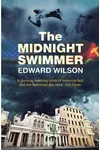
- The Midnight Swimmer (2011)
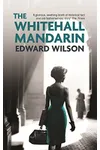
- Whitehall Mandarin (2014)
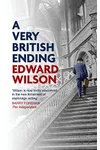
- A Very British Ending (2015)
- South Atlantic Requiem (2018)
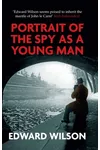
- The Portrait of a Spy as a Young Man (2020)
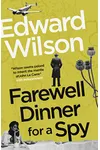
- Farewell Dinner for a Spy (2024)
The Chronological Order
For readers who prefer a strictly linear historical timeline, the chronological reading order traces William Catesby's life from his early days as a young academic recruited into the Special Operations Executive (SOE) during World War II, all the way to the twilight of his career. However, keep in mind that starting chronologically means beginning with books written much later in Wilson's career (2020 and 2024), which feature a slightly different narrative polish and assume a degree of familiarity with Catesby's eventual trajectory.
- The Portrait of a Spy as a Young Man (Sets in the 1940s / WWII)
- Farewell Dinner for a Spy (Sets in 1949)
- The Envoy (Sets in the early 1950s)
- The Darkling Spy (Sets in 1956)
- The Midnight Swimmer (Sets in 1961–1962)
- Whitehall Mandarin (Sets across the late 1950s and 1960s)
- A Very British Ending (Sets in the 1970s)
- South Atlantic Requiem (Sets in 1982)
The William Catesby Series: Book by Book
1. The Envoy (2008)
Set in London during the tense atmosphere of the 1950s, The Envoy centers on Kit Fournier, a cynical CIA Chief of Station operating under diplomatic cover. Fournier is tasked with sabotaging Great Britain’s independent hydrogen bomb program. As he navigates nuclear secrets and dangerous liaisons, his path crosses with MI6 agent William Catesby and his boss Henry Bone. This book serves as the perfect entry point, establishing the series' signature blend of historical figures (such as Kim Philby and Allen Dulles) and fictitious plots.
2. The Darkling Spy (2010)
In this second installment, William Catesby takes over as the central protagonist. Set in 1956, Catesby is sent to Berlin to stage a fake defection. The operation places him in the crosshairs of both the KGB and MI6's own internal rivalries, unfolding against the backdrop of the Hungarian Uprising. It is here that Catesby’s working-class background and distrust of the British ruling class begin to shape the series’ distinct ideological tone.
3. The Midnight Swimmer (2011)
Bridging the gap between the building of the Berlin Wall in 1961 and the Cuban Missile Crisis of 1962, this thriller sees Catesby sent on a backchannel diplomatic mission to Havana and Washington. Because the Americans view Catesby as a left-wing sympathizer, the mission is fraught with mutual suspicion. Catesby must navigate a complex web involving a disabled KGB general, the Mafia, and a mysterious figure known as the "Midnight Swimmer" to help prevent a nuclear catastrophe.
4. Whitehall Mandarin (2014)
Spanning the late 1950s and 1960s, this sprawling novel covers the Sino-Soviet split, China’s development of its own atomic bomb, the Profumo affair, and the burgeoning Vietnam War. Catesby is tasked with identifying a high-level mole within Whitehall leaking nuclear secrets to Beijing. The story takes Catesby from London to Hong Kong and the jungles of Vietnam, reflecting the global scale of the Cold War.
5. A Very British Ending (2015)
Moving into the mid-1970s, this novel turns its focus inward to domestic British politics. It explores a real-life historical conspiracy theory: the alleged plot by elements within MI5 and the military establishment to overthrow Harold Wilson’s Labour government. Catesby, now a veteran operative, finds himself caught between his loyalty to the state and his disgust at the anti-democratic maneuvers of his colleagues.
6. South Atlantic Requiem (2018)
Set during the 1982 Falklands War, this entry finds Catesby attempting to broker a clandestine peace agreement to prevent bloodshed. However, he discovers that hawkish politicians on both sides—including Margaret Thatcher's government—actively want a military conflict for domestic political gain. It is a bleak, powerful look at the cynical manipulation of patriotism.
7. The Portrait of a Spy as a Young Man (2020)
A prequel to the entire saga, this book takes readers back to the 1940s. It details William Catesby’s working-class upbringing in Suffolk, his academic scholarship to Cambridge, and his subsequent recruitment into the Special Operations Executive (SOE) during World War II. Catesby is sent into occupied France, where his experiences with the French Resistance and the betrayal of left-wing partisans shape his lifelong cynicism toward the establishment.
8. Farewell Dinner for a Spy (2024)
The latest addition to the Catesby timeline is set in 1949. Accused of left-wing sympathies and labeled a traitor after a failed operation, Catesby is demobbed from the Secret Service. However, his mentor Henry Bone sends him to Marseille under the cover of a writer researching the Resistance. Catesby is thrown into a violent turf war between the CIA, local unions, and the Mafia, eventually uncovering a personal plot by Bone to assassinate a former wartime ally.
Standalone Novels
A River in May (2002)
Edward Wilson’s debut novel is an intense, gritty, and deeply personal portrayal of the Vietnam War. The story follows Lieutenant Lopez, a young Mexican-American officer who volunteers for Special Forces duty to escape personal trauma. Stationed at a remote border outpost, Lopez is confronted with the raw brutality, racism, and futility of the war, leading him to question his allegiance to his country. Written decades after Wilson’s own Special Forces service in Vietnam, the book was praised by literary critics for its unflinching realism and moral weight.
What to Know Before You Start
Edward Wilson's spy novels are a far cry from the high-octane, action-oriented thrillers popularized by Ian Fleming. Instead, they belong to the realistic, cynical tradition of John le Carré and Len Deighton. What sets Wilson apart is his sharp class consciousness. William Catesby is not an elite, Oxbridge-educated gentleman spy; he is a working-class grammar school boy from Suffolk who is intensely aware of the class snobbery and entitlement of his superiors in MI6. His left-leaning politics and skepticism regarding Western foreign policy provide a refreshing, anti-establishment perspective that challenges standard Cold War narratives.