



Where to Start Your E.L. Doctorow Journey
E.L. Doctorow did not write interconnected series or recurring characters, meaning you can pick up almost any of his novels as a standalone experience. However, because his style evolved significantly and his narrative structures can range from straightforward page-turners to complex, fragmented post-modernism, choosing the right starting point is key to appreciating his genius.
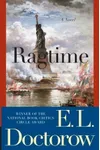
For most readers, the absolute best place to start is Ragtime (1975). It is Doctorow’s signature masterpiece, perfectly balancing his unique blend of historical reality and creative fiction. By weaving figures like Harry Houdini, Emma Goldman, and Henry Ford into the lives of three fictional families in early 20th-century New York, it offers a brilliant entry point to his themes of American identity, race, and social change.
If you prefer a gripping, traditional narrative, start with Billy Bathgate (1989). This atmospheric mobster novel follows a Bronx teenager who finds himself in the inner circle of notorious real-life gangster Dutch Schultz. It is one of Doctorow's most suspenseful and accessible books.
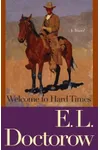
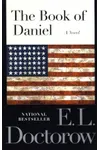
If you love revisionist Westerns, start with his debut, Welcome to Hard Times (1960). It is a short, dark, and searing look at a struggling frontier town that subverts the classic mythology of the American West. Finally, for readers who enjoy dense, politically charged psychological dramas, The Book of Daniel (1971)—a highly acclaimed work inspired by the trial and execution of Julius and Ethel Rosenberg—is a challenging but deeply rewarding masterpiece.
E.L. Doctorow Books in Order of Publication
Reading Doctorow in publication order allows you to witness his growth from a young novelist experimenting with genre tropes to a masterful stylist who completely redefined the boundaries of historical fiction. Here is the chronological list of his standalone novels by release date:
- Welcome to Hard Times (1960) – A gritty, revisionist Western set in a desolate Dakota territory town destroyed by a mysterious gunman.
- Big As Life (1966) – A rare science fiction excursion for Doctorow, detailing the arrival of two massive, motionless giants in New York Harbor and the subsequent societal panic.
- The Book of Daniel (1971) – A powerful, non-linear examination of the Cold War and the Red Scare, narrated by the son of executed Soviet spies.
- Ragtime (1975) – The iconic, syncopated narrative capturing the spirit, clashes, and changing landscape of pre-World War I America.
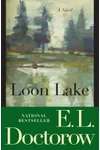
- Loon Lake (1980) – A complex, experimental novel set during the Great Depression that uses poetry, prose, and shifting perspectives to follow a young traveler.
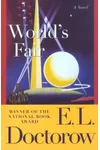
- World's Fair (1985) – A gentler, semi-autobiographical coming-of-age story about a young boy growing up in the Bronx during the 1930s, culminating in the 1939 New York World's Fair.
- Billy Bathgate (1989) – A classic gangster novel told from the perspective of an observant young boy caught up in the violent decline of the Dutch Schultz mob.
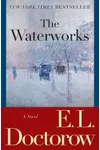
- The Waterworks (1994) – Set in 1871 New York, this gothic-flavored mystery explores a dark conspiracy involving wealthy industrialists, rogue scientists, and missing fortunes.
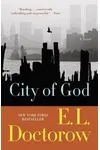
- City of God (2000) – An ambitious, fragmented philosophical novel following a Manhattan detective, a priest, and a rabbi sorting through faith, history, and the Holocaust at the turn of the millennium.
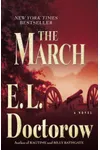
- The March (2005) – A sweeping historical epic that follows General Sherman's devastating march through the South during the final stages of the American Civil War.
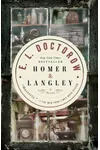
- Homer & Langley (2009) – A fictionalized, deeply empathetic reimagining of the famous Collyer brothers, two eccentric hoarders who shut themselves away in a Fifth Avenue brownstone.
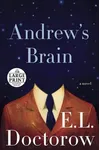
- Andrew's Brain (2014) – Doctorow's final novel, told in a series of psychological confessions by a brilliant but troubled cognitive scientist reflecting on love, tragedy, and post-9/11 America.
The American History Path: Chronological Settings
Because E.L. Doctorow focused heavily on different eras of the American experience, many readers enjoy arranging his books not by when they were written, but by the historical era they depict. Reading them in this order provides a fascinating, fictionalized tour through American history:
- The March (1864–1865) – Sherman's March to the Sea and the closing days of the Civil War.
- The Waterworks (1871) – Gilded Age corruption and mystery in post-Civil War New York City.
- Welcome to Hard Times (1870s–1880s) – Survival and struggles on the desolate Dakota frontier.
- Ragtime (1902–1912) – The turn of the century, industrialization, and the dawn of the Progressive Era.
- Homer & Langley (1918–1970s) – Spans almost the entire twentieth century, beginning with the Spanish Flu pandemic and moving through the World Wars, the Hippie movement, and beyond.
- Billy Bathgate (1935) – The peak and fall of Prohibition-era mob violence in New York.
- Loon Lake (1936) – The economic desperation and labor struggles of the Great Depression.
- World's Fair (1939) – The hope and innocence of childhood on the cusp of World War II.
- The Book of Daniel (1950s / 1960s) – The paranoia of the Cold War and the rise of the New Left student protests.
- City of God & Andrew's Brain (Late 20th / Early 21st Century) – Contemporary America, dealing with the legacy of the Holocaust, modern technology, and the trauma of 9/11.
Understanding the "Random House Reader's Circle" Confusion
If you look up Doctorow's works in online databases, you might run across a collection labeled Publication Order of Random House Reader's Circle Books. This is not a cohesive book series written by Doctorow. Rather, it is a promotional publisher line created by Random House to highlight trade paperback editions featuring reading group guides, author Q&As, and discussion questions.
While E.L. Doctorow's masterpieces like Billy Bathgate and his short story collection Lives of the Poets are included in this catalog, the other titles listed in this series—such as Ruth Reichl's culinary memoir Tender at the Bone or Elizabeth Berg's The Pull of the Moon—were written by entirely different authors. Do not make the mistake of trying to read the entire Reader's Circle list expecting a single cohesive narrative!
Short Story Collections, Essays, and Screenplays
For readers who want to look beyond his novels, Doctorow was also an accomplished short story writer and essayist. His primary collections include:
- Lives of the Poets: A Novella and Six Stories (1984) – A brilliant collection exploring the creative lives of writers living in New York.
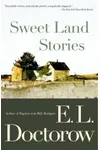
- Sweet Land Stories (2004) – A compilation of stories detailing the struggles of ordinary people in the American heartland.
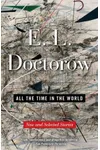
- All the Time in the World (2011) – A definitive collection featuring twelve of his best-known short stories along with new works.
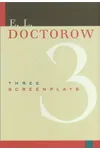
- Three Screenplays (2003) – A fascinating volume featuring Doctorow's own screen adaptations of Daniel, Ragtime, and Loon Lake, showing how he envisioned translating his complex narratives to the screen.