
How to Read Eleanor Shearer's Novels
Eleanor Shearer has quickly established herself as a vital voice in modern historical fiction. As a mixed-race writer and the granddaughter of Windrush Generation immigrants, she draws deeply from her personal heritage and academic background. Shearer holds a Master's degree in Politics from the University of Oxford, where her fieldwork in St. Lucia and Barbados focused on the legacy of slavery and reparations. This rich combination of scholarship and family history shines through in her emotionally resonant, highly detailed storytelling.
As of 2026, Shearer has published two standalone novels. Because her books are independent narratives, they do not share characters or ongoing storylines. This gives readers the flexibility to choose their starting point based on their preferred reading experience. Below, we break down the two main ways to approach her work: by publication order or by chronological historical setting.
The Recommended Reading Orders
Option 1: Publication Order (Recommended)
Reading Eleanor Shearer's books in the order they were published allows you to experience her evolution as an author, starting with her widely acclaimed debut and moving into her sophomore release. This is our recommended reading path.
Option 2: Chronological Historical Order
If you prefer to read historical fiction in the order that the events occurred in history, you can read the books chronologically. While the stories are entirely independent, this order traces the earlier colonial struggles of the 18th century before moving into the post-emancipation era of the 19th century.
- Fireflies in Winter (2026) — Set in 1796.
- River Sing Me Home (2023) — Set in 1834.
Deep Dive into the Novels
River Sing Me Home (2023)
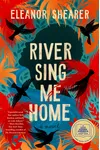
Set in 1834 on a plantation in Barbados, River Sing Me Home begins just as the Emancipation Act is announced. However, the protagonist, Rachel, quickly learns that true freedom is not yet hers; the system of "apprenticeship" forces the formerly enslaved to continue working for their former masters. Driven by a desperate need to reunite with her family, Rachel escapes. She embarks on a dangerous journey across the Caribbean, traveling from the cane fields of Barbados to the forests of British Guiana and the shores of Trinidad, searching for the five children who were torn from her and sold away.
Shearer was inspired to write this novel after visiting a 2010 exhibition at age sixteen that documented the efforts of Caribbean women searching for their children after emancipation. The novel was selected as a Good Morning America Book Club Pick and was named one of TIME magazine's 100 Must-Read Books of 2023, receiving praise for its lyrical prose and heartbreaking yet hopeful exploration of motherhood.
Fireflies in Winter (2026)
Moving away from the Caribbean geography, Shearer's second novel, Fireflies in Winter, takes readers to the harsh, freezing wilderness of Nova Scotia in 1796. The story centers on Cora, a young orphan who has recently arrived from Jamaica. Cora has never experienced winter or snow, and she struggles to survive the brutal elements alongside a displaced community of Jamaican Maroons who were exiled after the Maroon Wars against British colonial forces.
As Cora navigates this unfamiliar landscape, she discovers tracks in the snow that lead her to Agnes, a secretive woman living in hiding deep in the wilderness. The novel unfolds as a slow-burn, atmospheric story of survival, identity, and the tender, risk-laden queer romance that blossoms between Cora and Agnes as they seek a space where they can truly be free.
Practical Reader Guidance
Where is the best place to start?
We recommend starting with River Sing Me Home. It serves as an excellent introduction to Shearer's signature style: combining intensive historical research with intimate, character-driven emotional stakes. It is a fast-paced, sweeping journey that showcases her ability to write about heavy themes with a persistent undercurrent of hope.
Are there any spin-offs, co-authored books, or tie-ins?
No. Eleanor Shearer writes solo and has not published any spin-offs, companion novellas, or co-authored works. Both novels are complete, self-contained historical standalones.
What to know before you start
Eleanor Shearer's novels tackle painful historical realities, including the trauma of slavery, colonial displacement, and racial violence. However, her books are ultimately stories of resilience, community, and human connection. Readers can expect beautiful prose, rich sensory details of the environments (from the tropical heat of the Caribbean to the biting cold of Canada), and deeply empathetic character studies.