
The Recommended Reading Path for Elena Gorokhova's Works
Elena Gorokhova has crafted a small but deeply impactful bibliography that bridges the stark realities of Soviet Russia and the immigrant experience in America. For readers looking to dive into her work, the most rewarding path is to follow her publication order, which aligns perfectly with her personal chronological journey before expanding into inspired historical fiction.
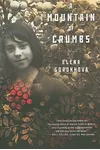
1. Start with the Foundation: A Mountain of Crumbs (2010)
Your journey must begin with her debut memoir, A Mountain of Crumbs. Published in 2010, this book serves as the perfect entry point. It introduces you to Gorokhova’s childhood and young adulthood in Leningrad (now St. Petersburg) during the 1960s and 1970s. Here, you will learn the rules of the Soviet state, the quiet rebellions of its citizens, and the concept of vranyo—the systemic cultural pretense where the state lies, the citizens know they are lying, the state knows they know, and yet everyone continues to pretend. Reading this first provides the essential cultural and historical baseline required to fully appreciate her subsequent books.
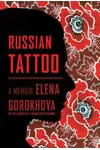
2. Follow the Immigrant Journey: Russian Tattoo (2015)
Once you finish her childhood memoir, progress directly to her second memoir, Russian Tattoo. Released in 2015, this book acts as a direct chronological sequel. It begins exactly where the first memoir ends: with twenty-four-year-old Elena leaving the Soviet Union in 1980 after marrying an American physicist. The narrative follows her initial culture shock in Texas, her transition to New Jersey, and the twenty-four years she spent living with her overbearing Soviet mother in the United States. It is a brilliant study of generational shifts, immigrant identity, and the heavy ties of family that cannot be severed by borders.
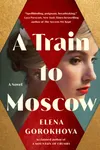
3. Explore the Inspired Fiction: A Train to Moscow (2022)
After completing her autobiographical memoirs, you should read her debut novel, A Train to Moscow. Published in 2022, this is a work of historical fiction set in post-World War II Soviet Russia. While it is technically a standalone novel, it is deeply connected to Gorokhova's memoirs. The protagonist, Sasha, is heavily inspired by Gorokhova's real-life older sister, Marina, who was a prominent stage actress in Leningrad. Having already met Marina in the pages of A Mountain of Crumbs, reading this novel third allows you to see how Gorokhova translates her family’s real-world sacrifices and theatrical passions into a rich, fictional tapestry.
Understanding the Publication vs. Chronological Order
Because Gorokhova’s works span both non-fiction memoirs and a historical novel, readers often wonder if they should read the books in the order the events occurred historically. Here is how the two approaches compare:
The Chronological Timeline of Events
- A Train to Moscow (Novel): Set in the late 1940s and 1950s, detailing the post-WWII reconstruction period and the rigid artistic guidelines of the early Cold War era.
- A Mountain of Crumbs (Memoir): Covers Gorokhova's childhood and youth from the late 1950s through her departure from the USSR in 1980.
- Russian Tattoo (Memoir): Follows her life in America from 1980 through the early 2000s, chronicling three generations of women under one roof.
Why Publication Order Wins
While reading chronologically might seem appealing, it is not recommended for first-time readers. A Train to Moscow is a fictionalized, dramatic reimagining that benefits enormously from the intimate, real-world context established in A Mountain of Crumbs. If you read the novel first, you miss the subtle autobiographical echoes and the emotional weight of Gorokhova’s personal relationship with her sister, Marina, which inspired the book. Starting with her memoirs ensures you understand the genuine gravity of the Soviet regime before seeing it dramatized through Sasha's theatrical ambitions.
The Core Themes of Elena Gorokhova's Books
To get the most out of your reading experience, keep an eye out for these recurring themes that define Gorokhova's literary voice:
- Language as Liberation: In her memoirs, learning English is not just an academic pursuit; it is a quiet act of political rebellion and a passport to mental freedom outside the Iron Curtain.
- The Mother-Daughter Dynamic: The complex, suffocating, yet fiercely loving relationship between Elena and her mother runs through both memoirs, showcasing the clash between Soviet conformity and American individualism.
- Vranyo (The Game of Lying): Gorokhova exposes the daily performance required of Soviet citizens, showing how theater and performance were not just artistic outlets, but survival mechanisms.
What to Know Before You Start
Elena Gorokhova writes in English, her second language, which she did not begin learning until age ten. Her prose is remarkably precise, lyrical, and laced with a dry, ironical humor that critics have compared to Frank McCourt (who was actually her writing mentor in the early 2000s). Her books do not contain graphic violence, but they do offer a poignant, clear-eyed look at the psychological toll of living under a totalitarian regime and the subsequent alienation that comes with immigration. All three books can technically stand alone, but reading them as a trio offers a complete, deeply moving picture of a family's survival across two centuries and two continents.