








Where to Start Reading Elie Wiesel
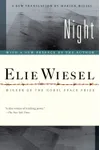
For any reader approaching Elie Wiesel's bibliography, the undisputed starting point is Night. Originally written in Yiddish and then heavily distilled into French as La Nuit (1958) before its English translation in 1960, it is one of the most significant pieces of Holocaust literature ever written. Because the emotional weight of Wiesel's work is immense, beginning here sets the foundation for all his subsequent philosophical and fictional explorations.
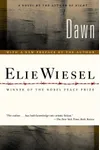
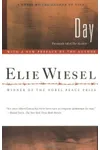
After completing Night, readers are encouraged to proceed through the rest of the informal Night Trilogy (which includes the novels Dawn and Day). Once you have experienced his core narrative, you can branch out into his two-volume autobiography to understand the factual chronology of his life, or explore his standalone novels which continue to probe the theological and moral crises faced by survivors.
The Night Trilogy: Fact and Fiction
Although packaged and sold together as a trilogy, these three works are distinct in genre and narrative style. Understanding the differences between them is key to appreciating Wiesel's development as an author.
1. Night (1958/1960)
Unlike the two volumes that follow it, Night is a first-person memoir. It is a terrifyingly sparse, autobiographical account of Wiesel's childhood in Sighet, Romania, his deportation to Auschwitz and Buchenwald, the loss of his family, and the profound crisis of faith he suffered during the Holocaust. In 2006, Wiesel's wife, Marion, published a revised English translation that corrected minor editorial issues from the original 1960 translation and aligned the text closer to Wiesel's original French voice.
2. Dawn (1960/1961)
Dawn is a work of fiction. Set in British-controlled Palestine after World War II, the story follows Elisha, a young Holocaust survivor who joins a Zionist paramilitary group. He is tasked with executing a captured British officer at dawn. The novel moves away from the passive suffering of the concentration camps to explore the moral corruption of taking a life, examining how victims can transform into executioners in the aftermath of trauma.
3. Day (1962)
Originally published in English under the title The Accident, this third installment is also fictional. It follows a survivor in New York who is hit by a taxi and spends his recovery reflecting on his survivor's guilt, his inability to love, and his relationship with the past. The book completes the psychological transition of the survivor, moving from physical torment (Night) to active violence (Dawn) and finally to internal psychological paralysis (Day).
The Memoirs: The Complete Story
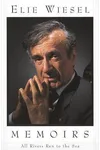
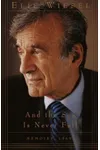
For readers who want to understand Wiesel's actual life journey beyond the pages of Night, he wrote a comprehensive, two-volume autobiography. These memoirs trace his life from his early childhood and childhood faith, through his struggles as a stateless journalist in Paris, and into his years as a global champion for human rights.
- All Rivers Run to the Sea (1995): This first volume covers his early years, his time in the concentration camps, his liberation, and his post-war reconstruction, ending with his marriage to Marion Erster Rose in Jerusalem in 1969.
- And the Sea is Never Full (1999): Picking up immediately after his marriage, this volume focuses on his career as an activist, his advocacy for Soviet Jewry, his efforts to establish the United States Holocaust Memorial Museum, and his experience receiving the 1986 Nobel Peace Prize.
Elie Wiesel's Standalone Novels
Wiesel wrote over a dozen novels that carry forward the themes of memory, theological silence, and post-war reconstruction. Many of these novels feature characters grappling with madness, forgotten history, and the moral obligations of bearing witness. Key works include:
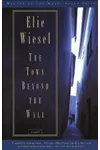
- The Town Beyond the Wall (1962/1964): A story of a survivor returning to his home town behind the Iron Curtain to confront the bystanders who watched his deportation.
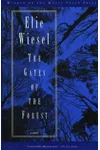
- The Gates of the Forest (1964/1966): An exploration of a young Jewish man hiding in the forests of Hungary, examining the relationship between faith, despair, and storytelling.
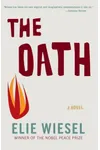
- The Oath (1973): A novel about a man who decides to break a lifelong vow of silence about the destruction of his town in order to save a young man from suicide, showing the life-giving necessity of memory.
- The Forgotten (1989/1992): A poignant novel about a Holocaust survivor who is slowly losing his memory to Alzheimer's disease and must pass his history to his son before it is completely erased.
The Jewish Encounters Series: A Collaborative Project
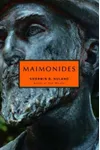
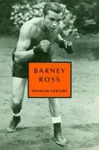
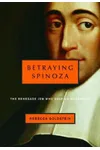
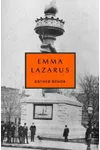
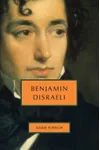
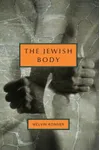
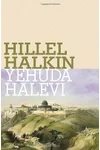
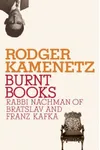
A common point of confusion in Wiesel's bibliography is the Jewish Encounters Series. This is a multi-author biography and essay series published by Schocken Books and Nextbook, edited by Jonathan Rosen. While the series includes works by authors such as Robert Pinsky, Rebecca Goldstein, and Sherwin B. Nuland, Elie Wiesel himself only wrote two books for this collection:
- Rashi (2009): Wiesel's biography of the great 11th-century French Jewish rabbi and commentator on the Talmud.
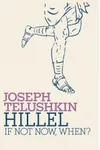
- Hillel: If Not Now, When? (2010): A study of the famous ancient sage whose teachings formed the foundation of Rabbinic Judaism.
Readers looking specifically for Wiesel's writing should seek out these two volumes rather than the entire series, which covers a vast array of topics by different writers.
What to Know Before You Start
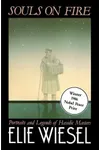
Wiesel wrote primarily in French, meaning that publication dates can vary significantly between the original French editions and their subsequent English translations. Additionally, his works frequently blur the boundary between religious study and personal narrative. In books like Souls on Fire (1972) and Messengers of God (1976), Wiesel retells Hasidic stories and biblical narratives to explore contemporary questions of suffering and faith. Approaching these works with an understanding of Jewish mysticism (Kabbalah) and Midrashic storytelling will greatly enrich your reading experience.