



Where to Start with Elizabeth Ironside
Because all of Elizabeth Ironside's novels are standalone works rather than part of a continuous series, you have complete freedom in how you approach her bibliography. However, for the best reading experience, we recommend starting with one of two entry points:
- The Acclaimed Masterpiece: Death in the Garden (1995). Widely considered her finest work, this novel is the perfect showcase of Ironside's signature dual-timeline structure, blending a 1920s cold case with a 1980s investigation. It was shortlisted for the CWA Gold Dagger and captures her elegant, literary prose at its absolute peak.
- The Award-Winning Debut: A Very Private Enterprise (1984). If you prefer to watch an author's style develop chronologically, start here. This novel won the CWA John Creasey Memorial Award (now the New Blood Dagger) for best first mystery, offering a rich look at the British diplomatic community in post-Raj New Delhi.
Elizabeth Ironside Books in Publication Order
Since the books do not share recurring detectives or overarching storylines, reading them in order of release is a satisfying way to experience her evolution as a writer. The publication order is as follows:
- A Very Private Enterprise (1984)
- Death in the Garden (1995)
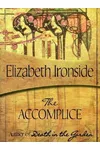
- The Accomplice (1996)
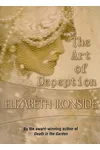
- The Art of Deception (1998)
- A Good Death (2000)
A Closer Look at the Novels
A Very Private Enterprise (1984)
Set against the backdrop of New Delhi, the plot begins with the murder of Hugo Frencham, a British civil servant found stabbed in his garden. Security officer George Sinclair is dispatched from London to quietly handle the investigation and avoid a diplomatic scandal. Sinclair soon uncovers a complex web of stolen Tibetan antiquities, hidden wealth, and espionage that challenges the polite facade of the expatriate community.
Death in the Garden (1995)
In 1925, Diana Pollexfen is tried and acquitted of poisoning her husband with her own photography chemicals at his birthday celebration. Though free, the shadow of suspicion follows her for the rest of her life. Sixty years later, her grand-niece Helena discovers Diana's personal diaries while settling her estate. Helena becomes consumed by the decades-old mystery, determined to piece together the truth behind the fateful garden party.
The Accomplice (1996)
When the skeleton of a child is discovered buried in the garden of Ashe House in Sussex, the quiet life of its elderly owner, Jean Loftus, is shattered. Jean is a woman of Russian descent with a history she has spent decades hiding. As her attorney Zita Daunsey steps in to assist, the excavation of the garden forces a reckoning with Jean's past as a refugee fleeing the turmoil of Eastern Europe during World War II. The sudden arrival of a mysterious young woman from Russia claiming to be a long-lost relative ratchets up the tension.
The Art of Deception (1998)
Nicholas Ochterlonie is an art historian whose quiet, predictable life is disrupted when his wife demands a divorce. Seeking a fresh start, Nicholas intervenes during a mugging to rescue a mysterious woman named Julian. His growing infatuation with her drags him into a high-stakes underworld of art forgery and the Russian mafia, forcing him to risk his career, safety, and reputation.
A Good Death (2000)
Set in 1944 in the immediate aftermath of the Allied liberation of France, the story follows Theo Cazalle, a member of General de Gaulle's inner circle. Returning to his family estate, Bonnemort, Theo is met with devastation: his home is pillaged, a loyal servant has been shot, his wife has had her head shaved as an accused Nazi collaborator, and the naked corpse of an SS officer lies on the front steps. Theo must navigate the volatile factions of the post-liberation French Resistance to find the truth.
What to Know Before You Start
Elizabeth Ironside is the pen name of Lady Catherine Manning. Her real-life experiences deeply influenced her writing. As a trained historian with an Oxford PhD and the wife of prominent British diplomat Sir David Manning (who served as Ambassador to the United States), she spent years living in international locations like Poland, India, Russia, and the United States. This global diplomatic perspective infuses her settings with remarkable detail and authenticity.
Readers should note that Ironside's novels are not fast-paced, formulaic whodunnits. Instead, they are slow-burn psychological mysteries that focus heavily on memory, historical trauma, and the impact of the past on the present. If you enjoy the literate prose of P.D. James, the psychological depth of Ruth Rendell, or intricate historical puzzles, Elizabeth Ironside's works are highly rewarding.