

Where to Start Reading Elizabeth Jane Howard
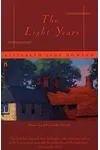
If you are new to Elizabeth Jane Howard, the best starting point depends on whether you want to commit to a sweeping historical series or prefer a single, self-contained story. For the ultimate Howard experience, begin with The Light Years, the first volume of her famous Cazalet Chronicles. It serves as the perfect introduction to her signature style: multi-generational family perspectives, sharp social observations, and rich emotional complexity.
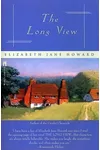
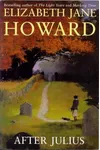
If you prefer a standalone novel to test the waters, we highly recommend starting with The Long View (1956). This masterpiece structural marvel dissects the history of a marriage backward in time, beginning with its cold, disintegrating present in the 1950s and tracing it back to the hopeful innocence of the couple's first meeting in the 1920s. Another brilliant standalone starting point is After Julius (1965), which explores family secrets and emotional recovery over a single weekend fifteen years after the death of the family patriarch at Dunkirk.
The Cazalet Chronicles Reading Order
The Cazalet Chronicles is Howard's crowning achievement, following the upper-middle-class Cazalet family from the tense pre-war atmosphere of 1937 through the aftermath of World War II and the social transformations of the mid-20th century. The books must be read in their chronological publication order, as they follow a continuous timeline and build directly upon the developments, relationships, and trauma of the preceding volumes.
Here is the recommended reading order for the original series written by Elizabeth Jane Howard:
- The Light Years (1990) – Sets the stage in the summers of 1937 and 1938 at the family's Sussex estate, Home Place, capturing the innocence of peace just before the outbreak of World War II.
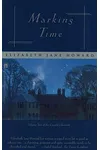
- Marking Time (1991) – Covers the early years of the war (1939–1941) as the family adjusts to rationing, air raids, and the psychological weight of conflict.
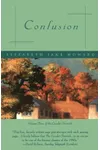
- Confusion (1993) – Focuses on the later years of the war (1942–1945), charting the personal growth, disruptions, and romantic dilemmas of the younger Cazalet women.
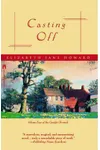
- Casting Off (1995) – Explores the immediate post-war period (1945–1947) as the family attempts to rebuild their lives, face structural changes, and navigate newfound independence.
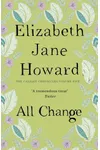
- All Change (2013) – Published nearly two decades after the fourth book, this final volume leaps forward to the late 1950s (1956–1958) to depict the decline of the family estate and the rise of a new generation.
A New Era: The Cazalet Legacy Continued
In exciting news for fans of the saga, the Cazalet family story is set to expand. Elizabeth Jane Howard's niece, the acclaimed novelist Louisa Young, has been commissioned to write three new books in the series. The first continuation, titled The Golden Hours, is scheduled for publication in September 2026. This sixth volume will pick up the narrative in December 1962, tracking the family as they enter the cultural shifts of the 'Swinging Sixties.'
Publication Order of Standalone Novels
While the Cazalet Chronicles brought Howard mainstream fame later in life, she was a highly respected writer of standalones for decades. These novels are brilliant studies of mid-century British class dynamics, marital discord, and female agency. They can be read in any order, but reading them in publication order showcases her growth as a writer:
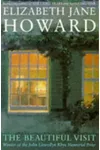
- The Beautiful Visit (1950) – Howard's debut novel, which won the John Llewellyn Rhys Prize, tells the story of an teenage girl finding her identity during the Edwardian era and World War I.
- The Long View (1956) – Her innovative, reverse-chronological look at the decay of a marriage.
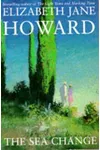
- The Sea Change (1959) – A story about a playwright, his wife, and the young woman who alters their domestic dynamic during travels to New York and Greece.
- After Julius (1965) – A compact family drama exploring the long shadows cast by the heroics and tragedies of World War II.
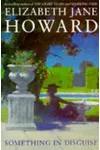
- Something In Disguise (1969) – A satirical, darkly funny look at stepfamilies, bad marriages, and the search for happiness.
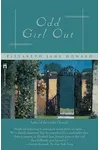
- Odd Girl Out (1972) – An exploration of sexual liberation and relationships, focusing on a young woman who disrupts the conventional marriage of an intellectual couple.
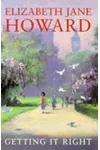
- Getting It Right (1982) – A heartwarming, witty comedy of manners centered on Gavin, a shy 31-year-old London hair stylist seeking connection. (Note: Some modern databases erroneously list the publication year as 1998 due to later reprint licenses, but the book was originally published in 1982 and adapted into a film in 1989.)
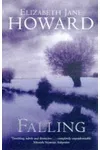
- Falling (1999) – A suspenseful, chillingly realistic portrayal of a sophisticated older woman targeted by a charming con artist.
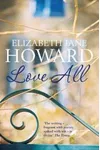
- Love All (2008) – A gentle, late-career novel exploring art, garden restoration, and romance in a quiet English community.
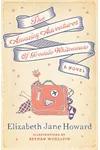
- The Amazing Adventures of Freddie Whitemouse (2017) – A charming children's story published posthumously.
Short Stories and Ghost Story Collaborations
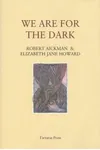
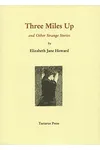
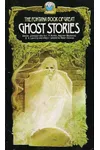
Howard also ventured into short fiction, including a notable contribution to the genre of supernatural literature. In 1951, she collaborated with her romantic partner at the time, the legendary ghost story writer Robert Aickman, on the collection We Are for the Dark. The book contained six stories, with each contributing three. Howard wrote the celebrated tales 'Three Miles Up,' 'Left Luggage,' and 'Perfect Love.' Her eerie fiction was later compiled alongside other tales in posthumous editions like Three Miles Up and Other Strange Stories (2003).
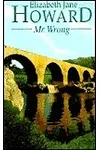
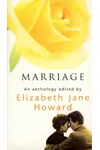
Her traditional short stories are collected in Mr. Wrong (1973) and the themed volume Marriage (1998).
What to Know Before You Start
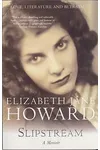
Elizabeth Jane Howard's writing is deeply rooted in her own lived experiences. She was home-educated, worked in various wartime jobs, and survived three marriages (including a turbulent union with writer Kingsley Amis, making her the stepmother to Martin Amis). Understanding this context helps readers appreciate the raw emotional authenticity in her books. The struggles of her female characters with money, independence, emotional neglect, and wartime duties are reflections of the barriers she faced in her own life.
Her works have been widely adapted. The BBC produced a six-part television miniseries, The Cazalets, in 2001, which adapted the first two novels. Later, BBC Radio 4 adapted all five novels into a massive 45-part radio drama broadcast between 2012 and 2014, which remains a favorite companion piece for readers. Additionally, Howard wrote the screenplays for the film adaptations of her novels Getting It Right (released in 1989) and Falling (released in 2005).