














Where to Start Reading Elizabeth von Arnim
Elizabeth von Arnim (born Mary Annette Beauchamp) did not write long, complex fantasy universes, but her extensive bibliography of over twenty books spans multiple tones, formats, and themes. To get the best experience, we recommend choosing a starting point based on the mood you are looking for:
- For Pure Delight & Escape: Start with The Enchanted April (1922). It is her most famous and beloved novel, following four very different Englishwomen who rent a medieval Italian castle to escape their dreary lives and dull marriages. It is warm, funny, and optimistic.
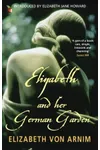
- For Her Signature Gardening Wit: Start with Elizabeth and Her German Garden (1898). This semi-autobiographical debut established her literary voice, showcasing her love for nature, independence, and her humorous toleration of her husband, whom she calls "The Man of Wrath."
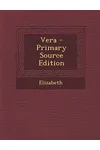
- For Dark Psychological Drama: Start with Vera (1921). Inspired by her disastrous marriage to Earl Francis Russell, this novel is a chilling, Gothic-tinted study of coercive control and domestic abuse. It is a masterpiece of dark humor and suspense, frequently compared to Daphne du Maurier's Rebecca.
The "Elizabeth" Garden Series
While the vast majority of her books are standalones, Elizabeth von Arnim's first three major works function as a loose, semi-autobiographical trilogy featuring the same narrator, "Elizabeth." If you want to follow her gardening adventures and domestic reflections, read them in this order:
- Elizabeth and Her German Garden (1898) – Introduces her beautiful garden at the Nassenheide estate, her three young children, and her dry domestic observations.
- The Solitary Summer (1899) – A direct continuation of her quiet, happy life in the garden, detailing a summer of deliberate isolation and peace.
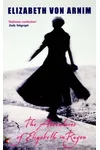
- The Adventures of Elizabeth in Rügen (1904) – A fictionalized travelogue where Elizabeth takes a caravan trip around the Baltic island of Rügen, filled with eccentric encounters and humorous observations of local tourists.
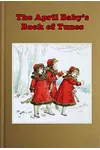
The Companion Children's Book: If you are a completionist, you can also look for The April Baby's Book of Tunes (1900). This charming children's book features the three babies from the garden books (named April, May, and June) and includes nursery rhymes illustrated by Kate Greenaway.
Original Chronological Publication Order
Modern online databases and digital reprint editions often list incorrect publication dates for Elizabeth's books (e.g., listing Vera as a 2013 book or The Enchanted April as a 2022 book due to reissue copyrights). Reading her novels in their original chronological order allows you to witness her growth from an anonymous satirical observer to a powerful social critic.
- Elizabeth and Her German Garden (1898)
- The Solitary Summer (1899)
- The April Baby's Book of Tunes (1900) – Children's book
- The Benefactress (1901) – A young Englishwoman inherits a German estate and tries to use it for charity, with comedic results.
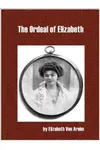
- The Ordeal of Elizabeth (1901) – Note: This work is considered apocryphal. While frequently attributed to her in libraries, she never formally claimed it, and scholars debate its authenticity.
- The Adventures of Elizabeth in Rügen (1904)
- The Princess Priscilla's Fortnight (1905) – A runaway princess tries to live a simple cottage life in an English village.
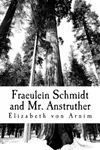
- Fräulein Schmidt and Mr. Anstruther (1907) – An epistolary novel exploring a woman's intellectual growth and independence after a broken engagement.
- The Caravaners (1909) – A satirical look at a Prussian military officer and his long-suffering wife on a holiday caravan tour in England.
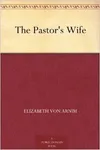
- The Pastor's Wife (1914) – A young Englishwoman marries a Prussian pastor and struggles to adapt to remote rural life.
- Christine (1917) – Written under the pseudonym Alice Cholmondeley, this epistolary novel details a young music student's life in Germany on the eve of World War I.
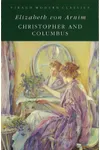
- Christopher and Columbus (1919) – Follows teenage Anglo-German twin sisters who are sent to America during the war to escape prejudice.
- In the Mountains (1920) – An anonymous epistolary novel about three women recovering from war-related grief in a Swiss chalet.
- Vera (1921)
- The Enchanted April (1922)
- Love (1925) – A sharp, bittersweet novel addressing the societal double standards surrounding an age-gap romance between an older widow and a younger man.
- Introduction to Sally (1926) – A comedic farce about a girl so beautiful that her husband tries to hide her from the world.
- Expiation (1929) – A dark satire focusing on a wife's public disgrace and family hypocrisy in suburban London.
- Father (1931) – A daughter attempts to establish her own life after her domineering father unexpectedly remarries a younger woman.
- The Jasmine Farm (1935) – A comedy of manners examining the social panic and fallout of a quiet affair.
- All the Dogs of My Life (1936) – An autobiographical memoir framed around the many dogs she owned throughout her life, detailing her marriages and career.
- Mr. Skeffington (1940) – Her final novel, tracking a aging society beauty who, after a series of health crises, begins to re-evaluate the husband she divorced years ago.
What to Know Before You Start
Elizabeth von Arnim was a master of biting wit, but her books also contain strong feminist undercurrents. She frequently wrote about domestic confinement, marriage as a trap, and the healing power of nature. When reading her works, keep in mind that they are products of their time, but their emotional honesty and sharp observation of human vanity remain incredibly modern. Most of her books stand completely on their own, allowing you to sample her novels in whatever order best fits your reading taste.