






















Where to Start with Ellen Kushner
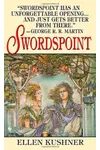
If you are new to Ellen Kushner's work, there is one undisputed entry point: Swordspoint (1987). This novel single-handedly pioneered the "mannerpunk" (fantasy of manners) subgenre. Instead of epic quests, dark lords, and high magic, Swordspoint drops readers into a gritty, nameless city where noble houses fight their wars not with spells or armies, but with political scandal, drawing-room gossip, and hired duelists. It is sharp, witty, features pioneering queer romance, and serves as the perfect introduction to Kushner's style.
From there, you have a choice. You can either follow the publication order of the main novels or dive into the chronological timeline, which includes a collaborative prequel series and various short stories. Below, we break down both paths so you can decide how to experience the world of Riverside.
The World of Riverside: Reading Orders
Option 1: Publication Order (Recommended)
Reading in publication order allows you to see how Kushner's vision of the city and its social structure evolved over two decades. It also lets you experience the core trilogy as it was released before expanding into prequels and side stories.
- Swordspoint (1987) – The novel that introduces the master swordsman Richard St. Vier and his brilliant, volatile companion Alec.
- The Fall of the Kings (2002) – Co-written with Delia Sherman, this novel takes place roughly 60 years after the events of Swordspoint, focusing on the generation-defining clash between the city's academic university and its older, magical history.
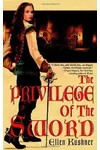
- The Privilege of the Sword (2006) – Set about 15 years after Swordspoint (and thus chronologically preceding The Fall of the Kings). It follows Katherine, a young woman forced by her eccentric uncle, the Mad Duke of Tremontaine, to learn the art of the sword.
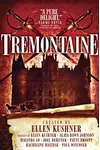
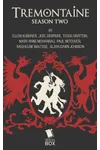
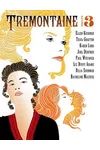
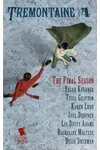
- Tremontaine (2015–2018) – A collaborative, serialized prequel that runs for four seasons (51 episodes total).
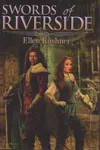
Note: Swords of Riverside (2006) is a compilation release containing both Swordspoint and The Privilege of the Sword, which can be a convenient way to purchase the first two chronological novels.
Option 2: Chronological Order
If you prefer to follow the history of the city of Riverside from its ancestral roots up through its future, you should read the stories chronologically. This path places the collaborative prequel series first, followed by the novels and associated short fiction:
- Tremontaine (Seasons 1–4) – Set roughly 15 to 20 years before Swordspoint, this collaborative project details the rise of the Tremontaine family, the introduction of chocolate to the city, and the political intrigue of the previous generation.
- "A Wild and a Wicked Youth" (Short Story) – A prequel story focusing on a young Richard St. Vier arriving in the city and finding his footing.
- Swordspoint (1987) – The anchoring "Year 0" novel of the setting.
- "The Man with the Knives" (Short Story/Novella) – A close tie-in to the events of Swordspoint, following a healer and a mysterious swordsman.
- "The Duke of Riverside" (Short Story) – A story published in the Naked City anthology that expands on the setting.
- The Privilege of the Sword (2006) – Set 15 years after Swordspoint.
- The Fall of the Kings (2002) – Set roughly 60 years after Swordspoint.
Other short stories set in this universe, such as "The Witch in the Wood" and "The Tragedy of King Alexander the Stag" (both written by Delia Sherman), expand the mythos of the world and can be read at any point after finishing Swordspoint.
The Standalone Novels & Audio Dramas
Beyond Riverside, Kushner has written celebrated standalone fantasy novels and boundary-pushing audio productions. These can be read completely independently of her other books:
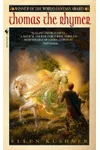
- Thomas the Rhymer (1990) – Reimagining the traditional Scottish ballad of a harper abducted by the Queen of Elfland, this novel won both the World Fantasy Award and the Mythopoeic Award. It is a beautiful, lyrical entry point for readers who prefer folklore and traditional fairy tales over urban intrigue.
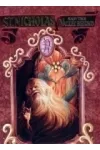
- St. Nicholas and the Valley Beyond: A Christmas Legend (1994) – A family-friendly, richly illustrated holiday fable.
- The Golden Dreydl (2007) – A Hanukkah fantasy novel adapted from Kushner's unique live performance with the Shirim Klezmer Orchestra. It follows a young girl named Sara on a magical journey through Jewish folklore, featuring King Solomon and the Queen of Sheba.
- The Witches of Lublin (2011) – A high-energy, award-winning musical audio drama co-written with Yale Strom and Elizabeth Schwartz. Set in 18th-century Eastern Europe, it follows a family of Jewish women klezmer musicians navigating dangerous political waters.
Clearing Up the Choose Your Own Adventure Catalog
Many online book databases and retail sites list Ellen Kushner as the author of nearly two hundred entries in the famous Choose Your Own Adventure series. This is a common cataloging error resulting from automated data scraping. In reality, Kushner worked as an editor in New York during the 1980s and wrote exactly five books for the original Choose Your Own Adventure line. If you are looking to collect her contributions to this interactive series, here are the actual titles she penned:
- Outlaws of Sherwood Forest (Book #47, 1985)
- The Enchanted Kingdom (Book #56, 1986)
- Statue of Liberty Adventure (Book #58, 1986)
- Mystery of the Secret Room (Book #62, 1986)
- Knights of the Round Table (Book #86, 1988)
Anthologies and Shared Worlds
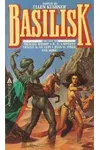
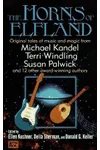
Kushner has also left a lasting mark as an editor and a key contributor to shared-world fantasy. She was one of the early contributors to Terri Windling’s famous Borderland (Bordertown) series, writing short stories for early anthologies like Bordertown (1986) and Life on the Border (1991). Decades later, she co-edited the revival anthology Welcome to Bordertown (2011) alongside Holly Black. Additionally, she edited the solo anthology Basilisk (1980) and co-edited the music-themed anthology The Horns of Elfland (1997) with Delia Sherman and Donald G. Keller.