
How to Read Ellen Marie Wiseman’s Novels
Ellen Marie Wiseman is a New York Times and USA Today bestselling author renowned for her meticulously researched, emotionally intense historical fiction. Because all of her books are written as standalones, there is no single "correct" reading order. Each novel features a distinct set of characters, settings, and historical challenges.
Depending on your reading style, you can approach her bibliography in one of two main ways: by publication order, which allows you to watch her style evolve, or by chronological order, which traces a timeline of historical events from the early 20th century through the late 1990s.
Ellen Marie Wiseman Books in Publication Order
Reading in publication order is a popular choice for fans who want to experience the author's catalog as it was introduced to the world. Below is the complete list of her standalone novels in order of release:
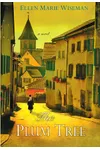
- The Plum Tree (2012) – Wiseman's debut novel is set in World War II Germany, following a young German woman named Christine who risks everything to hide her Jewish lover, Isaac, from the Gestapo.
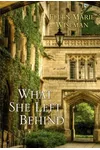
- What She Left Behind (2013) – A dual-timeline story that connects Clara, a young woman wrongfully committed to the Willard State Asylum in 1929, with Izzy, a modern-day foster teenager in 1995 who discovers Clara’s old suitcases.
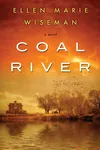
- Coal River (2015) – Set in a Pennsylvania mining town in 1912, this novel follows Emma Malloy as she confronts the horrific realities of child labor in the local coal mines.
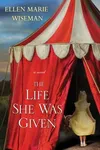
- The Life She Was Given (2017) – This novel weaves between 1931 and 1956, centering on Lilly, a girl hidden away in her mother's attic who is sold to a traveling circus, and Julia, who inherits the family farm decades later and uncovers long-buried secrets.
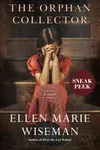
- The Orphan Collector (2020) – A story set against the devastating backdrop of the 1918 Spanish Flu pandemic in Philadelphia, focusing on a young German immigrant girl named Pia who tries to keep her family safe amid chaos and opportunists.
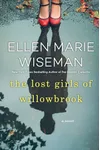
- The Lost Girls of Willowbrook (2022) – Inspired by the real-life horrors of the Willowbrook State School on Staten Island, the novel follows Sage Winters as she searches for her missing twin sister and is mistakenly institutionalized.
- The Lies They Told (2025) – Set in 1930s Virginia, this novel explores the dark history of the American eugenics movement through the perspective of an immigrant mother struggling to protect her family.
Chronological Order of Historical Settings
For readers who prefer to move sequentially through history, Wiseman's books can be mapped by their historical settings. Because several of her novels use dual-timeline structures, some books span multiple eras. Here is how they align chronologically by their primary historical periods:
- Coal River (Primary setting: 1912)
- The Orphan Collector (Primary setting: 1918)
- What She Left Behind (Historical timeline: 1929)
- The Lies They Told (Primary setting: 1930s)
- The Life She Was Given (Historical timeline: 1931)
- The Plum Tree (Primary setting: late 1930s to mid-1940s)
- The Life She Was Given (Later timeline: 1956)
- The Lost Girls of Willowbrook (Primary setting: 1971)
- What She Left Behind (Later timeline: 1995)
Where to Start Reading
If you are new to Ellen Marie Wiseman's work, deciding where to start depends on your historical interests. However, two of her novels are widely considered the best entry points by readers and book clubs:
The Orphan Collector
This novel is highly praised for its raw emotional intensity and historical relevance. Set during the 1918 flu pandemic, it delivers a gripping look at survival, grief, and resilience. It serves as an excellent introduction to Wiseman's ability to paint vivid, harrowing historical backdrops populated by deeply sympathetic characters.
What She Left Behind
For readers who enjoy mysteries and dual timelines, this book is an ideal starting point. The discovery of abandoned suitcases at a real-life shuttered asylum frames a heart-wrenching look at psychiatric institutionalization in the early 20th century. It highlights Wiseman's signature themes of social injustice and female resilience.
What to Know Before You Start
Wiseman’s novels do not shy away from the dark and painful chapters of human history. Her stories frequently deal with heavy themes, including abuse, child exploitation, the horrors of the Holocaust, forced institutionalization, and systemic medical injustice. While her books are emotionally demanding, they are ultimately stories of survival, hope, and the strength of the human spirit. Readers looking for discussion guides will find that most of Wiseman's novels include official book club questions at the end of the text, making them excellent choices for group reading.