



Where to Start Reading Ellen Raskin
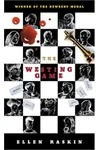
If you are looking to dive into the brilliant, puzzle-packed world of Ellen Raskin, the absolute best starting point is her masterpiece, The Westing Game. Published in 1978, this Newbery Medal-winning mystery is widely considered one of the greatest children's mysteries ever written. Its intricate puzzle, large cast of memorable, eccentric characters, and layers of wordplay make it a thrilling read for both first-time readers and adults. It serves as the perfect introduction to Raskin's unique storytelling style, which treats the reader not just as an observer, but as a active co-detective.
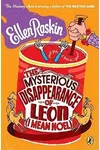
However, if you prefer to build up to her most complex work, starting with her debut novel, The Mysterious Disappearance of Leon (I Mean Noel) (1971), is a wonderful alternative. It is lighter and introduces Raskin's signature use of visual clues, typography, and wordplay in a slightly simpler, more slapstick mystery. By beginning here, you can watch her craft evolve book by book, culminating in the dazzling complexity of her final published novel.
Ellen Raskin's Novels in Publication Order
Ellen Raskin wrote four completed children's novels. Each of these books is a standalone work set in its own unique universe with a separate cast of characters. While they do not share a continuity, reading them in order of publication offers a fascinating look at how Raskin refined her visual and narrative puzzle techniques over the course of the 1970s.
- The Mysterious Disappearance of Leon (I Mean Noel) (1971): Raskin’s first novel is a wild, slapstick adventure. Married as children in an arranged union to secure a soup company partnership, Caroline "Little Dumpling" Fish and Leon Carillon are immediately separated. Decades later, they reunite, only for Leon (now calling himself Noel) to fall overboard during a storm. His final, water-logged words—"Noel (glub) see (blub) all... I (glub) new..."—become a puzzle that Caroline spends the next twenty years trying to decode with the help of her adopted twins and a childhood friend.
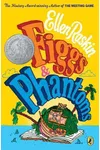
- Figgs & Phantoms (1974): Earning Raskin a Newbery Honor, this surreal and slightly dark comic novel is set in the eccentric town of Pineapple. The story follows Mona Lisa Figg Newton and her bizarre family of former vaudevillians. When her beloved Uncle Florence, a book dealer, passes away (or "departs for Capri," the family's mythical afterlife), Mona goes on a quest to find him, navigating a series of literary, musical, and historical clues.
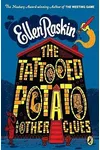
- The Tattooed Potato and Other Clues (1975): Set in Greenwich Village, this book follows seventeen-year-old art student Dickory Dock, who becomes an assistant to the mysterious portrait painter Garson. Dickory is quickly pulled into a series of six distinct detective cases where Garson helps the NYPD by sketching suspects under the alias "Inspector Noserag" (with Dickory acting as "Sergeant Kod"). The individual mysteries slowly unravel a larger, overarching secret about Garson's past.
- The Westing Game (1978): Raskin's crowning achievement. When eccentric paper millionaire Samuel W. Westing dies, sixteen unlikely heirs are brought to Sunset Towers on Lake Michigan. They are divided into eight pairs, given $10,000 and a set of cryptic clues, and tasked with solving Westing's murder. The heir who solves the puzzle inherits his massive $200 million fortune.
The "Unpublished" Mystery: A Murder for Macaroni and Cheese
If you look at online library catalogs or database sites like Goodreads, you might spot a fifth novel listed under Ellen Raskin's name: A Murder for Macaroni and Cheese, often carrying a publication date around 2010 or 2011. It is important for readers to know that this book has never been published.
At the time of her death in 1984, Raskin left behind an unfinished manuscript for this mystery, which she wrote in a style highly reminiscent of The Westing Game. The story is set in the resort town of Grouse Lake, Wisconsin, and revolves around a librarian named Madie "Macaroni" Rooney and her assistant, Chessa "Cheese" Plotz, as they investigate local crimes. In early 2025, International Literary Properties (ILP) acquired the Ellen Raskin estate and revealed that the manuscript was nearly complete, though the latter half was in a sketched-out state. The estate is actively searching for a middle-grade author to collaborate and polish the manuscript for a future posthumous release, alongside an unnamed, unfinished sequel to The Westing Game also found in Raskin's archives.
Ellen Raskin's Illustrated Picture Books
Before finding success as a novelist, Ellen Raskin was an exceptionally accomplished commercial illustrator and graphic designer. She designed dust jackets for over one thousand books—most famously the iconic first edition cover of Madeleine L'Engle's classic A Wrinkle in Time. She also wrote and illustrated ten of her own picture books. While geared toward younger readers, these books showcase the same visual wit, detail-oriented design, and playful spirit that define her novels.
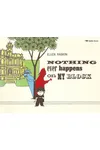
- Nothing Ever Happens on My Block (1966): Raskin's picture book debut. A boy named Chester Filbert sits on a curb complaining about how boring his street is, entirely oblivious to the chaotic dramas unfolding directly behind him, including a bank robbery, a house fire, and emerging monsters.
- Spectacles (1968): A clever and funny look at a young girl named Iris Fiddlegimp, who sees bizarre creatures (like fire-breathing dragons and giant red weeds) everywhere until she finally visits the optometrist and gets glasses.
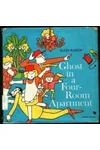
- Ghost in a Four-Room Apartment (1969): A chaotic, double-narrative picture book detailing a family gathering and the playful ghost who is busy making a mess of the apartment.
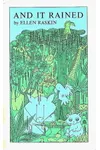
- And It Rained (1969): Three animals—a pig, a parrot, and a mouse—try to enjoy a proper afternoon tea in the rain forest, but the persistent downpour keeps ruining their biscuits and tea.
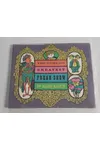
- The World's Greatest Freak Show (1971): The story of Alastair Plum, an incredibly vain man who travels to a country where everyone has three eyes or double mouths. Because Alastair only has a standard two eyes and one nose, he becomes the star attraction of their freak show.
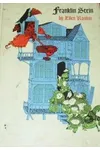
- Franklin Stein (1972): A young boy named Franklin builds an unusual creature named Fred out of everyday household junk, which is met with horror by the neighbors until Fred is judged at an art show.
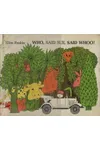
- Who, Said Sue, Said Whoo? (1973): A rhythmic, cumulative rhyming book where a girl named Sue goes on a drive and tries to match various animal sounds to the creatures making them.
- Moe Q. McGlutch, He Smoked Too Much. (1973): A humorous, cautionary picture book about a man whose excessive smoking habit leads to a series of funny and disastrous consequences.
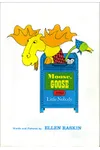
- Moose, Goose and Little Nobody (1974): A charming story about a moose and a goose who help a small, red, nameless animal find his mother, his home, and his identity.
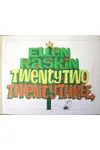
- Twenty-two, Twenty-three (1976): A visually detailed, rhyming puzzle book featuring a mouse traveling through various holiday scenes to reach a spectacular animal party.
What to Know Before You Start: Tone and Caveats
Raskin's novels are productively challenging. Unlike traditional mystery writers who present clues purely through text, Raskin was a visual artist first. She integrated typography, diagrams, puzzles, and hidden clues directly into the physical layout of her books. When reading her work, it is highly recommended to read a physical print copy or a high-quality digital layout. Standard text-only e-book reflows can sometimes obscure the wordplay, column alignments, and typographic clues that she meticulously designed.
Additionally, her tone is highly eccentric and sometimes surreal, blending lighthearted slapstick with deeper, poignant themes of family dysfunction, loneliness, and search for identity. Readers should expect characters with highly unusual names (like Dickory Dock or Mona Lisa Figg Newton) and bizarre habits, which all contribute to the whimsical, game-like atmosphere of her worlds. The books can be read completely independently, so feel free to choose whichever mystery premise sparks your curiosity first!