
Where to Start Reading Ellen Ullman
If you want to understand the human soul behind the digital revolution, Ellen Ullman is your perfect guide. A pioneer who worked as a software engineer for two decades starting in the late 1970s, Ullman writes about technology with the raw, lived experience of someone who built systems before the world wide web existed. Her writing splits cleanly into two categories: her legendary, prophetic tech memoirs and her atmospheric, psychologically complex novels. Since her books are not serialized, you do not need to follow a strict chronological storyline, but grouping them by category yields the best reading experience.
The Tech Memoir Path (Highly Recommended)
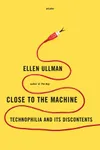
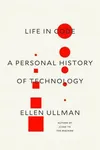
For the most direct introduction to Ullman's voice, we recommend starting with her landmark memoir, Close to the Machine: Technophilia and Its Discontents (1997). This book captures the late-90s dot-com boom with lyrical, intimate prose. Once you have finished it, leap forward twenty years to its spiritual sequel, Life in Code: A Personal History of Technology (2017). Together, these two books track the evolution of technology and San Francisco over two decades, showing how early programming romanticism shifted into the corporate, AI-dominated landscapes of the modern era.
The Fiction Path
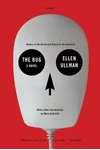
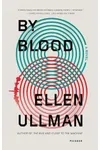
If you prefer narrative fiction, start with The Bug (2003). It is a gripping psychological thriller about a programmer's descent into obsession over an elusive, near-impossible-to-reproduce software glitch. After that, you can dive into By Blood (2012), a dark, claustrophobic historical novel set in San Francisco during the 1970s. It steps away from technology entirely, focusing on identity, memory, and adoption secrets.
Ellen Ullman Books in Publication Order
Reading Ellen Ullman's books in order of their release allows you to watch her transition from documenting the active frontlines of coding to experimenting with psychological fiction, and finally returning to look back at the tech industry with decades of hindsight.
- Close to the Machine: Technophilia and Its Discontents (1997) — Non-Fiction / Memoir
- The Bug (2003) — Standalone Novel
- By Blood (2012) — Standalone Novel
- Life in Code: A Personal History of Technology (2017) — Non-Fiction / Essay Collection
Anthologies and Key Essays
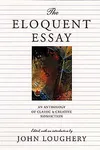
- Space Is Numeric in The Eloquent Essay: An Anthology of Classic & Creative Nonfiction (2000) — This widely anthologized piece originally served as the opening chapter of her 1997 memoir, capturing the peculiar physical and spatial isolation of the computer programmer.
Deep Dive into the Works
Close to the Machine (1997)
Ullman's debut memoir is a cult classic that humanizes the abstract world of coding. Written during the dawn of the internet age, she explores what it means to coexist with machines and how programming alters the human mind. She writes candidly about being one of the few women in a heavily male-dominated field, addressing isolation, the drive for technological perfection, and the early signs of societal disconnection.
The Bug (2003)
Set in 1984 against the backdrop of the early personal computer era and the launch of the Macintosh, this novel revolves around Ethan Levin, a coder driven mad by a mysterious, intermittent software bug nicknamed "The UI." As Ethan's life unravels, a young quality assurance tester named Roberta Walton tries to help him trace the error. It is a brilliant, tense examination of the psychological toll of logical engineering and human obsession.
By Blood (2012)
A departure from her usual tech themes, this historical novel is set in San Francisco in the 1970s. It follows a disgraced professor who rents an office next to a therapist. Through the thin walls, he becomes obsessed with the sessions of a young woman trying to uncover the truth about her adoption and her birth parents. It is a slow-burn, atmospheric story exploring biological inheritance and psychological projection.
Life in Code (2017)
This collection of essays serves as the bookend to Close to the Machine. Spanning the years 1994 to 2017, Ullman documents the cultural shifts in Silicon Valley. She observes the rise of algorithms, the erosion of personal privacy, the return of rampant sexism in tech startups, and how the quirky, anti-establishment hacker culture of the 70s and 80s was replaced by corporate tech giants.
What to Know Before You Start
Ullman holds a B.A. in English from Cornell University, which heavily influences her style. Unlike many technical writers, her prose is deeply lyrical, introspective, and emotional. When reading her memoirs, remember that she was writing about the dangers of internet isolation and corporate data gathering long before social media and modern smartphones even existed. Her warnings about the erosion of human connection feel remarkably prophetic today.