

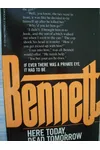

How to Read the Fred Bennett Detective Novels
Before transitioning into detective fiction, Elliott Lewis was widely celebrated as "Mr. Radio," working as an actor, writer, producer, and director during the golden era of American broadcasting. When he turned his talents to the typewriter in his sixties, he brought a master's sense of pacing, crisp dialogue, and atmospheric tension to the page. The result was the Fred Bennett series: seven tight, cynical, and hard-edged paperback originals published between 1980 and 1983.
Fred Bennett is a classic noir protagonist—a "crusty" and bitter former LAPD officer who works unlicensed, drives a battered Buick, and frequently struggles to stay afloat financially. Unlike the upbeat heroes of standard action paperbacks, Bennett's world is one of compromise, lingering attachment to his ex-wife Polly, and a complicated relationship with the police force that discarded him.
Recommended Starting Point
For the best reading experience, we recommend starting with the first published book, Two Heads Are Better (1980). Reading in publication order allows you to meet Bennett as a fully formed, cynical investigator before later taking a step back in time with the prequel, Bennett's World, to see how he became so jaded. However, if you prefer a straight chronological narrative, starting directly with the prequel is a perfectly valid alternative path.
The Fred Bennett Books in Publication Order
If you want to experience the series exactly as it hit the drugstores and paperback racks in the early 1980s, follow this order:
- Two Heads Are Better (1980) – Introduces the unlicensed, bitter private investigator Fred Bennett as he navigates the dark underbelly of Los Angeles.
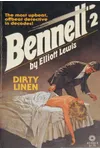
- Dirty Linen (1980) – A fast-paced mystery that cements Bennett's status as a street-level investigator who takes on the jobs official channels won't touch.
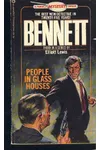
- People in Glass Houses (1981) – Bennett deals with fragile reputations and hidden secrets in a classic case of blackmail and deception.
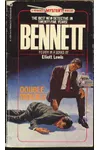
- Double Trouble (1981) – A complex investigation that showcases Lewis's radio-honed ability to write sharp, rapid-fire dialogue.
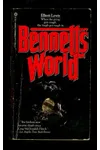
- Bennett's World (1982) – The crucial prequel of the series, showing Fred's final days on the police force, the collapse of his marriage, and the events that led to his firing.
- Here Today, Dead Tomorrow (1983) – A suspenseful race against time that tests Bennett's remaining connections on the force.
- Death and the Single Girl (1983) – The final installment in the series, nominated for a Shamus Award, which brings his personal and professional lives into a dangerous collision.
The Chronological Reading Order
Because the fifth book published is a prequel, reading the series chronologically gives you a different perspective on Bennett's character development, tracing his transition from an LAPD cop to a cynical private citizen. Here is the chronological sequence:
- Bennett's World (1982) – Start here to see Fred Bennett as an active LAPD officer, witnessing the personal and professional pressures that ultimately break him.
- Two Heads Are Better (1980) – Pick up here as Fred begins his new, struggle-filled life as an unlicensed investigator.
- Dirty Linen (1980)
- People in Glass Houses (1981)
- Double Trouble (1981)
- Here Today, Dead Tomorrow (1983)
- Death and the Single Girl (1983)
What to Know Before You Start
To get the most out of Elliott Lewis's novels, it helps to understand the context in which they were written and marketed:
- The Radio Connection: Lewis was involved in legendary radio productions like Suspense, Broadway Is My Beat, and The Adventures of Sam Spade. This background is evident in his writing style, which relies heavily on tight scene transitions and evocative sensory descriptions.
- Recurring Characters: While Bennett is a loner, two characters recur throughout the series to anchor his world. The first is Polly, his glamorous ex-wife for whom he still carries a torch. The second is Rufus Drang, Fred's former LAPD partner who has risen to Captain of Detectives and frequently uses Fred to handle unofficial, high-stakes investigations.
- Marketing Caveats: When first released by Pinnacle Books, these novels were sometimes marketed with cover art and numbers suggesting standard "men's adventure" action. In reality, they are traditional, character-driven hardboiled detective mysteries.