








Where to Start Reading Elswyth Thane
For readers new to Elswyth Thane, there are two ideal paths depending on your taste. If you want to commit to a sweeping, multi-generational family saga, the absolute best starting point is Dawn's Early Light (1943), the first volume of her famous seven-book Williamsburg series. If you prefer a standalone novel to sample her style, her most famous and beloved single book is Tryst (1939), a hauntingly beautiful supernatural romance about a young woman who falls in love with the ghost of a British intelligence officer in an English country house.
The Williamsburg Series: Reading Order and Chronology
The Williamsburg series (sometimes referred to as the Women of Williamsburg or Williamsburg Novels) is Thane's signature achievement. The books follow the interconnected Day and Sprague families across nearly 170 years of history. The chronological order of the story line aligns perfectly with the order of publication, making it highly recommended to read them in the sequence they were written.
While the local database lists Dawn's Early Light as published in 1934, reliable historical records confirm it was published in 1943, initiating the series during the height of World War II. Here is the recommended reading order for the saga:
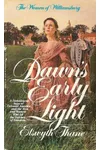
- Dawn's Early Light (1943): Set between 1774 and 1781, this novel introduces Julian Day, a young English schoolmaster who arrives in Virginia on the eve of the American Revolution. As he aligns with the revolutionary cause, he finds himself deeply involved with the aristocratic Sprague family and a young orphan named Tibby Mawg.
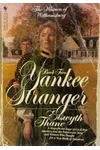
- Yankee Stranger (1944): Set during the American Civil War (1860–1865), the story focuses on Eden Day—the great-granddaughter of Julian Day—who falls in love with Cabot Murray, a wounded Union journalist and spy trapped in Confederate Williamsburg.
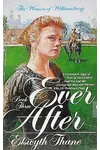
- Ever After (1945): Moving forward to the late 1890s, this volume covers the Spanish-American War. The plot follows Bracken Murray (Cabot's son) and his cousin Fitz-John Sprague as their lives and loves transition between Virginia, New York, and Cuba.
- The Light Heart (1947): Bridging the late Victorian era and the outbreak of World War I (1900–1918), this novel takes the family saga across the Atlantic. The story centers on Phoebe Sprague and her complex romantic choices set against the backdrop of European royalty and the onset of global war.
- Kissing Kin (1948): Spanning the years 1918 to 1934, this book follows the family's next generation—particularly the twins Calvert and Camilla—as they navigate the emotional aftermath of the Great War, the glitz of the Roaring Twenties, and the rise of fascism in Europe.
- This Was Tomorrow (1951): Set between 1934 and 1938, the narrative explores the growing threat of Nazi Germany. The story tracks family members working in London theater and journalism, showing their desperate attempts to ignore the looming inevitability of another war.
- Homing (1957): The final installment of the saga takes place between 1938 and 1941, detailing the dramatic trials of the Sprague and Day descendants during the early years of World War II and the harrowing experience of the London Blitz.
The Adventure Duology: Riders of the Wind
Before her historical epics, Thane began her career with a romantic adventure duology. These books should be read in order of publication:
- Riders of the Wind (1926): Thane's debut novel, featuring a spirited young woman who escapes an unhappy marriage by traveling to the rugged mountains of Central Asia alongside an adventurous explorer.
- Cloth of Gold (1929): A direct sequel to her debut, following the same characters on a dangerous quest to locate a legendary, jeweled sacred fabric hidden in the Far East.
Notable Standalones and Historical Fiction
Outside of her major series, Thane wrote a wide array of fiction ranging from light-hearted romance to time-slip and gothic fantasy:
- Tryst (1939): Highly acclaimed and frequently reprinted, this fantasy-romance follows Sabrina, a young girl who discovers a closed-off room in her family's leased English home and falls in love with the spirit of Hilary Shenstone, a British officer killed in the Middle East.
- Queen's Folly (1937): A multi-generational novel that spans four centuries, tracking the history of a beautiful Tudor mansion gifted by Queen Elizabeth I to an ancestor of the Brand family, and the dedication of subsequent generations to preserving it. (Note: Many modern reprints list 1965 as the release date, but it was originally published in 1937.)
- The Tudor Wench (1932): A highly dramatized biographical novel detailing the early life and turbulent youth of Queen Elizabeth I. Thane adapted this work into a popular theatrical play, The Tudor Wench: A Play in Three Acts, which was performed in 1934 and officially published as a play script in later collections.
- The Lost General (1953): A modern romance in which a young woman becomes obsessed with a minor Revolutionary War general and travels south to research his life, finding modern-day love along the way.
- Letter to a Stranger (1954): A meta-fictional romance centering on a female novelist who attempts to help a fan who wrote her a letter, only to get caught up in the fan's family drama.
Non-Fiction and Historical Biographies
In her later life, Thane transitioned from writing fiction to producing historical biographies and personal memoirs. Her non-fiction works can be categorized into two main groups:
The Mount Vernon and Washington Chronicles
- Washington's Lady (1960): A deeply researched, novelistic biography of Martha Washington, bringing the first First Lady of the United States to life.
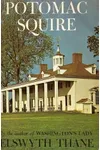
- Potomac Squire (1963): A companion biography focusing on George Washington's life as a private planter, husband, and manager of the Mount Vernon estate.
- Mount Vernon Is Ours (1966): A historical account of the Mount Vernon Ladies' Association and their mid-19th-century struggle to rescue and restore George Washington's home.
- Mount Vernon, the Legacy (1967): A follow-up detailing the continued history, management, and preservation efforts of the Mount Vernon estate.
- Mount Vernon Family (1968): A look into the daily domestic life, nieces, nephews, and extended family members who frequented the Washington estate.
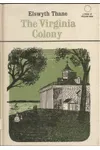
- The Virginia Colony (1969): A historical overview of early colonial Virginia targeted at general history enthusiasts.
Biographies and Memoirs
- Young Mr. Disraeli (1936): Written originally as a play, this narrative tells the story of the youth and early political career of Benjamin Disraeli.
- Reluctant Farmer / The Strength of the Hills (1950/1976): A delightful personal memoir detailing Thane's experiences buying and restoring a historic farm in Vermont. The book was originally published in 1950 as Reluctant Farmer and later reprinted in 1976 under the title The Strength of the Hills.
- Dolley Madison, Her Life and Times (1970): A detailed biography of the legendary early American hostess and First Lady.
- The Fighting Quaker (1972): Thane's final book, a comprehensive biography of General Nathanael Greene, one of the most brilliant military minds of the American Revolutionary War.
What to Know Before You Start
While the Williamsburg series books are technically designed to be read as standalones—Thane includes brief summaries of past events in later volumes—readers will lose the deep emotional impact of the multi-generational family trees if they read them out of order. Reading them chronologically allows you to watch minor children from one book grow into the parents and grandparents of the next.
It is also worth noting that because these books were written in the 1940s and 1950s, Thane's depiction of the antebellum American South in Yankee Stranger includes idealized views of plantation life and enslaved individuals that reflect the historical romance conventions of the mid-20th century. Modern readers should approach these sections with a historical lens.