





How to Read E.M. Forster: The Recommended Path
E.M. Forster did not write connected series or recurring characters, meaning you can technically read his novels in any order. However, jumping straight into his most complex work can be overwhelming. To appreciate his evolution as a writer and get the most out of his signature wit, we recommend a curated pathway rather than strict chronological publication order.
1. The Perfect Gateway: A Room with a View (1908)
Start here. This is Forster’s most lighthearted, romantic, and accessible novel. Set in Florence and the English countryside, it follows Lucy Honeychurch as she struggles to choose between social conformity and true love. It introduces Forster's satirical view of English middle-class snobbery and his championing of emotional honesty, making it the perfect introduction to his style.
2. The Mid-Career Masterpiece: Howards End (1910)
Once you are familiar with Forster's style, move on to his most famous depiction of English society. Howards End explores class differences and social conventions through three families: the intellectual Schlegels, the wealthy and pragmatic Wilcoxes, and the struggling, working-class Basts. This novel is famous for the phrase "only connect," which serves as the core theme of all of Forster's work.
3. The Crowning Achievement: A Passage to India (1924)
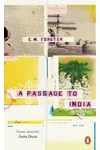
Save his final and most complex novel for third. Inspired by his own travels, it deals with the racial tensions, cultural misunderstandings, and colonial politics of British-ruled India. Because it is much more serious, structurally intricate, and politically charged than his earlier work, having a solid grasp of Forster's humanistic philosophy from his previous books will enhance your reading experience.
4. The Posthumous Revelation: Maurice (Written 1913–1914, Published 1971)
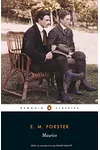
Read this next. Written in the years between Howards End and A Passage to India, Forster chose not to publish this gay love story during his lifetime due to legal risks and societal taboos in Britain. It features a rare happy ending for its time and offers deeply personal insight into Forster's own life and struggles with his sexuality.
5. The Early Works & Unfinished Projects
Finish your journey by going back to where he started. Where Angels Fear to Tread (1905) and The Longest Journey (1907) are his earliest novels, full of youthful passion and dark irony. Finally, Arctic Summer (published in 1980) contains the unfinished fragments of a novel Forster began in the 1910s but never completed, giving fans a fascinating look at his creative process.
E.M. Forster Novels in Publication Order
If you prefer to follow his career chronologically as it unfolded, here is the order in which E.M. Forster's novels were published, including posthumous releases:
- Where Angels Fear to Tread (1905) – A tragicomedy about an English widow who marries a younger Italian man, sparking a clash between families and cultures.
- The Longest Journey (1907) – Forster's most autobiographical novel, following an aspiring writer named Rickie Elliot through Cambridge and a difficult marriage.
- A Room with a View (1908) – A celebrated romantic comedy criticizing the rigidity of Edwardian society.
- Howards End (1910) – A sweeping social critique examining who will inherit the soul of England.
- A Passage to India (1924) – A brilliant, tragic look at the impossibility of friendship under the shadow of British imperialism.
- Maurice (1971) – Published posthumously, a landmark of gay literature tracking a young man’s self-acceptance.
- Arctic Summer (1980) – Posthumously published fragments of his abandoned novel.
Short Stories and Collections: The Sci-Fi and Fantasy Side
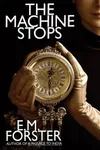
Many readers do not realize that E.M. Forster was also an accomplished short story writer who frequently experimented with fantasy, mythology, and even science fiction. The best place to start is with his famous 1909 story "The Machine Stops", a shockingly prophetic sci-fi tale that describes a future where humanity lives underground, entirely dependent on a global technological network for communication and survival.
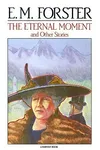
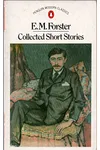
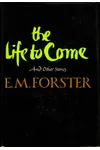
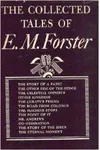
Forster published two collections of short stories during his lifetime: The Celestial Omnibus and Other Stories (1911) and The Eternal Moment and Other Stories (1928). These were later combined into the Collected Short Stories (1947). After his death, The Life to Come and Other Short Stories (1972) was released, compiling previously unpublished works that explicitly explored homosexual themes that he could not share during his lifetime.
Non-Fiction, Travels, and Literary Criticism
Forster was an influential essayist and literary critic. For those who want to dive deeper into his intellect and worldview, these works are highly recommended:
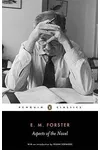
- Aspects of the Novel (1927) – Compiled from a series of lectures Forster gave at Cambridge, this remains a classic text in literary criticism, famously defining the difference between "flat" and "round" characters.
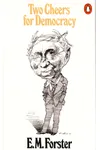
- Two Cheers for Democracy (1951) – A collection of essays outlining his humanist philosophy, his thoughts on WWII, and his defense of personal liberty and tolerance.
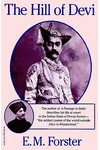
- The Hill of Devi (1953) – A memoir of his time serving as private secretary to the Maharajah of Dewas State Senior, which provided the vital background material for writing A Passage to India.
What to Know Before You Start
E.M. Forster was a key figure in the Bloomsbury Group, an influential circle of English writers, intellectuals, and artists that also included Virginia Woolf and John Maynard Keynes. Knowing this context helps readers appreciate his forward-thinking views on gender, class, and sexuality. His writing style is accessible and conversational, but it carries a sharp satiric edge that targets hypocrisy, pretension, and emotional repression.
Additionally, Forster's work is famous for its visual, atmospheric adaptations. If you enjoy his books, the lush Merchant Ivory film adaptations of the 1980s and 1990s—particularly A Room with a View (1985), Maurice (1987), and Howards End (1992)—are highly acclaimed and capture the tone of the books beautifully.