
The Best Way to Read Emilia Hart's Novels
As a British-Australian author who blends rich historical fiction with magical realism, Emilia Hart has quickly established a signature style: novels featuring multiple timelines, interconnected stories of female resilience, and deep bonds with the natural world. Because her books are entirely standalone stories, there is no strict continuity or narrative link between them. You can read them in any order you choose.
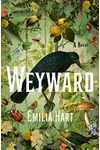
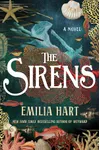
However, the most recommended starting point is her breakout debut, Weyward (2023). It perfectly introduces Hart's signature triple-timeline structure, her lyrical prose, and her exploration of patriarchal oppression and nature-bound strength. Starting with her debut allows you to see how her writing style and thematic complexity evolve into her second book, The Sirens (2025), which takes a slightly darker, folk-horror-inflected approach to siren mythology.
Emilia Hart Books in Publication Order
If you prefer to follow her career progression, reading in order of publication is straightforward. To date, her novels include:
- Weyward (Published: February 2023)
- The Sirens (Published: January 2025)
Although both books feature distinct characters and settings—one nestled in the Cumbrian countryside and the other spanning Irish coasts and Australian seas—they share an unmistakable spiritual DNA and structural layout.
A Deep Dive Into the Timelines and Orders
To truly appreciate Emilia Hart's novels, it is helpful to understand the intricate, non-linear structures she uses. Each book is a puzzle where ancestral secrets are unraveled across centuries. Here is what you need to know about the chronological timelines within each work:
1. Weyward (2023)
Set primarily in the rural village of Crows Beck in Cumbria, England, Weyward weaves together three distinct eras to show how the women of the Weyward line inherit both trauma and power:
- 1619: The story of Altha Weyward. Gifted with a natural healing instinct inherited from her mother, Altha is accused of witchcraft after a local man is trampled to death by cattle. Her trial exposes the fear and control driving the historical witch hunts.
- 1942: The story of Violet Ayres. Sixteen-year-old Violet lives a sheltered, stifled life at Orton Hall under her controlling father during World War II. Her affinity for nature and insects leads her to uncover dark family secrets and eventually escape to Weyward Cottage.
- 2019: The story of Kate Ayres. Kate flees an abusive relationship in London to seek refuge at Weyward Cottage, inherited from her great-aunt Violet. There, she uncovers the history of the Weyward women and connects with her ancestral legacy.
2. The Sirens (2025)
Hart's second novel shifts the setting from the woods of Cumbria to the ocean, exploring sea-based folklore, sisterhood, and the generational echo of female trauma:
- 1800: The story of Irish twin sisters Mary and Eliza Kissane. Convicted of a crime, they are transported to Australia on the prison ship Naiad. The harsh voyage triggers a physical and spiritual transformation as they adapt to the ocean.
- 1999: The story of Jess. Living in Australia and suffering from aquagenic urticaria (a rare water allergy), young Jess records her life in diary entries, detailing her artistic passions and a dangerous relationship with a predatory teacher.
- 2019: The story of Lucy Martin. Lucy, a journalism student suffering from violent sleepwalking, travels to the coastal town of Comber Bay, Australia, to find her missing, estranged sister Jess. Her search leads her to historical shipwrecks and a series of mysterious disappearances.
What to Know Before You Start
Before diving into Emilia Hart's novels, readers should keep a few practical points in mind:
Heavy Themes: While both books are deeply empowering and showcase female resilience, they feature intense themes including domestic abuse, sexual violence, predatory relationships, and historical persecution. If you are sensitive to these topics, approach both books with caution.
Feminist Magical Realism: Hart's brand of magic is subtle and grounded in nature. Rather than grand fantasy spells, the supernatural elements manifest as a deep, instinctual connection to insects, animals, and weather (in Weyward) or the ocean and physical transformations (in The Sirens). The magic serves as a metaphor for female autonomy and reclamation of power.
Non-Linear Reading: Because both novels shift perspectives and eras in alternating chapters, they require focused attention. Readers who enjoy slow-burn mysteries and character-driven historical fiction will find this narrative style highly rewarding.