
Where to Start with Emily Brontë
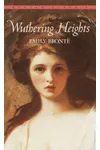
For the vast majority of readers, the definitive entry point is Emily Brontë’s sole novel, Wuthering Heights (1847). Unlike many authors with sprawling series, Emily’s legacy rests primarily on this single, colossal monument of Gothic literature. If you are new to the Brontë sisters, Wuthering Heights is a stormy, emotionally intense experience that differs significantly from Charlotte Brontë's structured, psychological narrative in Jane Eyre or Anne Brontë's realistic, social critique in Agnes Grey.
If you plan to read the Brontë sisters' work collectively, it is often recommended to start with Charlotte's Jane Eyre to get comfortable with the period's prose style, followed by Emily's Wuthering Heights to experience the peak of Gothic romanticism, and conclude with Anne's Agnes Grey. However, if you are focusing strictly on Emily, begin with her novel before diving into her poetry and reconstructed writings.
Understanding the Gondal Universe
Before publishing Wuthering Heights under the pseudonym Ellis Bell, Emily spent her childhood and adulthood co-creating a massive fantasy world known as Gondal with her sister Anne. While Charlotte and Branwell wrote about the imaginary empire of Angria, Emily and Anne created the island continent of Gondal in the North Pacific. They wrote extensive prose stories, diaries, and poems set in this world, which featured complex politics, wars, and intense romances centered around the fictional queen Augusta Geraldine Almeda.
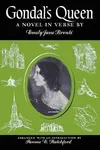
Unfortunately, all of Emily and Anne's Gondal prose manuscripts have been lost to time. What remains are Emily's poems, many of which were written from the perspective of Gondal characters. In 1955, scholar Fannie Elizabeth Ratchford carefully analyzed and arranged 84 of these surviving poems into a logical narrative sequence. This reconstruction was published as Gondal's Queen: A Novel in Verse. While our database notes a prominent reprint edition from 1973, the work represents the closest modern readers can get to experiencing the lost epic narrative Emily spent her life constructing.
Emily Brontë's Works in Publication Order
Because Emily's bibliography is small, tracking her publications chronologically offers a fascinating look at her development from a secretive poet to a published novelist. Here is how her works were published during and after her lifetime:
- Poems by Currer, Ellis, and Acton Bell (1846): This was the joint poetry collection published by the three Brontë sisters under their male-sounding pseudonyms. It sold only a few copies initially but features some of Emily's most powerful poetic voices.
- Wuthering Heights (1847): Published originally in a three-volume set alongside Anne's Agnes Grey, this represents Emily's only complete novel.
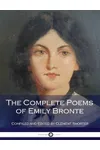
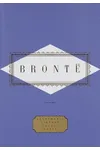
- Posthumous Collections: Following Emily's untimely death in 1848 at age 30, her sister Charlotte edited and published some of her remaining poems. In the 20th and 21st centuries, editors compiled complete editions, including The Complete Poems of Emily Bronte (1941), Gondal's Queen (1955/1973), and more recent curated editions like No Coward Soul Is Mine (1993), Emily Bronte: Poems (1996), and Collected Poems (2019).
Practical Reading Guidance and Caveats
When approaching Emily Brontë's works, keep the following guidance in mind:
Wuthering Heights is Not a Traditional Romance
Many readers go into Wuthering Heights expecting a sweet, passionate love story similar to modern romance tropes. Instead, they are met with a dark, atmospheric, and often unsettling story of obsession, generational trauma, vengeance, and cruelty. The characters—particularly Heathcliff and Catherine Earnshaw—are deeply flawed, volatile, and unsympathetic by design. Bracing yourself for a Gothic tragedy rather than a light-hearted romance will help you appreciate the novel's psychological depth.
The Poetic Path
If you fall in love with the wild atmosphere of the Yorkshire moors in Wuthering Heights, your next logical step is to explore Emily's poetry. Her poems are highly lyrical, philosophical, and deeply tied to nature. Start with her famous standouts like "No Coward Soul Is Mine" and "Remembrance," before attempting to read the reconstructed narrative of Gondal's Queen. Reading her poetry provides invaluable context into the untamed spirit that wrote Wuthering Heights.
Standalones and Anthologies
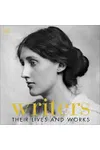
Emily did not write sequels or spin-offs, so everything she wrote can be read independently. Her works are frequently featured in various classic anthologies, such as The Seventeenth Fontana Book of Great Ghost Stories (1981), The Darker Sex (2009), Writers: Their Lives and Works (2018), and Women Who Wrote (2020), which highlight her influence on early Gothic ghost stories and women's literature.