


Where to Start with Emily Hauser
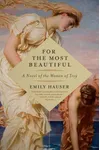
If you are new to Emily Hauser’s mythic retellings, the best place to begin is at the very beginning of her fiction career: For the Most Beautiful (2016). This book serves as the perfect entry point because it introduces her signature style—a seamless blend of deep classical scholarship and accessible, character-driven storytelling that centers the sidelined women of ancient myth.
Because the novels are loosely connected by theme and setting but tell distinct stories, you could technically read them as standalones. However, reading them in order allows you to appreciate the growth of Hauser's narrative voice and the subtle thematic continuity of the "Golden Apple" motifs across the trilogy. After finishing the main trilogy, you can transition to her fascinating non-fiction works, which explore the real history behind the myths.
The Golden Apple Trilogy in Order
The Golden Apple Trilogy is Emily Hauser's premier contribution to the modern Greek myth retelling genre. Published between 2016 and 2018 by Doubleday (an imprint of Penguin Random House) and Pegasus Books, the series tackles three major legends of the ancient world. Each book is structured to give agency, voice, and interiority to female characters who are typically treated as passive prizes or minor obstacles in classical texts.
1. For the Most Beautiful (2016)
Hauser's debut novel transports readers to the final, grueling years of the Trojan War. Drawing directly from Homer’s Iliad, the story shifts the spotlight away from the warring male heroes like Achilles and Agamemnon to focus on two captive women: Briseis and Chryseis (written as Krisayis in the novel). Briseis, a queen who sees her city destroyed, and Krisayis, a young priestess’s daughter, find their fates intertwined with the survival of Troy itself.
Hauser masterfully depicts the complex relationships these women develop with their captors, demonstrating how they wield soft power, intelligence, and resilience to survive in a war zone controlled by men. The title of the book refers to the golden apple inscribed "for the most beautiful," which sparked the legendary dispute between Hera, Athena, and Aphrodite, ultimately leading to the Trojan War. The novel also features a parallel narrative involving the Greek gods, portrayed with human flaws, petulance, and humor, highlighting how mortal lives are toys in divine games.
2. For the Winner (2017)
The second installment shifts from the battlefields of Troy to the open seas, retelling the voyage of Jason and the Argonauts in search of the Golden Fleece. The protagonist is Atalanta, the legendary huntress abandoned at birth and raised in the wild. Determined to prove herself in a man's world and claim her rightful place, Atalanta disguises herself as a male warrior named "Athena" to join the crew of the Argo.
Throughout the dangerous voyage, Atalanta must navigate not only physical threats like harpies and sea monsters but also the constant risk of exposure. Hauser uses Atalanta’s journey to examine gender expectations, identity, and the heavy price of independence. The book draws inspiration from Apollonius of Rhodes' Argonautica and other classical fragments, contrasting Jason’s flawed ambition with Atalanta’s genuine skill and internal strength.
3. For the Immortal (2018)
The trilogy concludes by tackling the labors of Hercules (Heracles), focusing on the myth of the Amazons. The story centers on two women from opposing worlds: Admete, the pampered but observant daughter of Eurystheus (the king who orders Hercules' tasks), and Hippolyta, the fierce warrior queen of the Amazons.
When Hercules is sent to steal Hippolyta’s sacred golden girdle, the lives of these two women collide. Rather than portraying the Amazons as monstrous savages, Hauser paints them as a complex, self-sustaining society with their own culture, struggles, and values. The novel explores themes of sisterhood, duty, and what it truly means to achieve immortality—whether through brutal conquest or enduring legacy. It brings the trilogy to a satisfying close, resolving the overarching themes of female agency and the manipulation of mortals by the Olympian gods.
Chronological vs. Publication Order
Since the Golden Apple Trilogy consists of three standalone stories set in different eras of Greek mythology, readers often ask whether they can be read out of order. Here is what you need to know about the timeline:
- Publication Order: For the Most Beautiful (2016), followed by For the Winner (2017), and ending with For the Immortal (2018). This is the order in which the books were released and is the recommended reading path.
- Mythological Chronology: If you wanted to read the books chronologically based on when the myths are traditionally set, the order actually changes. The quest of the Argonauts (For the Winner) and the labors of Hercules (For the Immortal) occur in the generation before the Trojan War (For the Most Beautiful). In fact, Hercules and Jason are often described as older contemporaries, while the Trojan War represents the twilight of the heroic age.
Despite this chronological discrepancy, we strongly recommend sticking to the publication order. The books were written with a progressive depth in character development and a thematic evolution regarding the gods' interference in human lives. Reading them in publication order matches the author's intentional structural development of the trilogy's themes.
Dr. Emily Hauser’s Scholarly Non-Fiction
For readers who want to understand the rigorous academic research that fuels Emily Hauser’s novels, her non-fiction works are a must-read. As a Senior Lecturer in Classics and Ancient History at the University of Exeter, Hauser bridges the gap between historical scholarship and mainstream interest.
How Women Became Poets: A Gender History of Greek Literature (2023)
Published by Princeton University Press, this academic work offers a detailed gender history of early Greek literature. Hauser examines how the concept of the "poet" was constructed in ancient Greece, arguing that the vocabulary of authorship was deliberately gendered as masculine to exclude women. She looks at how female poets, starting with Sappho, navigated these exclusionary linguistic spaces to establish their own voices. It provides the academic foundation for the feminist retellings she explores in her fiction.
Mythica: A New History of Homer's World (2025)
Released in April 2025 by Doubleday/Transworld, Mythica: A New History of Homer’s World, Through the Women Written Out of It is a non-fiction book written for a general audience. It serves as a perfect companion to the Golden Apple Trilogy. Using archaeology, Linear B tablets, DNA analysis, and textual criticism, Hauser digs beneath the myths of Helen, Penelope, Briseis, and Circe to uncover the real lives of Bronze Age women. It shows that the real women of antiquity were far more active, powerful, and interesting than the male poets of the epic tradition let on.
What to Know Before You Start
Before diving into Emily Hauser’s books, keep these helpful context clues in mind:
A Feminist Lens, Not a Complete Rewrite: Unlike some modern retellings that completely alter the classical plots to make them palatable to modern audiences, Hauser respects the contours of the original myths. She works within the existing structures of Homer or Apollonius of Rhodes, finding the "gaps" in the text where women’s stories were left untold. This makes her books highly satisfying for classics lovers who appreciate mythological accuracy.
The Role of the Gods: In the Golden Apple Trilogy, the Olympian gods are not remote forces; they are active, petty, and highly involved characters. Hauser uses them to explore the theme of human agency versus divine fate. The contrast between the mortal women struggling for survival and the immortal deities playing games with their lives is a core dynamic of her books.
No Co-Authors or Spin-offs: Unlike other massive fantasy franchises, Emily Hauser’s fictional bibliography is tight and self-contained. She has not written any spin-offs, co-authored books, or tie-in novellas. You do not need to hunt down obscure short stories or read companion guides to get the full experience of the Golden Apple universe.