
The Recommended Reading Order for Emily Itami
For readers diving into the evocative, bicultural worlds crafted by Emily Itami, the journey is straightforward but emotionally rich. Because Itami writes standalone contemporary fiction rather than interconnected series, there is no strict continuity to worry about. You do not need to read the books in a specific sequence to understand the plot of another. However, the order in which you experience them can shape your appreciation of her growth as a novelist.
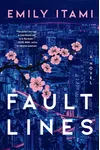
We highly recommend starting with her breakout debut, Fault Lines (2021). This novel serves as the perfect introduction to her signature style: sharp, witty prose, a strong sense of place, and an intimate look at the silent struggles of modern women. Once you have tasted her Tokyo-infused storytelling, you should progress to her second major novel, Kakigori Summer (2025), which broadens the lens to focus on a multi-perspective family drama spanning sisterhood, grief, and cultural identity. Finally, for those who fall in love with the atmosphere of her settings, her hybrid travel-novel Tokyo (2025) offers a delightful, epistolary companion piece to the cities that shape her life.
Emily Itami's Books in Order of Publication
Following Itami's works in their publication sequence highlights the expansion of her themes—from the solitary introspections of a single housewife to the grander, collective dynamics of sisters and cross-generational healing.
1. Fault Lines (2021 / 2022)
First published in the United Kingdom by Phoenix Books in May 2021, and later in the United States by Mariner Books in September 2022, Fault Lines introduced the literary world to Itami’s bicultural voice. The story follows Mizuki, a Japanese housewife living a comfortable, seemingly perfect life in a sleek Tokyo apartment with her hardworking husband and two young children. Beneath the surface, however, Mizuki is suffocating under the weight of societal expectations and domestic monotony.
A chance encounter with Kiyoshi, a charismatic restaurateur, sparks an electric affair that reawakens her sense of self and allows her to reclaim the neon-lit, energetic Tokyo of her youth. Itami crafts a tender, sometimes funny, and deeply honest examination of the compromise between duty and desire. It is a brilliant starting point for fans of character-driven contemporary fiction in the vein of Sally Rooney or Haruki Murakami.
2. Tokyo (February 2025)
Released in early 2025 through European publishers (such as L'arbre qui marche and Ediciclo), Tokyo is a unique entry in Itami's bibliography. Rather than a traditional narrative novel, it functions as a hybrid travel-novel and literary guide. The book is structured around emails exchanged between a character named Anna and her childhood friend, Tsubasa, who sends sensory descriptions, cultural insights, and intimate reflections on the life, food, and secret corners of Tokyo. It is a love letter to the metropolis that highlights Itami's background as a travel writer and journalist, making it an essential read for anyone planning a trip to Japan or seeking to immerse themselves in its atmospheric charm.
3. Kakigori Summer (June 2025)
Published in June 2025 by HarperCollins, Kakigori Summer marked a significant evolution in Itami's fiction. The story shifts focus to three half-Japanese, half-British ('haafu') sisters who are separated by distance and very different life paths. Rei is a high-flying finance professional in London; Kiki is a single mother working in a Tokyo retirement home; and Ai is a J-pop idol in Japan. When Ai becomes the target of a massive public scandal, her older sisters pause their lives to shield her, prompting a reunion at their grandmother's home on the Japanese coast.
Under the heat of the summer sun, eating shaved ice (kakigori), the sisters must navigate family secrets, their relationship with their sharp-tongued grandmother, and the unresolved trauma of their mother's death fifteen years prior. The novel is a bittersweet, hopeful exploration of sisterhood, bicultural identity, and collective healing.
Themes and What to Know Before You Start
Emily Itami's writing is heavily informed by her own bicultural identity. Born to a Japanese mother and a British father, she grew up splitting her time between Tokyo and London. This upbringing allows her to observe Japanese and Western cultures with both the intimacy of an insider and the sharp clarity of an outsider. Her characters often navigate the feeling of being 'haafu' (half-Japanese), caught between worlds and struggling to fit into rigid societal boxes.
Readers should expect a tone that is breezy yet deeply empathetic. Itami has a talent for taking heavy topics—such as marital dissatisfaction, severe grief, and public shaming—and rendering them with a light, warm, and highly engaging touch. If you enjoy vivid descriptions of food (like the icy crunch of kakigori or the savory depths of Tokyo's restaurant scene), complex female characters, and family dynamics, Itami's bibliography will be a rewarding experience.