



Recommended Reading Paths
Because the books written under the E.V. Cunningham pseudonym span distinct detective series, light comedy-capers, and standalone psychological suspense, there is no single narrative arc that you must follow from start to finish. Instead, your best starting point depends on the subgenre you want to explore:
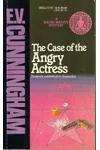
- For Police Procedurals with a Unique Twist: Start with the Masao Masuto Series. Masuto is a Zen-practicing, rose-gardening Japanese-American detective navigating the high-society crimes of Beverly Hills. The absolute best place to start is the first book, The Case of the Angry Actress (originally published under the title Samantha).
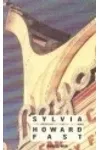
- For Classic Suspense and Noir Thrillers: Start with Sylvia (1960). It is the very first novel Howard Fast published under the Cunningham name and remains one of his most critically acclaimed works of psychological mystery.
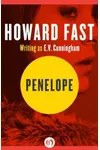
- For Lighthearted Comedy Capers: Start with Penelope (1965), which introduces the NYC law enforcement duo of John Gomaday (Comaday) and Larry Cohen and features a humorous, fast-paced bank robbery plot.
What to Know Before You Start
E.V. Cunningham was the pseudonym of the famous and politically active American novelist Howard Fast (best known for writing the historical novel Spartacus). Fast was blacklisted during the McCarthy era due to his Communist Party affiliation and even served prison time for refusing to cooperate with the House Un-American Activities Committee. To keep publishing and earning a living during the height of the blacklist, he adopted the name E.V. Cunningham to write lighter, commercial crime fiction, which he likened to Graham Greene's "entertainments."
A fascinating hallmark of the early E.V. Cunningham bibliography is the "naming convention." Between 1960 and 1973, almost all of his books were titled with a single female name (e.g., Sylvia, Phyllis, Alice, Lydia, Shirley, Penelope, Helen, Margie, Sally, Cynthia, Samantha, and Millie). Despite having female names as titles, these books are not part of a single series; instead, they are split across two minor detective series and several entirely standalone suspense thrillers.
The Masao Masuto Mysteries
The Beverly Hills detective Masao Masuto is Cunningham's most enduring and popular character. As a Japanese-American officer working in an wealthy, often prejudiced community during the late 1960s through the 1980s, Masuto uses Buddhist meditation techniques, sharp intellect, and a calm demeanor to solve puzzling crimes. Reading these in publication order is highly recommended to appreciate the evolving setting and character dynamics:
- The Case of the Angry Actress (1967) - Originally published under the title Samantha, this book introduces Masuto as he investigates the murders of people connected to a Hollywood film production.
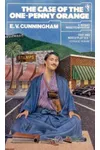
- The Case of the One-Penny Orange (1977) - Masuto is called to solve a murder connected to a rare, highly valuable postage stamp.
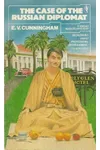
- The Case of the Russian Diplomat (1978) - A political thriller variant where a dead body in a Beverly Hills pool sparks international intrigue.
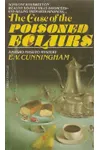
- The Case of the Poisoned Eclairs (1979) - A classic poison-mystery where a box of toxic pastries disrupts a wealthy Beverly Hills social circle.
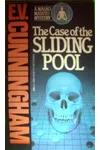
- The Case of the Sliding Pool (1981) - An old skeleton is unearthed after a swimming pool slides down a rain-slicked California hillside, reopening a cold case.
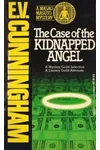
- The Case of the Kidnapped Angel (1982) - Masuto must track down a famous Hollywood starlet who has disappeared under highly suspicious circumstances.
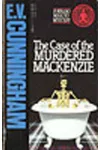
- The Case of the Murdered Mackenzie (1984) - The final novel-length investigation for Masuto, centering on a bizarre murder in the high-stakes world of Beverly Hills wealth.
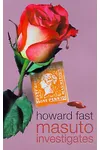
- Masuto Investigates (2000) - A late-career omnibus compilation that bundles together the first two novels for modern readers.
The Harvey Krim Investigations
Harvey Krim is a sharp-tongued, cynical New York City-based insurance investigator who has a knack for finding himself in dangerous situations. This brief two-book subseries blends hardboiled detective tropes with Fast's characteristic focus on character-driven pacing:
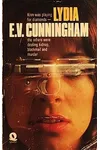
- Lydia (1964) - Krim is hired to look into a wealthy woman with a complicated past, leading him down a rabbit hole of deceit.
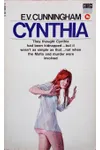
- Cynthia (1969) - Krim returns to investigate a high-stakes kidnapping case where the ransom demands and family secrets do not add up.
The Gomaday & Cohen Novels
This lighthearted duo features NYC Police Commissioner John Gomaday (often spelled "Comaday" in reference articles) and Manhattan Assistant District Attorney Larry Cohen. These books lean heavily into humor, caper aesthetics, and dialogue-driven plotting:
- Penelope (1965) - The story of a neglected, wealthy wife who decides to rob her husband’s bank for excitement. It was adapted into a popular 1966 comedy film starring Natalie Wood and Peter Falk.
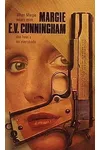
- Margie (1966) - A fast-paced comedy of errors involving a young woman, a mislaid drug stash, and a race through the streets of New York.
Standalone Suspense Novels
If you want to read E.V. Cunningham outside of the recurring series, Fast wrote several standalone novels that range from domestic suspense to global espionage. The standout here is Sylvia, which was adapted into a 1965 noir drama film starring Carroll Baker and George Maharis.
- Sylvia (1960) - A private investigator is hired to run a background check on a millionaire's mysterious fiancée, unraveling her dark and tragic past.
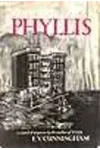
- Phyllis (1962) - A tense Cold War thriller centering on atomic secrets, missing physicists, and the threat of nuclear destruction.
- Alice (1963) - A psychological thriller about a man who is drawn into a web of blackmail and murder after a chance meeting.
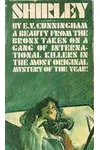
- Shirley (1964) - The story of a working-class New York girl who suddenly becomes the target of professional hitmen.
- Helen (1966) - A dramatic suspense story focusing on a woman on trial and the lawyer who tries to piece together the truth.
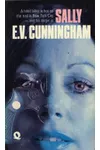
- Sally (1967) - A young woman accidentally witnesses a mob hit and must go on the run to escape a professional assassin.
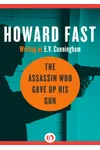
- The Assassin Who Gave Up His Gun (1969) - A darker, more political thriller about a highly efficient assassin working for a secret global organization who begins to develop human feelings.
- Millie (1973) - A gritty urban drama about a woman trying to survive and protect her family in the changing social landscape of New York.
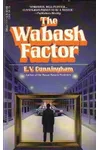
- The Wabash Factor (1986) - Cunningham’s final standalone book, a contemporary conspiracy thriller concerning global corporate manipulation and political assassination.
Complete E.V. Cunningham Chronological Publication Order
For readers who wish to follow Howard Fast’s stylistic progression as E.V. Cunningham, here is the complete chronological list of all publications under the pen name:
- 1960: Sylvia (Standalone)
- 1962: Phyllis (Standalone)
- 1963: Alice (Standalone)
- 1964: Lydia (Harvey Krim Book 1)
- 1964: Shirley (Standalone)
- 1965: Penelope (Gomaday & Cohen Book 1)
- 1966: Helen (Standalone)
- 1966: Margie (Gomaday & Cohen Book 2)
- 1967: Sally (Standalone)
- 1967: The Case of the Angry Actress / Samantha (Masao Masuto Book 1)
- 1969: Cynthia (Harvey Krim Book 2)
- 1969: The Assassin Who Gave Up His Gun (Standalone)
- 1973: Millie (Standalone)
- 1977: The Case of the One-Penny Orange (Masao Masuto Book 2)
- 1978: The Case of the Russian Diplomat (Masao Masuto Book 3)
- 1979: The Case of the Poisoned Eclairs (Masao Masuto Book 4)
- 1981: The Case of the Sliding Pool (Masao Masuto Book 5)
- 1982: The Case of the Kidnapped Angel (Masao Masuto Book 6)
- 1984: The Case of the Murdered Mackenzie (Masao Masuto Book 7)
- 1986: The Wabash Factor (Standalone)
- 2000: Masuto Investigates (Masao Masuto Compilation)