
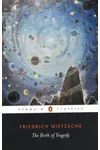
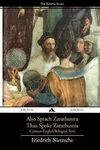
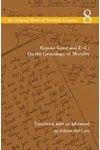
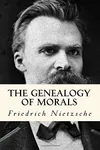
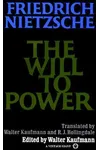
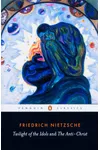

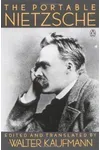
Picture a German philosopher who shook the foundations of Western thought with bold, provocative ideas—meet Friedrich Nietzsche! Born in 1844, Nietzsche crafted works like Thus Spoke Zarathustra and Beyond Good and Evil, challenging morality, religion, and the human condition. His fiery prose and concepts like the Übermensch continue to spark debates and inspire thinkers worldwide.
With a life as dramatic as his philosophy, Nietzsche’s journey from a small Prussian village to global intellectual stardom is a tale of genius, struggle, and legacy. Let’s dive into the world of this philosophical trailblazer!
The Making of Friedrich Nietzsche
Born on October 15, 1844, in Röcken, Prussia, Friedrich Nietzsche grew up in a devout Lutheran family. His father, a pastor, died when Nietzsche was just five, leaving him in a household of women—his mother, sister, and aunts. A prodigy, he excelled in classics and music, entering the University of Bonn at 20 to study theology and philology. But Nietzsche’s restless mind soon abandoned theology for philology, diving into ancient Greek texts under the mentorship of Friedrich Ritschl. By 24, he was a professor at the University of Basel, a meteoric rise fueled by his brilliance and ambition.
Influenced by Arthur Schopenhauer’s pessimistic philosophy and Richard Wagner’s operatic genius, Nietzsche began questioning the cultural and moral norms of his time. His early work, The Birth of Tragedy, reflected this blend of classical scholarship and artistic passion, setting the stage for his radical ideas.
Friedrich Nietzsche’s Unforgettable Works
Nietzsche’s writing is a whirlwind of poetic intensity and philosophical depth. His most famous work, Thus Spoke Zarathustra (1883–1885), is a lyrical masterpiece where the prophet Zarathustra proclaims the death of God and the rise of the Übermensch—an idealized human who creates their own values. Its bold, allegorical style captivated readers and cemented Nietzsche’s reputation.
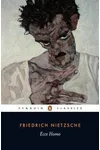
In Beyond Good and Evil (1886), Nietzsche dissected traditional morality, arguing that good and evil are constructs rooted in power dynamics. His concept of the “will to power”—the drive to overcome and create—challenged readers to rethink human motivation. Other key works, like The Genealogy of Morality (1887), critiqued Christian ethics, while Ecce Homo (1888), his autobiographical reflection, revealed his unapologetic self-vision: “I am no man, I am dynamite.”
Nietzsche’s style—aphoristic, witty, and provocative—made his ideas accessible yet profound. He blended philosophy with literature, using metaphors and irony to engage readers. His rejection of dogma and embrace of life-affirmation resonated with artists, writers, and thinkers, from existentialists to modern psychologists.
Why Friedrich Nietzsche Matters
Nietzsche’s impact is colossal. His critique of Christianity and traditional morality paved the way for existentialism, influencing thinkers like Jean-Paul Sartre and Albert Camus. His ideas inspired movements as diverse as modernism, psychoanalysis, and even postmodernism. The Übermensch and will to power became cultural touchstones, echoed in literature, film, and philosophy.
Despite his controversial legacy—misappropriated by the Nazis, a distortion he’d have despised—Nietzsche’s call to embrace life’s challenges resonates today. His work encourages us to question assumptions, create meaning, and live boldly in a world without absolutes. From university lecture halls to pop culture, Nietzsche’s voice endures.
About Friedrich Nietzsche
- Born: October 15, 1844, Röcken, Prussia
- Key Works: Thus Spoke Zarathustra, Beyond Good and Evil, The Genealogy of Morality
- Influence: Existentialism, modernism, psychology
- Died: August 25, 1900, after a mental collapse
Ready to explore Nietzsche’s explosive ideas? Grab Thus Spoke Zarathustra and dive into his thrilling, life-affirming philosophy!