
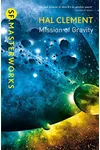
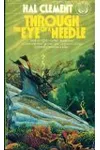
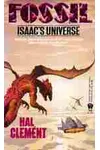
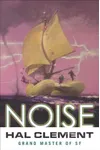
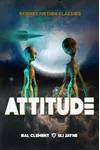
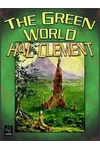
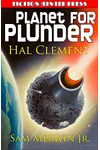
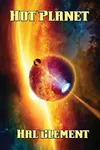
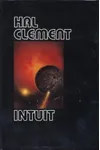

Picture an American storyteller who turned the laws of physics into thrilling adventures—meet Hal Clement! Born Harry Clement Stubbs in 1922, Clement was a titan of hard science fiction, blending rigorous science with imaginative worlds. His 1953 novel Mission of Gravity captivated readers with its alien planet Mesklin, proving that science could be as exciting as any space opera.
With degrees in astronomy, chemistry, and education, Clement wasn’t just a writer—he was a teacher, a WWII B-24 pilot, and an artist who painted cosmic vistas under the pseudonym George Richard. His unique blend of expertise and creativity made him a cornerstone of the genre, earning him the Science Fiction and Fantasy Hall of Fame induction in 1998.
The Making of Hal Clement
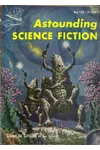
Born in Somerville, Massachusetts, on May 30, 1922, Clement grew up fascinated by the stars. He earned a B.S. in astronomy from Harvard in 1943, where he penned his first story, 'Proof,' for Astounding Science Fiction. Despite flying 35 combat missions as a B-24 pilot during WWII, he continued writing, fueled by his love for scientific precision. After the war, he taught chemistry and astronomy at Milton Academy for 40 years, inspiring students and crafting stories that felt like cosmic puzzles.
Hal Clement’s Unforgettable Stories
Clement’s stories are masterclasses in hard science fiction, where scientific problems drive the plot. His most famous work, Mission of Gravity (1953), follows a centipede-like alien, Barlennan, navigating the high-gravity planet Mesklin to recover a human probe. The novel’s meticulous world-building, based on real astronomical data, made it a genre classic.
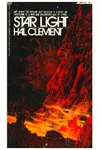
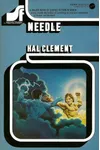
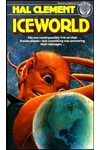
Other gems include Needle (1950), a detective story about an alien symbiont hunting a fugitive on Earth, and Iceworld (1953), where a teacher investigates a drug from a freezing planet—Earth! Star Light (1971), a sequel to Mission of Gravity, explores Mesklin’s evolving culture. Clement’s prose, while not flashy, sparkles with scientific curiosity, making complex ideas accessible and thrilling.
His short stories, like 'Uncommon Sense' (1946), showcase his knack for problem-solving narratives. Clement saw writing as a game, challenging readers to spot scientific inaccuracies while delivering vivid, plausible worlds. His focus on physics and chemistry set him apart in an era dominated by space operas.
Why Hal Clement Matters
Clement’s influence on hard science fiction is immense. He raised the bar for scientific accuracy, inspiring authors like Larry Niven and Gregory Benford. His world-building panels at conventions were legendary, teaching writers to craft believable planets. As a teacher, he instilled a love of science in generations, mirroring the wonder in his stories. The 1999 SFWA Grand Master Award cemented his legacy as a genre pioneer.
His work remains relevant, offering timeless lessons in curiosity and problem-solving. Clement showed that science fiction could be both intellectually rigorous and endlessly fun, inviting readers to explore the universe’s wonders.
- Born: May 30, 1922, in Somerville, Massachusetts
- Key Works: Mission of Gravity, Needle, Iceworld, Star Light
- Awards: 1998 Science Fiction and Fantasy Hall of Fame, 1999 SFWA Grand Master
- Died: October 29, 2003, in Milton, Massachusetts
About Hal Clement
Snag Mission of Gravity and dive into Hal Clement’s hard science fiction adventures—your inner scientist will thank you!