













J.G. Ballard Books in Order

  • 75 Books
  • 1962 – 2023 Published

Amazon links here are affiliate links. As an Amazon Associate I earn from qualifying purchases.

Reading order
01
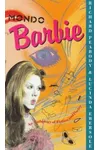
Mondo Barbie
Mondo Barbie
1993 By: John Varley, Lynne Barrett, Julia Alvarez, Philip Levine, A.M. Homes, David Trinidad, Sandra Cisneros, Marge Piercy, Gary Soto, Roberta Allen, Alice McDermott, Hilary Tham, Lyn Lifshin, Rebecca Brown, Denise Duhamel, Lucinda Ebersole, Richard Peabody, Jeanne Beaumont, Lynne McMahon, Kathryn Harrison, Patricia Storace, Richard Grayson, Leslie Shiel, Laura Costas, Sharon Henry, Cookie Lupton, Lisa B. Herskovits, Belinda Subraman, Ellie Schoenfeld, Sparrow ., Gregg Shapiro, Cathryn Hankla, Wayne E. Kline, Jose Padua, Jeff Weddle
02
Mondo Elvis
Mondo Elvis
1994 By: Howard Waldrop, Cornelius Eady, Mark Childress, Susie Mee, Nick Cave, Mark Winegardner, Rafael Alvarez, Greil Marcus, Pagan Kennedy, Lucinda Ebersole, Richard Peabody, Lynne McMahon, Cathryn Hankla, Samuel Charters, Rachel Salazar, Eleanor Earle Crockett, Diane Wakoski, Judy Vernon, David Wojahn, William McCranor Henderson, Janice Eidus, Elizabeth Ash Vélez, Laura Kalpakian, Eri Makino, Ai, Michael Wilkerson, Brian Gilmore
03
Mondo Marilyn
Mondo Marilyn
1995 With: Michael Hemmingson, Clive Barker, Doris Grumbach, Beth Meacham, Lynne Tillman, Charles Bukowski, David Trinidad, Tom Whalen, Sharon Olds, Leslie Pietrzyk, Lyn Lifshin, Nanci Griffith, Robert Peters, Lucinda Ebersole, Richard Peabody, Jeanne Beaumont, Gregg Shapiro, Judy Grahn, Sam Toperoff, Julia P. Dubner, Bill Morris, John Rechy, L.A. Lantz, Phyllis Burke, Hillary Johnson, Rita Valencia, Michael Lally, Eleanor E. Crocket, Taylor Mead, Susan Compo, Rosanne Daryl Thomas
04
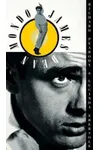
Mondo James Dean
Mondo James Dean
1996 By: Lewis Shiner, Jack C. Haldeman II, Bentley Little, Michael Hemmingson, Chuck Taylor, Michael Martone, Louisa Ermelino, Terence Winch, Lucinda Ebersole, Richard Peabody, Sparrow ., Janice Eidus, Ai, Tino Villanueva, Edwin Corley, Robert Ready, Reuben Jackson, Stephanie Hart, D.E. Steward, David Plumb, Ed Graczyk, Hilary Howard, James Finney Boylan, Miranda Schwartz
7 of 7 reading orders shown

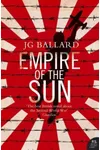
Picture a British visionary who turned dystopian nightmares into literary gold—meet J.G. Ballard! Born in Shanghai in 1930, Ballard’s life was as gripping as his stories, blending the chaos of war with a fascination for humanity’s darkest corners. His novels, like the provocative Crash and the heartfelt Empire of the Sun, challenge us to rethink technology, desire, and survival in a world gone wild.

With over 100 books, Ballard didn’t just write science fiction—he redefined it, weaving psychological depth into futuristic landscapes. Ready to explore a mind that saw the future through a cracked lens? Let’s dive into Ballard’s extraordinary world!

The Making of J.G. Ballard

J.G. Ballard’s early life reads like a novel itself. Born to British parents in Shanghai’s International Settlement, he lived a comfortable life until World War II upended it. At 12, he and his family were interned in a Japanese prison camp, an experience that scarred and shaped him. These years later fueled Empire of the Sun, his semi-autobiographical masterpiece. After the war, Ballard moved to England, studied medicine, and began writing, channeling his outsider’s perspective into stories that defied convention.

J.G. Ballard’s Unforgettable Stories

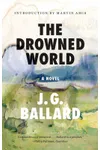
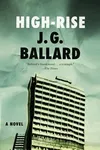
Ballard’s work is a kaleidoscope of dystopia, psychology, and raw human instinct. His 1962 novel The Drowned World imagines a flooded Earth where survivors confront their primal selves, showcasing his knack for blending climate fiction with inner turmoil. Crash (1973), his most controversial work, explores car crashes as a metaphor for technological obsession and desire, shocking readers with its unflinching prose. Empire of the Sun (1984) draws from his childhood, painting a haunting picture of war through a boy’s eyes. And High-Rise (1975) turns a luxury apartment into a battleground of class and chaos, proving Ballard’s gift for turning the mundane into the apocalyptic.

His style—often called ‘Ballardian’—is clinical yet poetic, dissecting modern life with a surgeon’s precision. He didn’t just predict tech’s grip on our psyche; he exposed its underbelly, making readers squirm and think. Whether it’s abandoned cities or twisted desires, Ballard’s themes remain eerily relevant.

Why J.G. Ballard Matters

J.G. Ballard’s influence stretches far beyond science fiction. His ideas about technology’s seductive dangers inspired filmmakers like David Cronenberg, who adapted Crash, and writers exploring dystopian themes. He gave us a vocabulary to navigate our increasingly surreal world, where media, machines, and human nature collide. Ballard’s fearless honesty—his willingness to probe the uncomfortable—makes him a literary pioneer whose work still sparks debate and awe.

About J.G. Ballard

  • Born: November 15, 1930, Shanghai, China
  • Key Works: Crash, Empire of the Sun, High-Rise, The Drowned World
  • Awards: Nominated for the Booker Prize (Empire of the Sun)
  • Died: April 19, 2009, London, England

Snag Empire of the Sun or Crash and dive into J.G. Ballard’s thrilling, unsettling world—your bookshelf will thank you!

Frequently Asked

Who was J.G. Ballard?

J.G. Ballard was a British author born in Shanghai in 1930, known for dystopian novels like Crash and Empire of the Sun. His provocative stories explored technology, psychology, and human desire, earning him a lasting legacy in science fiction.

What inspired J.G. Ballard’s writing?

Ballard’s writing was inspired by his childhood in a Japanese internment camp during World War II, his fascination with technology’s dark side, and his outsider’s view of modern life. These shaped his haunting, visionary stories.

What are J.G. Ballard’s best books?

J.G. Ballard’s best books include Crash, a daring exploration of technology and desire; Empire of the Sun, a semi-autobiographical war tale; High-Rise, a dystopian class struggle; and The Drowned World, a climate fiction gem.

Why is J.G. Ballard’s <em>Crash</em> controversial?

Crash by J.G. Ballard is controversial for its graphic depiction of car crashes as a metaphor for technological obsession and sexual desire. Its bold, unsettling themes shocked readers and sparked debates about art and morality.

How did J.G. Ballard influence science fiction?

J.G. Ballard redefined science fiction with his ‘Ballardian’ style, blending dystopia, psychology, and social critique. His focus on technology’s impact and human nature inspired writers, filmmakers, and thinkers, making him a genre icon.