








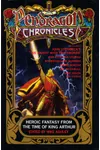
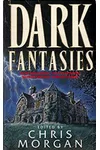
John Brunner Books in Order

  • 161 Books
  • 1959 – 2015 Published

Amazon links here are affiliate links. As an Amazon Associate I earn from qualifying purchases.

Reading order
01
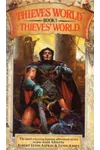
Thieves' World
Thieves' World
1979 By: Lynn Abbey, Robert Lynn Asprin
02
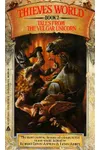
Tales from the Vulgar Unicorn
1980 By: Lynn Abbey, Robert Lynn Asprin
03
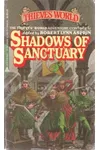
Shadows of Sanctuary
1981 With: Philip Jose Farmer, Joe Haldeman, Robert Lynn Asprin
04
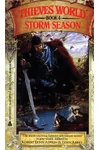
Storm Season
Storm Season
1982 By: Lynn Abbey, Robert Lynn Asprin
05
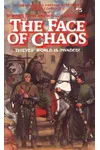
The Face of Chaos
The Face of Chaos
1983 By: Lynn Abbey, Robert Lynn Asprin
06
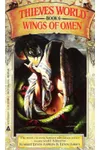
Wings of Omen
Wings of Omen
1984 By: Lynn Abbey, Robert Lynn Asprin
07
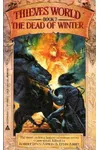
The Dead of Winter
The Dead of Winter
1985 By: Robert Lynn Asprin
08
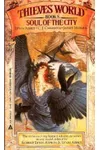
Soul of the City
Soul of the City
1986 By: Lynn Abbey, Robert Lynn Asprin
09
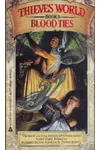
Blood Ties
Blood Ties
1986 By: Lynn Abbey, Robert Lynn Asprin
10
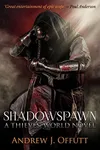
Shadowspawn
Shadowspawn
1987 By: Andrew J. Offutt
11
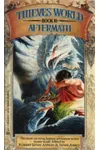
Aftermath
Aftermath
1987 By: Lynn Abbey, Robert Lynn Asprin
12
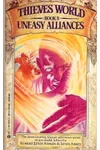
Uneasy Alliances
Uneasy Alliances
1988 By: Robert Lynn Asprin
13
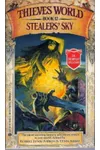
Stealers' Sky
Stealers' Sky
1989 By: Lynn Abbey, Robert Lynn Asprin
14
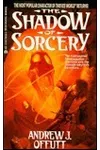
The Shadow of Sorcery
1993 By: Andrew J. Offutt
15
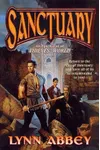
Sanctuary
Sanctuary
2002 By: Lynn Abbey
16
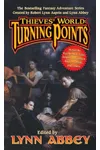
Turning Points
Turning Points
2002 By: Dennis L. McKiernan, Mickey Zucker Reichert, Lynn Abbey, Raymond E. Feist, Diana Paxson
17
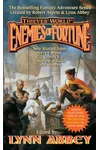
Enemies of Fortune
Enemies of Fortune
2004 By: C.J. Cherryh, Jody Lynn Nye, Mickey Zucker Reichert, Lynn Abbey, Robin Wayne Bailey, Andrew J. Offutt, Jeff Grubb, Selina Rosen, Diana Paxson
18
Thieves' World: Player's Manual
2005 By: James Ryman
19
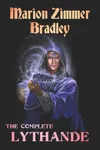
The Complete Lythande
2013 By: Marion Zimmer Bradley
01
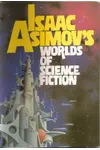
Isaac Asimov's Worlds of Science Fiction
1980 By: Isaac Asimov, Tanith Lee, Phyllis Eisenstein, Gene Wolfe, Barry B. Longyear, John M. Ford, Arnie Bateman, Alan Dean Foster, Martin Gardner, Randall Garrett, Rob Chilson, Ted Reynolds, George Scithers, Richard S. McEnroe, Jeff Duntemann, R.N. Bracewell, K.W. MacAnn, G. Richard Bozarth
02
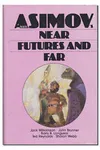
Isaac Asimov's Near Futures and Far
1981 With: Isaac Asimov, Frederik Pohl, Carter Scholz, Barry B. Longyear, John M. Ford, Jack Williamson, Darrell Schweitzer, Juleen Brantingham, Martin Gardner, Richard Wilson, Milton A. Rothman, Elizabeth Anne Hull, Sharon Webb, Somtow Sucharitkul, Lee Weinstein, Ted Reynolds, George Scithers, F. Gwynplaine MacIntyre, William Tuning, Francis E. Izzo, Paul David Novitski, Lee Russell, Seth S. Horowitz, Tol E. Rant, S. Dale, Julie Flores, Tony Sarowitz
03
Isaac Asimov's Space of Her Own
1983 By: Connie Willis, Ursula K. Le Guin, Pat Cadigan, Joan D. Vinge, Tanith Lee, Pamela Sargent, Lee Killough, Mary Gentle, Mildred Downey Broxon, Shawna McCarthy, Sharon Webb, Leigh Kennedy, Stephanie A. Smith, Cherie Wilkerson, Julie Stevens, Sydney J. Van Scyoc, Cyn Mason, P.A. Kagan, P.J. MacQuarrie, Janet O. Jeppson, Beverly Grant, Hope Athearn
04
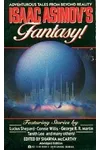
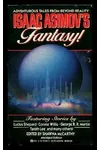
Isaac Asimov's Fantasy!
1985 By: Shawna McCarthy
05
Isaac Asimov's Fantasy!
1989 By: Connie Willis, George R.R. Martin, Ron Goulart, John Kessel, George Alec Effinger, Robert Thurston, Tanith Lee, Lucius Shepard, Scott Baker, Lillian Carl, Juleen Brantingham, Lee Killough, Ian McDowell, Daphne Castell, Sharon N. Farber, Richard Kearns, Shawna McCarthy, Leigh Kennedy, Gregg Keizer, Kristi Olesen
06
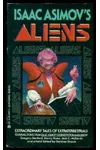
Isaac Asimov's Aliens
1991 By: Isaac Asimov, Gardner Dozois
07
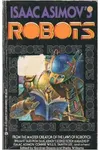
Isaac Asimov's Robots
1991 By: Isaac Asimov, Rob Chilson
08
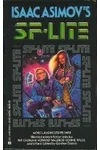
Isaac Asimov's SF-Lite
1993 By: Isaac Asimov, John M. Ford
09
Isaac Asimov's War
Isaac Asimov's War
1993 By: Isaac Asimov, Gardner Dozois
10
Isaac Asimov's Cyberdreams
1994 By: Isaac Asimov, Gardner Dozois
11
Isaac Asimov's Skin Deep
1995 By: Isaac Asimov, Gardner Dozois
12
Isaac Asimov's Ghosts
1995 By: Isaac Asimov, Terry Bisson
13
Isaac Asimov's Christmas
1997 By: Isaac Asimov, Gardner Dozois
14
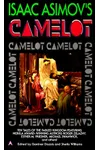
Isaac Asimov's Camelot
1998 By: Isaac Asimov, Gardner Dozois, Eleanor Arnason
15
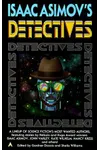
Isaac Asimov's Detectives
1998 By: Isaac Asimov, Gardner Dozois
16
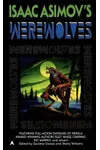
Isaac Asimov's Werewolves
1999 By: Isaac Asimov, Suzy McKee Charnas, Gardner Dozois
17
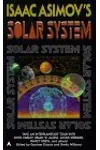
Isaac Asimov's Solar System
1999 By: Gardner Dozois
18
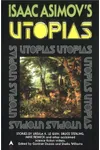
Isaac Asimov's Utopias
2000 By: Isaac Asimov, Gardner Dozois
19
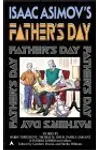
Isaac Asimov's Father Day
2001 By: Isaac Asimov, Gardner Dozois
20
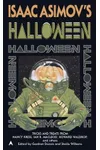
Isaac Asimov's Halloween
2001 By: Isaac Asimov
9 of 9 reading orders shown

Picture a British visionary who saw the future through a kaleidoscope of words—meet John Brunner! Born in 1934, this science fiction maestro crafted tales that didn’t just entertain but predicted our world’s twists and turns. From the Hugo Award-winning Stand on Zanzibar to coining the term ‘worm’ in computing, Brunner’s stories are a time machine of ideas.

The Making of John Brunner

John Kilian Houston Brunner grew up in Oxfordshire, England, with a vivid imagination sparked by wartime upheaval and a love for speculative fiction. By his teens, he was already penning stories, publishing his first novel, Galactic Storm, at just 17 under a pseudonym. A stint in the Royal Air Force and a rebellious streak against traditional publishing fueled his drive to carve a unique path in science fiction.

John Brunner’s Unforgettable Stories

Brunner’s works are a thrilling blend of social commentary and futuristic foresight. Stand on Zanzibar (1968), his Hugo-winning masterpiece, paints a dystopian 2010 grappling with overpopulation and corporate control, eerily mirroring today’s challenges. Its innovative, fragmented narrative style broke new ground. The Shockwave Rider (1975) introduced the concept of a computer ‘worm,’ predicting cyber threats decades early. The Squares of the City (1965) cleverly uses a chess game as a metaphor for political intrigue, showcasing his genre-blending brilliance. His style—sharp, satirical, and layered with ethical questions—made readers rethink technology’s role in society.

Unlike many peers, Brunner didn’t shy away from gritty realism or complex characters. His novels tackled overpopulation, environmental collapse, and digital surveillance, themes that resonate even now. Whether crafting sprawling epics or concise thrillers, he balanced bold predictions with human stories, earning a cult following among sci-fi fans.

Why John Brunner Matters

John Brunner’s legacy lies in his uncanny ability to predict societal shifts—think Black Mirror, but decades earlier. His term ‘worm’ is now a cybersecurity staple, and his warnings about overpopulation and tech monopolies feel like today’s headlines. Despite personal struggles and a rocky relationship with publishers, Brunner’s influence endures in modern sci-fi, inspiring authors like William Gibson. His fearless storytelling reminds us that fiction can both warn and inspire.

About John Brunner

  • Born: September 24, 1934, Oxfordshire, England
  • Key Works: Stand on Zanzibar, The Shockwave Rider, The Squares of the City
  • Awards: Hugo Award (1969), British Science Fiction Award
  • Died: August 25, 1995, during a sci-fi convention in Glasgow

Ready to explore a mind that saw tomorrow? Snag Stand on Zanzibar and dive into John Brunner’s thrilling, thought-provoking sci-fi!

Frequently Asked

Who was John Brunner?

John Brunner (1934–1995) was a British sci-fi author whose visionary novels, like the Hugo-winning Stand on Zanzibar, blended bold predictions with sharp social commentary. He coined the term ‘worm’ in computing and foresaw issues like overpopulation and cyber threats.

What is John Brunner’s most famous book?

John Brunner’s most famous book is Stand on Zanzibar (1968), a Hugo Award-winning dystopian novel about overpopulation and corporate control in 2010, known for its innovative, fragmented narrative style.

What inspired John Brunner’s writing?

John Brunner drew inspiration from wartime England, his love for speculative fiction, and a rebellious streak against traditional publishing. His works tackled real-world issues like overpopulation, technology, and political intrigue.

Why is The Shockwave Rider important?

The Shockwave Rider (1975) by John Brunner is a sci-fi classic that introduced the concept of a computer ‘worm,’ predicting cybersecurity threats. It explores digital freedom and surveillance, influencing cyberpunk.

What awards did John Brunner win?

John Brunner won the Hugo Award in 1969 for Stand on Zanzibar and the British Science Fiction Award, cementing his status as a leading voice in speculative fiction.