

author Reading Order

John Varley Books in Order

46 Books
11 Series & collections
1977 – 2018 Published
Jump to reading order
Affiliate links: We may earn a commission on purchases made at no extra cost to you.
Reading order
01
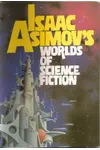
Isaac Asimov's Worlds of Science Fiction
1980 By: Isaac Asimov, Tanith Lee, Phyllis Eisenstein, Gene Wolfe, Barry B. Longyear, John M. Ford, Arnie Bateman, Alan Dean Foster, Martin Gardner, Randall Garrett, Rob Chilson, Ted Reynolds, George Scithers, Richard S. McEnroe, Jeff Duntemann, R.N. Bracewell, K.W. MacAnn, G. Richard Bozarth
02
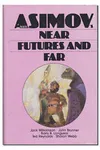
Isaac Asimov's Near Futures and Far
1981 By: Isaac Asimov, Frederik Pohl, Carter Scholz, Barry B. Longyear, John M. Ford, Jack Williamson, Darrell Schweitzer, John Brunner, Juleen Brantingham, Martin Gardner, Richard Wilson, Milton A. Rothman, Elizabeth Anne Hull, Sharon Webb, Somtow Sucharitkul, Lee Weinstein, Ted Reynolds, George Scithers, F. Gwynplaine MacIntyre, William Tuning, Francis E. Izzo, Paul David Novitski, Lee Russell, Seth S. Horowitz, Tol E. Rant, S. Dale, Julie Flores, Tony Sarowitz
03
Isaac Asimov's Space of Her Own
1983 By: Connie Willis, Ursula K. Le Guin, Pat Cadigan, Joan D. Vinge, Tanith Lee, Pamela Sargent, Lee Killough, Mary Gentle, Mildred Downey Broxon, Shawna McCarthy, Sharon Webb, Leigh Kennedy, Stephanie A. Smith, Cherie Wilkerson, Julie Stevens, Sydney J. Van Scyoc, Cyn Mason, P.A. Kagan, P.J. MacQuarrie, Janet O. Jeppson, Beverly Grant, Hope Athearn
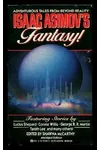
04
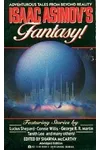
Isaac Asimov's Fantasy!
1985 By: Shawna McCarthy
05
Isaac Asimov's Fantasy!
1989 By: Connie Willis, George R.R. Martin, Ron Goulart, John Kessel, George Alec Effinger, Robert Thurston, Tanith Lee, Lucius Shepard, Scott Baker, Lillian Carl, Juleen Brantingham, Lee Killough, Ian McDowell, Daphne Castell, Sharon N. Farber, Richard Kearns, Shawna McCarthy, Leigh Kennedy, Gregg Keizer, Kristi Olesen
06
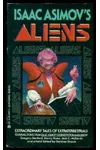
Isaac Asimov's Aliens
1991 By: Isaac Asimov, Gardner Dozois
07
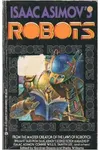
Isaac Asimov's Robots
1991 By: Isaac Asimov, Rob Chilson
08
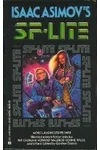
Isaac Asimov's SF-Lite
1993 By: Isaac Asimov, John M. Ford
09
Isaac Asimov's War
Isaac Asimov's War
1993 By: Isaac Asimov, Gardner Dozois
10
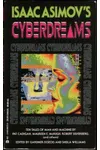
Isaac Asimov's Cyberdreams
1994 By: Isaac Asimov, Gardner Dozois
11
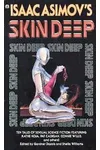
Isaac Asimov's Skin Deep
1995 By: Isaac Asimov, Gardner Dozois
12
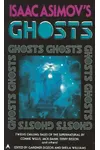
Isaac Asimov's Ghosts
1995 By: Isaac Asimov, Terry Bisson
13
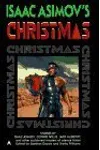
Isaac Asimov's Christmas
1997 By: Isaac Asimov, Gardner Dozois
14
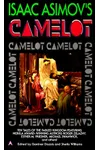
Isaac Asimov's Camelot
1998 By: Isaac Asimov, Gardner Dozois, Eleanor Arnason
15
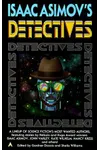
Isaac Asimov's Detectives
1998 By: Isaac Asimov, Gardner Dozois
16
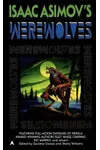
Isaac Asimov's Werewolves
1999 By: Isaac Asimov, Suzy McKee Charnas, Gardner Dozois
17
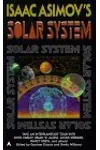
Isaac Asimov's Solar System
1999 By: Gardner Dozois
18
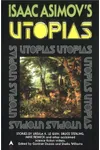
Isaac Asimov's Utopias
2000 By: Isaac Asimov, Gardner Dozois
19
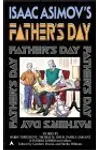
Isaac Asimov's Father Day
2001 By: Isaac Asimov, Gardner Dozois
20
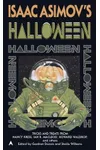
Isaac Asimov's Halloween
2001 By: Isaac Asimov
01
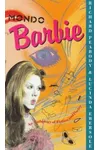
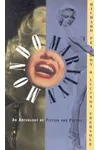
Mondo Barbie
Mondo Barbie
1993 With: Lynne Barrett, Julia Alvarez, Philip Levine, A.M. Homes, David Trinidad, Sandra Cisneros, Marge Piercy, Gary Soto, Roberta Allen, Alice McDermott, Hilary Tham, Lyn Lifshin, Rebecca Brown, Denise Duhamel, Lucinda Ebersole, Richard Peabody, Jeanne Beaumont, Lynne McMahon, Kathryn Harrison, Patricia Storace, Richard Grayson, Leslie Shiel, Laura Costas, Sharon Henry, Cookie Lupton, Lisa B. Herskovits, Belinda Subraman, Ellie Schoenfeld, Sparrow ., Gregg Shapiro, Cathryn Hankla, Wayne E. Kline, Jose Padua, Jeff Weddle

Picture a Texas-born dreamer who swapped physics for far-out galaxies and fluid identities—meet John Varley! This science fiction maestro burst onto the scene in the 1970s, weaving tales of interplanetary adventures and mind-bending tech that still dazzle readers. With his Hugo and Nebula awards, Varley’s not just a writer; he’s a universe-builder who makes the impossible feel real.

The Making of John Varley

Born on August 9, 1947, in Austin, Texas, John Herbert Varley grew up in Fort Worth and later Port Arthur, soaking up the humid charm of small-town life. A National Merit Scholarship whisked him to Michigan State University, where he ditched physics for English before dropping out to chase the 1967 Summer of Love in San Francisco’s Haight-Ashbury. From panhandling to stumbling into Woodstock when his car ran out of gas, Varley’s hippie days shaped his free-spirited storytelling. By 1973, he decided writing beat odd jobs, and his first story, “Picnic on Nearside,” hit print in 1974, launching a stellar career.

John Varley’s Unforgettable Stories

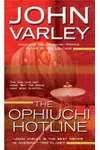
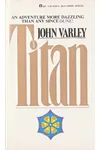
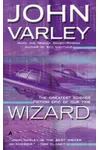
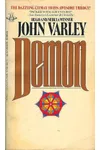
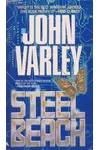
Varley’s work is a cosmic playground, blending hard science with human heart. His Eight Worlds series, kicked off by The Ophiuchi Hotline (1977), imagines a solar system where humans, exiled from Earth by alien invaders, embrace cloning, sex changes, and digital memories. The novel’s vibrant, libertarian vibe earned praise for its bold vision. Then there’s the Gaea TrilogyTitan (1979), Wizard (1980), and Demon (1984)—where explorers tangle with a sentient, movie-obsessed world called Gaea. Fans call Titan a page-turner that mixes wonder and weirdness. Steel Beach (1992) dives into a moon colony’s existential ennui, while The Golden Globe (1998) follows a roguish actor-thief across the stars. Varley’s style, often compared to Robert Heinlein’s, shines with witty prose, strong female leads, and themes of freedom and identity.

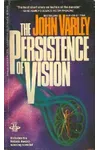
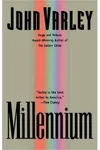
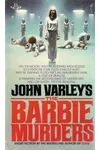
His short stories, like “The Persistence of Vision” (1978), which nabbed both Hugo and Nebula awards, pack equal punch. Varley’s knack for blending speculative tech—think mind uploads and bioengineering—with raw human emotion sets him apart. Whether it’s a detective chasing a killer in a cult of identical “Barbies” or a time-travel heist in Millennium (1983), his stories stick with you.

Why John Varley Matters

Varley’s impact on science fiction is galactic. In the 1970s, he rode the New Wave, bringing feminism and fluid gender to the genre’s forefront, long before they were mainstream. His Eight Worlds universe, with its casual sex changes and cloned identities, challenged norms and inspired writers like Cory Doctorow, who calls Varley’s work “purely love.” His libertarian streak, echoing Heinlein but less preachy, celebrates self-determination. Despite health setbacks in 2021, including a quadruple bypass, Varley’s influence endures, with fans still raving about his “unforgettable” stories on platforms like Reddit. He’s proof that sci-fi can be brainy, bold, and deeply human.

  • Born: August 9, 1947, Austin, Texas
  • Key Works: The Ophiuchi Hotline, Gaea Trilogy, Steel Beach, The Golden Globe
  • Awards: Multiple Hugo, Nebula, Locus, and Prometheus awards

Ready to blast off? Grab The Ophiuchi Hotline or Titan and dive into John Varley’s wild, wondrous sci-fi worlds!

Frequently Asked

QWho is John Varley?

John Varley is an American science fiction author born in 1947 in Austin, Texas. Known for his Eight Worlds series and Gaea Trilogy, he’s won Hugo and Nebula awards for his imaginative tales of cloning, fluid genders, and interplanetary adventures.

QWhat are John Varley’s best books?

John Varley’s top books include The Ophiuchi Hotline (1977), exploring a post-Earth solar system, the Gaea Trilogy (Titan, Wizard, Demon), and Steel Beach (1992), a witty moon-colony saga. Fans love their bold themes and vivid characters.

QWhat inspired John Varley to write science fiction?

John Varley’s hippie days in 1960s San Francisco, plus his love for Robert Heinlein’s novels like Red Planet, sparked his sci-fi passion. His free-spirited life, from Woodstock to Haight-Ashbury, fueled his tales of freedom and futuristic societies.

QWhy is John Varley compared to Robert Heinlein?

John Varley’s descriptive style, libertarian themes, and focus on free love mirror Robert Heinlein’s work. His novels like Steel Beach even nod to Heinlein with “Heinleiners” societies, blending homage with his own innovative spin.

QWhat awards has John Varley won?

John Varley has snagged multiple Hugo and Nebula awards, including for “The Persistence of Vision” (1978). He’s also won Locus, Prometheus, and Seiun awards, cementing his status as a sci-fi heavyweight.