
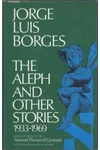



Jorge Borges Books in Order

  • 144 Books
  • 1925 – 2018 Published

Amazon links here are affiliate links. As an Amazon Associate I earn from qualifying purchases.

Reading order
01
San Francisco Stories
1990 By: John Miller
02
Los Angeles Stories
Los Angeles Stories
1991 By: John Miller
04
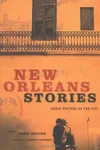
New Orleans Stories
New Orleans Stories
1992 By: John Miller, Genevieve Anderson
05
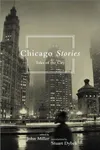
Chicago Stories
Chicago Stories
1993 By: Stuart Dybek, John Miller
06
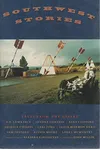
Southwest Stories
Southwest Stories
1993 By: D.H. Lawrence, Alison Moore, Barry Gifford, Sandra Cisneros, Larry McMurtry, Sam Shepard, Leslie Marmon Silko, C.G. Jung, John Miller, Georgia O'Keefe
07
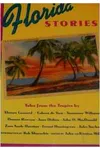
Florida Stories
Florida Stories
1993 By: Dave Barry, Elmore Leonard, Ernest Hemingway, John D. MacDonald, Damon Runyon, Isaac Bashevis Singer, Nathaniel Hawthorne, Stephen Crane, Zora Neale Hurston, Elizabeth Bishop, Tennessee Williams, Alison Lurie, Wallace Stevens, John Sayles, John James Audubon, Joy Williams, Joan Didion, John Miller, KirstenMiller, William Bartram
08
09
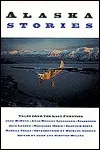
Alaska Stories
Alaska Stories
1995 By: John Miller, KirstenMiller
10
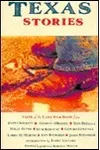
Texas Stories
Texas Stories
1995 By: John Miller, KirstenMiller
11
San Francisco Thrillers
1995 By: Tim Smith, John Miller
12
Cape Cod Stories
Cape Cod Stories
2002 By: Tim Smith, John Miller
01
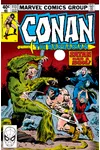
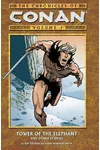
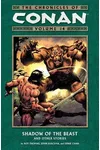
The Chronicles of Conan, Volume 20: Night of the Wolf and Other Stories
2010 By: Gary Kwapisz, John Buscema, Michael L. Fleisher
02
The Chronicles of Conan, Volume 21: Blood of the Titan and Other Stories
2011 By: Roy Thomas, Larry Yakata, John Buscema, Michael L. Fleisher, Bob Camp, Armando Gil
03
The Chronicles of Conan, Volume 22: Reavers in the Borderland and Other Stories
2012 By: Christopher J. Priest, Ernie Chan, John Buscema, Michael L. Fleisher, Val Mayerik
04
The Chronicles of Conan, Volume 23: Well of Souls and Other Stories
2013 By: Chris Warner, Christopher J. Priest, Ernie Chan, John Buscema
05
The Chronicles of Conan, Volume 24: Blood Dawn and Other Stories
2013 By: Mike Docherty, Chris Warner, Christopher J. Priest, Ernie Chan, Don Kraar, Dave Simons, John Buscema
07
The Chronicles of Conan, Volume 26: Legion of the Dead and Other Stories
2014 By: Andy Kubert, Vince Colletta, Adam Kubert, Val Semeiks, Geof Isherwood, George Roussos, Chris Warner, Vincent Giarrano, Christopher J. Priest, Ernie Chan, John Buscema, George Sturt
01
Learning to Live Finally
2005 By: Jacques Derrida
03
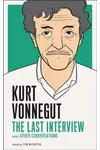
Kurt Vonnegut
Kurt Vonnegut
2011 By: Kurt Vonnegut
07
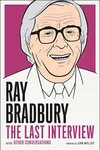
Ray Bradbury: The Last Interview
2014 By: Ray Bradbury, Sam Weller
08
Gabriel García Márquez
2015 By: Gabriel García Márquez
09
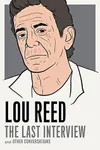
Lou Reed
Lou Reed
2015 By: Lou Reed
10
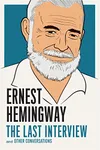
Ernest Hemingway
Ernest Hemingway
2015 By: Ernest Hemingway
12
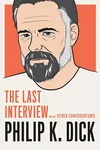
Philip K. Dick
Philip K. Dick
2015 By: Philip K. Dick
13
J. D. Salinger
2016 By: J.D. Salinger
14
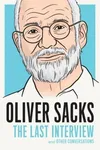
Oliver Sacks
Oliver Sacks
2016 By: Oliver Sacks
15
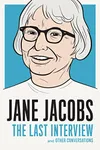
Jane Jacobs
Jane Jacobs
2016 By: Jane Jacobs
16
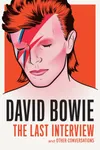
David Bowie
David Bowie
2016 By: David Bowie
18
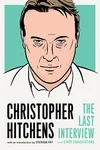
Christopher Hitchens
2017 By: Christopher Hitchens
19
Hunter S. Thompson
2018 By: Hunter S. Thompson
9 of 9 reading orders shown

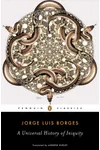
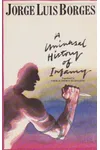
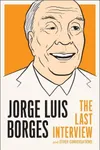
Picture an Argentine storyteller weaving labyrinths of thought, where reality and dreams blur—meet Jorge Luis Borges! Born in 1899 in Buenos Aires, Borges redefined literature with his mind-bending short stories and essays. His works, like Ficciones and The Aleph, explore time, infinity, and identity, captivating readers with their philosophical depth and playful puzzles.

Despite losing his sight progressively, Borges’s imagination only grew sharper, crafting tales that feel like stepping into a cosmic riddle. Ready to unravel his story? Let’s dive into the life and legacy of this literary genius!

The Making of Jorge Luis Borges

Borges grew up in a book-filled home in Buenos Aires, surrounded by his father’s vast library and a bilingual education in English and Spanish. This eclectic upbringing sparked his love for literature, from Cervantes to Kafka. After moving to Europe during his teens, he soaked up modernist ideas in Spain and Switzerland, shaping his experimental style. Back in Argentina, Borges began writing poetry and essays, but his 1930s short stories marked his rise as a literary innovator.

Jorge Borges’s Unforgettable Stories

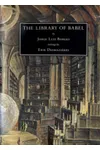
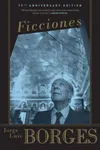
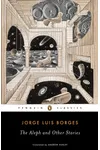
Borges’s stories are like intellectual treasure hunts, blending philosophy, fantasy, and mystery. His 1944 collection Ficciones is a masterpiece, featuring tales like ‘Tlön, Uqbar, Orbis Tertius,’ where a fictional world reshapes reality, and ‘The Library of Babel,’ imagining an infinite library of all possible books. The Aleph (1949) dazzles with its titular story, where a single point contains the entire universe.

His style is concise yet profound, often mimicking scholarly essays or detective tales to explore big ideas. Borges loved playing with paradoxes—think mirrors reflecting mirrors or stories within stories. His themes of fate, memory, and the nature of existence resonate universally, making his work timeless. Unlike sprawling novels, his compact stories pack a punch, inviting readers to ponder long after the last page.

Why Jorge Luis Borges Matters

Borges’s influence stretches far beyond Argentina, inspiring writers like Umberto Eco and Salman Rushdie. His fusion of highbrow philosophy with accessible storytelling reshaped modern literature, paving the way for magical realism and postmodernism. By tackling universal questions—What is reality? Who are we?—he connects with readers across cultures. His courage to write despite blindness also underscores his resilience, making him a literary icon.

Today, Borges’s ideas echo in films, games, and even AI, where virtual worlds mirror his imagined realities. His work remains a gateway to exploring the human mind’s endless possibilities.

About Jorge Luis Borges

  • Born: August 24, 1899, Buenos Aires, Argentina
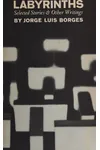
  • Key Works: Ficciones (1944), The Aleph (1949), Labyrinths (1962)
  • Notable Trait: Mastered short stories blending philosophy and fantasy
  • Awards: International Publishers’ Prize (1961), Jerusalem Prize (1971)

Snag Ficciones and dive into Borges’s mesmerizing world of ideas! His stories are short but will leave your mind spinning with wonder.

Frequently Asked

Who is Jorge Luis Borges?

Jorge Luis Borges (1899–1986) was an Argentine writer famous for his mind-bending short stories like Ficciones. Blending philosophy, fantasy, and mystery, he explored time and identity, reshaping 20th-century literature despite progressive blindness.

What are Jorge Luis Borges’s best books?

Borges’s top works include Ficciones (1944), with stories like ‘The Library of Babel,’ and The Aleph (1949), featuring a point containing the universe. Labyrinths (1962) is also a must-read collection.

What inspired Jorge Luis Borges’s writing?

Borges drew inspiration from his father’s library, bilingual upbringing, and European travels. Writers like Kafka, Cervantes, and Poe, plus philosophy and mysticism, shaped his labyrinthine tales of reality and dreams.

Why is Jorge Luis Borges important?

Borges revolutionized literature with his philosophical short stories, influencing magical realism and postmodernism. His universal themes of identity and existence inspire writers, filmmakers, and thinkers worldwide.

How did blindness affect Jorge Luis Borges’s work?

Borges’s progressive blindness, starting in his 30s, deepened his imagination. Unable to read or write independently, he dictated his intricate stories, like those in The Aleph, proving his creative resilience.