

Kim Stanley Robinson Books in Order

  • 78+ Books
  • 1971 – 2022 Published

Amazon links here are affiliate links. As an Amazon Associate I earn from qualifying purchases.

Reading order
01
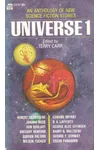
Universe 1
Universe 1
1971 By: Terry Carr
02
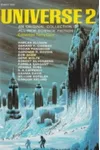
Universe 2
Universe 2
1972 By: Terry Carr
03
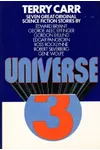
Universe 3
Universe 3
1973 By: Terry Carr
04
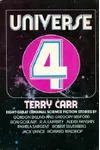
Universe 4
Universe 4
1974 By: Terry Carr
05
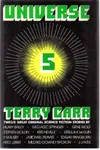
Universe 5
Universe 5
1974 By: Terry Carr
06
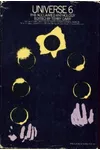
Universe 6
Universe 6
1976 By: John Shirley, Terry Carr
07
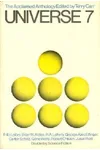
Universe 7
Universe 7
1977 By: Terry Carr
08
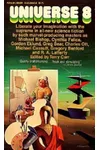
Universe 8
Universe 8
1978 By: Terry Carr
09
Universe 9
Universe 9
1979 By: John Shirley, Terry Carr
10
Universe 10
Universe 10
1980 By: Terry Carr
11
Universe 11
Universe 11
1981 With: William Gibson, Michael Swanwick, Carter Scholz, Michael Bishop, Ian Watson, Nancy Kress, Carol Emshwiller, Josephine Saxton, Terry Carr
12
Universe 12
Universe 12
1982 By: Terry Carr
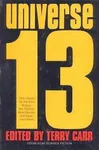
13
Universe 13
Universe 13
1983 With: Lucius Shepard, Michael Bishop, Ian Watson, Terry Carr, Bruce Sterling, Leanne Frahm, Bill Bickel
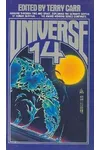
14
Universe 14
Universe 14
1984 By: Terry Carr
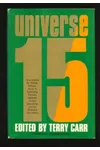
15
Universe 15
Universe 15
1985 By: Terry Carr
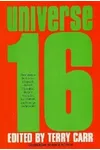
16
Universe 16
Universe 16
1986 By: Terry Carr
17
Universe 17
Universe 17
1987 By: Terry Carr
01
The Human Front
The Human Front
2001 By: Ken MacLeod
02
The Left Left Behind
2009 By: Terry Bisson, Eleanor Arnason
04
The Underbelly
The Underbelly
2010 By: Gary Phillips, Eleanor Arnason
05
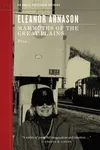
Mammoths of the Great Plains
2010 By: Eleanor Arnason
06
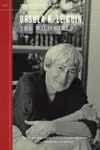
The Wild Girls
The Wild Girls
2011 By: Ursula K. Le Guin, Eleanor Arnason
07
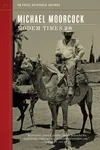
Modem Times 2.0
Modem Times 2.0
2011 By: Michael Moorcock, Eleanor Arnason
08
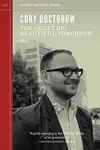
The Great Big Beautiful Tomorrow
2011 By: Cory Doctorow, Eleanor Arnason
09
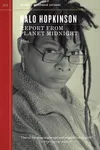
Report from Planet Midnight
2012 By: Nalo Hopkinson, Eleanor Arnason
10
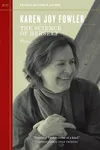
The Science of Herself
2013 By: Karen Joy Fowler, Eleanor Arnason
11
12
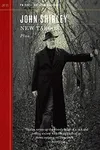
New Taboos
New Taboos
2013 By: John Shirley
13
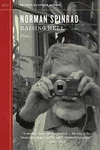
Raising Hell
Raising Hell
2014 By: Norman Spinrad, Eleanor Arnason
14
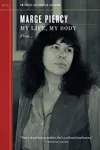
My Life, My Body
My Life, My Body
2015 By: Marge Piercy
15
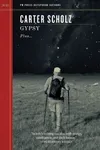
Gypsy
Gypsy
2015 By: Carter Scholz, Eleanor Arnason
16
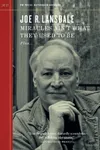
Miracles Ain't What They Used to Be
2016 By: Joe R. Lansdale, Eleanor Arnason
17
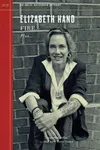
Fire.
Fire.
2017 By: Elizabeth Hand, Eleanor Arnason
18
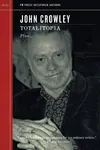
Totalitopia
Totalitopia
2017 By: John Crowley
19
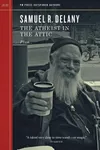
The Atheist in the Attic
2018 By: Samuel R. Delany, Eleanor Arnason
20
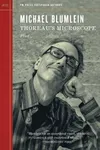
Thoreau's Microscope
2018 By: Michael Blumlein, Eleanor Arnason
10 of 11 reading orders shown

Picture an American visionary who turned the red sands of Mars into a saga of human hope and struggle—meet Kim Stanley Robinson! Born in 1952, this science fiction maestro weaves ecological and societal questions into gripping narratives, earning him a devoted following and multiple awards. His stories aren’t just tales; they’re blueprints for sustainable futures.

With his acclaimed Mars trilogy and novels like Ministry for the Future, Robinson challenges us to rethink our planet’s path. Ready to dive into a world where science meets storytelling? Let’s explore the life and legacy of this literary pioneer.

The Making of Kim Stanley Robinson

Born in Waukegan, Illinois, Kim Stanley Robinson grew up in California, where the landscapes of Orange County sparked his love for nature. He earned a Ph.D. in English from UC San Diego, studying under the legendary Fredric Jameson. His academic roots and fascination with science shaped his career, blending rigorous research with speculative wonder. By the 1980s, Robinson was publishing short stories, laying the groundwork for his epic novels.

Kim Stanley Robinson’s Unforgettable Stories

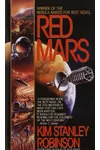
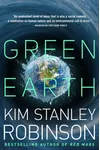
Robinson’s Mars trilogy—Red Mars, Green Mars, and Blue Mars—is his crown jewel. This sprawling saga follows the terraforming of Mars over centuries, blending political intrigue, environmental ethics, and human resilience. Red Mars (1992) won the Nebula Award, while Green Mars and Blue Mars snagged Hugo Awards, cementing his reputation.

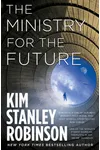
His 2020 novel Ministry for the Future tackles climate change head-on, imagining a global response to ecological collapse with a mix of policy, technology, and human grit. Robinson’s style is dense yet accessible, grounding fantastical ideas in scientific detail. Themes of sustainability, equity, and human potential run through his work, making each book a call to action.

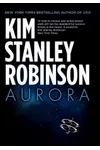
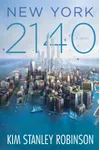
Other gems include New York 2140, a climate fiction tale of a flooded Manhattan, and Aurora, a sobering take on interstellar travel. His ability to balance hope and caution sets him apart in sci-fi.

Why Kim Stanley Robinson Matters

Kim Stanley Robinson’s impact transcends genre. His novels inspire scientists, policymakers, and activists to confront climate change and social inequality. By grounding his stories in plausible science, he makes speculative futures feel urgent and real. His six Locus Awards and dedicated fanbase reflect his influence, while his optimistic yet critical lens challenges readers to build a better world.

Robinson’s work resonates because it’s not just about Mars or flooded cities—it’s about us. His stories ask: How do we live responsibly on Earth? His answers, woven through rich characters and vivid worlds, keep readers thinking long after the last page.

  • Born: March 23, 1952, Waukegan, Illinois
  • Key Works: Mars trilogy, Ministry for the Future, New York 2140
  • Awards: Nebula, Hugo, and six Locus Awards

Snag Ministry for the Future or the Mars trilogy and dive into Kim Stanley Robinson’s thought-provoking sci-fi! His worlds will leave you inspired to reimagine our planet’s future.

Frequently Asked

Who is Kim Stanley Robinson?

Kim Stanley Robinson is an American sci-fi author born in 1952, famous for the Mars trilogy. His novels blend science, ecology, and societal themes, earning Nebula, Hugo, and six Locus Awards. A visionary storyteller, he challenges readers to imagine sustainable futures.

What are Kim Stanley Robinson’s best books?

Kim Stanley Robinson’s top books include the Mars trilogy (Red Mars, Green Mars, Blue Mars), Ministry for the Future, and New York 2140. These novels explore terraforming, climate change, and human resilience with scientific depth.

What inspired Kim Stanley Robinson’s writing?

Kim Stanley Robinson drew inspiration from California’s landscapes, his Ph.D. studies under Fredric Jameson, and his passion for science and ecology. His fascination with sustainable futures and societal challenges shapes his thought-provoking sci-fi narratives.

Why is the Mars trilogy so famous?

Kim Stanley Robinson’s Mars trilogy is renowned for its detailed terraforming saga, blending science, politics, and human drama. Winning Nebula and Hugo Awards, it captivates with its vision of Mars as a testing ground for humanity’s future.

How does Kim Stanley Robinson address climate change?

Kim Stanley Robinson tackles climate change in novels like Ministry for the Future and New York 2140, imagining global solutions through policy, technology, and human action. His scientifically grounded stories inspire real-world environmental action.