








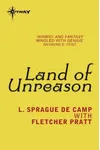

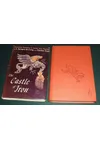
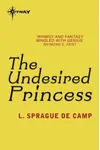
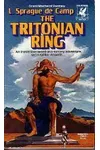
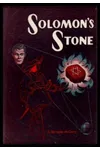
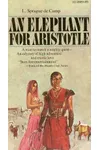
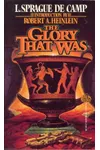
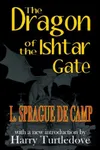
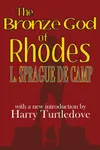
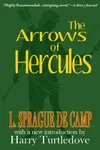
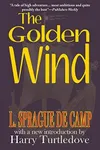



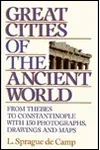
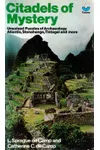

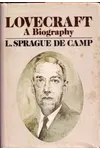





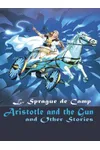
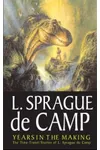
Picture an American storyteller who spun tales of time travel, barbarian heroes, and skeptical science—meet L. Sprague de Camp! Born in 1907, this prolific author crafted over 100 books, blending rigorous research with whimsical imagination. A titan of science fiction and fantasy, de Camp’s witty narratives and historical insights captivated readers for six decades, earning him a lasting legacy.
From his early days in New York to his influential role in the genre’s golden age, de Camp’s unique voice—part scholar, part dreamer—reshaped speculative fiction. Ready to explore his world of dinosaurs, enchanters, and ancient Rome? Let’s dive in!
The Making of L. Sprague de Camp
Lyon Sprague de Camp was born on November 27, 1907, in New York City, the son of a real estate businessman and a descendant of Civil War veteran Charles Ezra Sprague. Educated at Trinity School and the military-style Snyder School in North Carolina, he later earned a master’s in aeronautical engineering from Caltech in 1933. His technical background fueled his love for practical science, which seeped into his storytelling. By the late 1930s, de Camp was writing for Astounding Science Fiction, mentored by editor John W. Campbell, and soon became a cornerstone of the genre’s golden age.
L. Sprague de Camp’s Unforgettable Stories
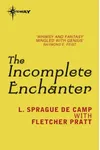
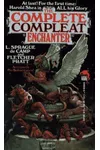
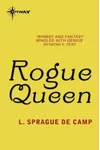
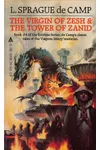
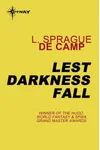
De Camp’s fiction danced between science fiction, fantasy, and historical adventure, often laced with humor and skepticism. His 1939 novel Lest Darkness Fall is a time-travel classic, where a modern American tries to prevent the fall of Rome with printing and technology—only to be thwarted by practical limits. The Incomplete Enchanter (1941), co-written with Fletcher Pratt, follows Harold Shea’s magical misadventures across mythological worlds, blending wit with rigorous logic. Rogue Queen (1951) broke ground with its strong female protagonist and exploration of alien societies, influencing later works like Daniel Keyes’s Flowers for Algernon. His Viagens Interplanetarias series, including The Virgin of Zesh, imagined a Brazilian-dominated future with romantically barbarian planets, showcasing his knack for world-building.
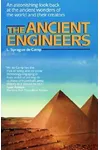
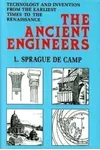
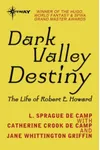
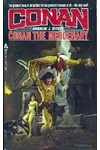
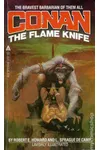
De Camp’s style was distinctive: he married scientific plausibility with playful irony, crafting stories that felt both fantastical and grounded. His non-fiction, like The Ancient Engineers (1963), explored practical science through history, while his biographies of H.P. Lovecraft and Robert E. Howard offered unflinching, if controversial, portraits of fantasy icons. Whether writing about dinosaurs or Conan the Barbarian, de Camp’s work sparkled with intellectual curiosity.
Why L. Sprague de Camp Matters
De Camp’s impact on science fiction and fantasy is immense. He helped elevate the genre from pulp adventures to sophisticated narratives, influencing writers like Isaac Asimov and Robert A. Heinlein. His skeptical lens—evident in works like Science-Fiction Handbook (1953, revised 1975 with Catherine Crook de Camp)—guided aspiring authors, while his editorship of Conan stories preserved Robert E. Howard’s legacy. Awards like the SFWA Grand Master (1979) and World Fantasy Award for Life Achievement (1984) reflect his stature. De Camp’s blend of humor, history, and science continues to inspire modern speculative fiction, proving that imagination thrives on reason.
About L. Sprague de Camp
- Born: November 27, 1907, New York City
- Died: November 6, 2000, Plano, Texas
- Key Works: Lest Darkness Fall, Incomplete Enchanter, Rogue Queen
- Awards: SFWA Grand Master (1979), World Fantasy Award for Life Achievement (1984), Hugo Award for Nonfiction (1997)
Snag Lest Darkness Fall or Incomplete Enchanter and dive into L. Sprague de Camp’s thrilling blend of science and sorcery!