










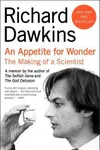
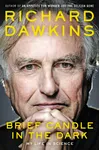














Picture a British scientist who turned the world of evolutionary biology upside down with a single, bold idea—meet Richard Dawkins! Born in 1941, Dawkins is the mastermind behind The Selfish Gene, a book that redefined how we think about evolution. With his knack for clear, captivating science communication, he’s also sparked global debates on religion and culture, coining the term 'meme' along the way.
From his early days in Nairobi to his provocative atheism advocacy in The God Delusion, Dawkins has spent decades challenging conventional wisdom. Ready to dive into the life of a man who’s as much a storyteller as a scientist? Let’s explore!
The Making of Richard Dawkins
Richard Dawkins was born on March 26, 1941, in Nairobi, Kenya, where his father worked as an agricultural civil servant. Moving to England at age eight, he grew up surrounded by books and nature, fostering a love for science. At Oxford University, he studied zoology under Nobel Prize-winner Nikolaas Tinbergen, igniting his passion for evolutionary biology. His early career as a researcher laid the groundwork for his revolutionary ideas, blending rigorous science with a flair for communication.
Richard Dawkins’s Groundbreaking Works
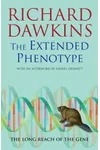
Dawkins’s 1976 masterpiece, The Selfish Gene, introduced the gene-centered view of evolution, arguing that genes, not organisms, drive natural selection. This accessible yet profound book made complex science relatable, captivating readers worldwide. He followed with The Extended Phenotype (1982), diving deeper into how genes influence environments, showcasing his ability to push scientific boundaries.
In 2006, The God Delusion cemented Dawkins as a cultural lightning rod. With sharp wit, he challenged religious dogma, advocating for atheism and sparking heated debates. His clear, engaging prose—often laced with humor—makes his books both educational and entertaining. Dawkins also coined 'meme,' a term now ubiquitous in digital culture, proving his influence extends beyond science.
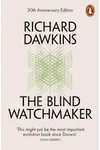
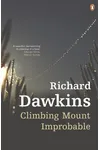
Other notable works include The Blind Watchmaker (1986), which dismantles creationist arguments, and Climbing Mount Improbable (1996), a vivid exploration of evolutionary processes. His style blends meticulous research with storytelling, making science feel like an adventure.
Why Richard Dawkins Matters
Dawkins’s work has reshaped evolutionary biology, making it accessible to millions. His gene-centered theory remains a cornerstone of modern science, while his fearless critiques of religion have fueled global conversations on faith and reason. By popularizing 'meme,' he inadvertently shaped internet culture. Despite polarizing views, Dawkins’s ability to provoke thought ensures his lasting impact on science and society.
About Richard Dawkins
- Born: March 26, 1941, in Nairobi, Kenya
- Key Works: The Selfish Gene, The God Delusion, The Blind Watchmaker
- Notable Contribution: Coined the term 'meme'
- Awards: Royal Society of Literature Award, Faraday Award
Ready to explore the mind of a scientific storyteller? Grab The Selfish Gene and dive into Dawkins’s fascinating world of evolution and ideas!