
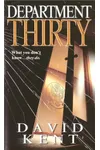
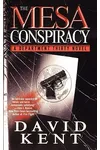
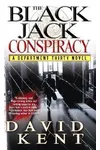
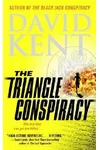
The Recommended Reading Order for Department Thirty
The Department Thirty series, penned by broadcast journalist B. Kent Anderson under the pseudonym David Kent, is a fast-paced quartet of political thrillers. To fully appreciate the unfolding conspiracy and character development, you should read the novels in their publication order. The overarching lore of the secretive agency builds from one book to the next, meaning skipping ahead will spoil key plot points.
- Department Thirty (2003)
- The Mesa Conspiracy (2004)
- The Blackjack Conspiracy (2005)
- The Triangle Conspiracy (2006)
A Closer Look at the Books
1. Department Thirty (2003)
The series kicks off with the titular debut, introducing us to Oklahoma radio journalist Ryan Elder. Ryan's life is shattered following the mysterious double suicide of his parents. Soon, he receives a cryptic letter from his late mother, exposing his parents' deep ties to "Department Thirty"—a highly clandestine government division that exchanges immunity and identity erasure for valuable intelligence. Ryan is thrust into a maze of historical secrets and national security threats, forcing him to decide who he can truly trust.
2. The Mesa Conspiracy (2004)
In the second installment, the focus shifts to Eric Anthony, a single father raising a young deaf son. On her deathbed, Eric's adoptive cousin Colleen reveals a hidden directive left by his biological father, drawing him to Oklahoma. There, his search for his roots collides with Department Thirty operations and U.S. Marshal Faith Kelly, who is hot on the trail of a domestic terror cell linked to Eric's family history.
3. The Blackjack Conspiracy (2005)
Winner of the 2006 Oklahoma Book Award for Fiction, this standout novel places Faith Kelly in her new role as a formal case officer for Department Thirty. When Alex Bridge, a pregnant young widow, is accused of murdering an FBI agent and embezzling millions, Faith steps in to offer her the agency's signature protection in exchange for testimony. The investigation unearths a dark conspiracy with roots tracing back over a century to a frontier-era massacre in the Oklahoma Territory.
4. The Triangle Conspiracy (2006)
The final book in the quartet delivers a highly personal case for Faith Kelly. When Daryn McDermott, the activist daughter of a powerful senator, is found murdered near the Oklahoma City National Memorial, the prime suspect is Faith's own brother, Sean—an ICE agent who had been sent to bring Daryn home. As Sean goes on the run, Faith must navigate a web of betrayal, political cover-ups, and her own past to clear her brother's name.
What to Know Before You Start
The Evolution of Protagonists: While Ryan Elder starts the journey in the first book, the series transitions into a recurring focus on U.S. Marshal Faith Kelly. Understanding this shift helps set expectations, as Faith becomes the emotional anchor for the subsequent books.
Grounded in Real History: David Kent's background as a journalist and press secretary shines through in his attention to detail. The novels frequently weave real Oklahoma history, local geography, and political structures into fictional plots. The shadow of actual historical events, such as frontier massacres and modern domestic terrorism, gives the conspiracy theories a chilling sense of plausibility.
Standalones vs. Continuity: Although each book resolves its primary mystery, the character growth of Faith Kelly and the evolving operations of Department Thirty are highly serial. We strongly recommend not reading them out of order.
Related and Co-Authored Works
There are no direct spin-offs or co-authored novels set in the Department Thirty universe. However, readers who enjoy David Kent's style can explore B. Kent Anderson's thrillers published under his real name. These political thrillers feature a similar blend of history and modern intrigue:
- Cold Glory (2011)
- Silver Cross (2012)