







The Recommended Reading Order
For readers diving into the high-stakes espionage of Department Z, the recommended approach is to read the books in their original publication order. Because John Creasey wrote this series sequentially over a quarter-century, the geopolitical landscape, the operational evolution of the intelligence agency, and the personal arcs of the recurring agents progress naturally in tandem with real-world history.
Beginning in 1933 with the rise of pre-war anxieties and continuing through the depths of World War II to the early years of the Cold War, the publication order provides a dynamic, chronologically consistent experience of mid-20th-century history. Here is the complete reading order based on original publication dates.
Department Z Books in Publication Order
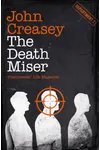
- The Death Miser (1933) - The debut novel introducing Chief of Intelligence Gordon Craigie and agent James Quinion as they confront an international monetary conspiracy.
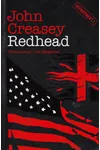
- Redhead (1933) - Two operatives dodge deadly assassins across New York and Sussex to unravel a major conspiracy.
- First Came a Murder (1934) - A complex web of secrets and murder that demands Department Z's intervention.
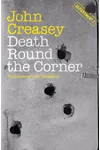
- Death 'Round the Corner (1935) - The team matches wits with Leopold Gorman, a megalomaniac financier aiming for global economic control.
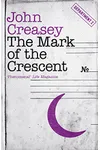
- The Mark of the Crescent (1935) - A pulse-pounding case involving cryptic symbols and a hidden threat.
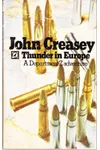
- Thunder in Europe (1936) - Espionage turns urgent as geopolitical tensions begin to boil over in Europe.
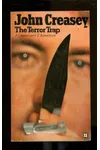
- The Terror Trap (1936) - Agent Tony Beresford and Gordon Craigie fight to dismantle an underground network.
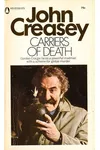
- Carriers of Death (1937) - The agents trace a deadly threat across borders to prevent a biological or political crisis.
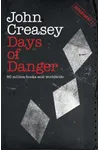
- Days of Danger (1937) - Pre-war conspiracies reach a fever pitch as the shadow of conflict looms.
- Death Stands By (1938) - Danger hits close to home as agents are targeted on British soil.
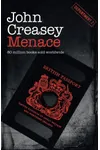
- Menace! (1938) - A fast-paced race against time to stop an international plot before it sparks a war.
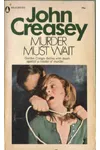
- Murder Must Wait (1939) - Intelligence duties and homicide investigations cross paths as the war starts.
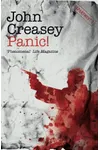
- Panic! (1939) - Terror strikes the public, forcing Department Z to act swiftly.
- Death by Night (1940) - The series transitions into active wartime operations under the cover of darkness.
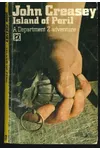
- The Island of Peril (1940) - A remote location becomes the staging ground for a high-stakes intelligence showdown.
- Sabotage (1941) - Wartime defense takes center stage as agents defend critical infrastructure against enemy infiltrators.
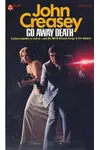
- Go Away Death (1942) - Department Z fights desperate rearguard actions in the face of axis plots.
- The Day of Disaster (1942) - Features a frantic race during the London Blitz sparked by the cryptic message, "Lotfus, spell it backwards."
- Prepare for Action (1942) - Total war demands full mobilization of Department Z's civilian bachelors.
- No Darker Crime (1943) - A grim wartime case that tests the limits of the agents' resolve and sacrifice.
- Dark Peril (1944) - A deep-cover mission behind enemy lines as the tide of World War II begins to turn.
- The Peril Ahead (1946) - The transition from the conclusion of World War II to the uneasy peace that followed.
- The League of Dark Men (1947) - A post-war conspiracy of rogue operatives threatens the fragile global stability.
- The Department of Death (1949) - Craigie leads the department against new, highly organized syndicate networks.
- The Enemy Within (1950) - Infiltration, subversion, and early Cold War paranoia take hold of British intelligence.
- Dead or Alive (1951) - High-stakes pursuits of international fugitives in a rapidly changing world.
- A Kind of Prisoner (1954) - A slower-paced, psychological thriller focusing on captivity and loyalty.
- The Black Spiders (1957) - The explosive finale of the Department Z series, wrapping up the era of classical espionage.
Chronological Flow & Historical Context
The chronological order of the Department Z books is almost identical to the publication order, as Creasey wrote the series in real-time. This structural alignment allows readers to follow the chronological evolution of the department alongside the shifting geopolitics of the mid-20th century. The series can be divided into three distinct chronological phases:
- The Pre-War Era (1933–1939): These novels, beginning with The Death Miser and ending with Panic!, are steeped in the geopolitical anxiety of the 1930s. The threats are often wealthy megalomaniacs (like Leopold Gorman in Death 'Round the Corner), rogue syndicates, and general European instability. The agents are introduced as a 'home for bachelors with a suicidal turn of mind,' serving as a deniable, freelance force of patriotic amateurs.
- The World War II Years (1940–1945): From Death by Night to Dark Peril, the series shifts into active war mode. The threat is no longer theoretical or criminal; it is the immediate peril of Nazi Germany and Axis saboteurs. The Blitz, wartime rationing, and constant threat of invasion shape the narratives. Notable books in this era like The Day of Disaster feature agents operating under intense pressure, where the stakes are the survival of Britain itself.
- The Post-War and Early Cold War Era (1946–1957): Starting with The Peril Ahead and concluding with The Black Spiders, the department must navigate the fallout of World War II. The enemies transition from Axis agents to shadowy syndicates, rogue organizations, and ideological subversives, reflecting the dawn of the Cold War.
Meet the Agents: Key Characters and Structure
Unlike modern spy series built around a single, invincible operative, Department Z functions as a collective intelligence network. The series revolves around the agency itself, though several key figures recur across the decades:
- Gordon Craigie: The brilliant founder and chief coordinator of Department Z. Craigie is the mastermind who selects the agents, handles political liaisons, and orchestrates global counter-intelligence from his headquarters. He is the anchor of the entire 28-book run.
- James Quinion: The premier field agent of the early pre-war books. Quinion is a charismatic civilian bachelor who masks his deadly efficiency under the guise of an easygoing dandy.
- Bill Loftus: A key agent who gains prominence during the wartime novels. Loftus brings a more action-focused, hard-hitting style to the field, famously involved in the high-stakes Blitz thriller The Day of Disaster.
- Tony Beresford: An agent prominent in early conflicts, particularly known for tracking the mastermind Leopold Gorman.
Practical Reader Advice and Starting Points
Are you wondering where to begin? The easiest answer is at the very beginning with The Death Miser (1933). This book sets up the premise of Department Z, Gordon Craigie's recruitment tactics, and the core style of Creasey's early espionage thrillers. Because the books are mostly self-contained mysteries, you do not strictly need to read them in order to understand the plots. However, reading them out of sequence will spoil major character developments, marriage milestones, and the historical progression of the department.
If you cannot find the early books—which are often out of print—a great alternative starting point is The Day of Disaster (1942). It showcases the peak of Creasey's wartime writing and provides a self-contained, high-octane narrative that represents the best elements of the series.
What to Know Before You Start
Before diving into Department Z, readers should keep a few stylistic elements in mind. Written by John Creasey, one of the most prolific authors in history (who penned over 600 novels under numerous pen names), these books were written at an incredibly fast pace. The style is pulpy, action-oriented, and filled with the melodramatic tropes of early 20th-century thrillers. It serves as a vital historical precursor to the modern spy genre, bridging the gap between classic adventure stories and the gritty Cold War spy thrillers that would later be popularized by authors like Ian Fleming.