









Where to Start Reading Inspector Bonaparte
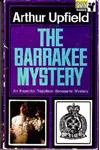
For readers looking to dive into the cases of Detective Inspector Napoleon Bonaparte, affectionately known as "Bony," the best and most rewarding entry point is the very first novel, The Barrakee Mystery (published in some markets as The Lure of the Bush) in 1929. This book sets the stage for the entire series, introducing Bony's dual heritage, his unique university education, and his transition between the worlds of white Australian authority and traditional Aboriginal trackers.
However, if you cannot find a copy of the debut novel, you do not need to worry. Arthur Upfield wrote almost all the Inspector Bonaparte books as standalone mysteries. Each novel focuses on a self-contained investigation in a specific region of the Australian wilderness, meaning you can easily pick up almost any book in the series and follow the plot. That said, reading them in order offers a satisfying look at Bony's gradual aging, his evolving reputation within the police force, and the changing landscape of 20th-century Australia.
Inspector Bonaparte Publication Order
Here is the complete list of Detective Inspector Napoleon Bonaparte novels in order of their original publication. Because many of these books were published under different titles in the United States and the United Kingdom, alternate titles are included below to help you avoid accidentally buying the same book twice:
- The Barrakee Mystery (1929) – Also published as The Lure of the Bush
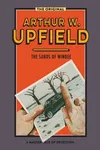
- The Sands of Windee (1931)
- Wings Above the Diamantina (1936) – Also published as Wings Above the Claypan or Winged Mystery
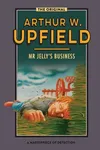
- Mr. Jelly's Business (1937) – Also published as Murder Down Under
- Winds of Evil (1937)
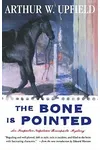
- The Bone is Pointed (1938)
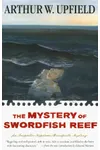
- The Mystery of Swordfish Reef (1939)
- Bushranger of the Skies (1940) – Also published as No Footprints in the Bush
- Death of a Swagman (1945)
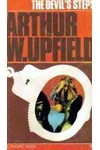
- The Devil's Steps (1946)
- An Author Bites the Dust (1948)
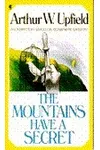
- The Mountains Have a Secret (1948)
- The Bachelors of Broken Hill (1950)
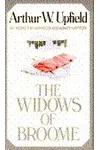
- The Widows of Broome (1951)
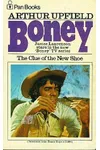
- The New Shoe (1951) – Also published as The Clue of the New Shoe
- Venom House (1952)
- Murder Must Wait (1953)
- Death of a Lake (1954)
- Sinister Stones (1954) – Also published as Cake in the Hat Box
- The Battling Prophet (1956)
- Man of Two Tribes (1956)
- Bony Buys a Woman (1957) – Also published as The Bushman Who Came Back
- Bony and the Mouse (1959) – Also published as Journey to the Hangman or The Cadger
- Bony and the Black Virgin (1959) – Also published as The Torn Branch
- Bony and the Kelly Gang (1960) – Also published as Valley of Smugglers
- Bony and the White Savage (1961)
- The Will of the Tribe (1962)
- Madman's Bend (1963) – Also published as The Body at Madman's Bend or The Body in the Pulpit
- The Lake Frome Monster (1966) – Posthumously completed by J. L. Price and Dorothy Strange
Chronological Caveats and Series Continuity
Unlike many long-running mystery series where prequels or chronological shifts complicate the order, the chronological order of Bony's adventures matches their publication order. Reading them chronologically is as simple as following the order in which Arthur Upfield wrote them. As the series progresses from 1929 through the mid-1960s, you will notice shifts in technology, transport, and social attitudes in the Australian Outback, mirroring the real-world historical timeline.
There is one significant continuity caveat at the end of the series. Arthur Upfield passed away in February 1964, leaving behind an unfinished manuscript for his 29th novel, The Lake Frome Monster. Using Upfield's detailed notes, the novel was completed and edited by J. L. Price and Dorothy Strange and published posthumously in 1966. While it retains Bony's characteristic voice and tracking logic, the prose style may feel slightly different from Upfield's solo works due to this collaborative completion.
What to Know Before You Start
Before stepping into Bony’s world, it helps to understand the context in which these books were written. Arthur Upfield was an English immigrant who spent years working in the Australian bush as a boundary rider, station hand, and opal miner. His deep fascination with the Outback landscape and Aboriginal culture heavily influenced his writing. The dry, harsh environment of Australia acts as a character in its own right, dictating the plot, the survival tactics of the characters, and the nature of the crimes Bony investigates.
While Bony was a progressive character for the 1920s and 1930s—portrayed as highly intelligent, university-educated, and culturally superior to many of his white colleagues—modern readers should be prepared for outdated racial terminology and colonial-era perspectives. Upfield wrote with a sincere, if paternalistic, respect for Indigenous tracking methods and mythology, but the books are products of their time and reflect the social prejudices of mid-20th-century white Australia.
Television Adaptations and Legacy
The popularity of Upfield's novels led to two separate television adaptations, both of which attracted considerable attention and subsequent controversy regarding casting choices:
Boney (1971–1972)
This television series ran for two seasons and adapted many of the original novels. Produced by Fauna Productions, the series chose to cast James Laurenson, a white New Zealand actor, as the biracial Inspector Bonaparte, using dark makeup to alter his appearance. This decision drew heavy criticism from the Australian Aboriginal community and critics who argued that an Indigenous actor should have played the role.
Bony (1992)
Produced by the Seven Network, this 13-episode series served as a loose spin-off rather than a direct adaptation. The story focused on David John "Bony" Bonaparte, a white detective who was written as the grandson and successor of the original character. He was mentored by an Indigenous elder named Uncle Albert, played by Indigenous actor and activist Burnum Burnum. This series was also criticized for failing to feature an Indigenous lead actor in a series historically centered on Aboriginal heritage.