
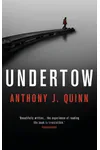
The Recommended Reading Order for Inspector Celcius Daly
To fully appreciate the atmospheric tension, the intricate political conspiracies, and the slow-burning character development of Detective Inspector Celcius Daly, you should read the series in its original publication order. The narrative arc builds upon Daly's personal struggles, his complicated standing as a Catholic investigator within the Police Service of Northern Ireland (PSNI), and the shifting socio-political landscape of the Irish borderlands.
Here is the recommended reading path for the series:
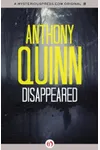
- Disappeared (2012) – The debut novel that introduces Celcius Daly. When a retired special branch detective suffering from dementia vanishes, Daly is drawn into a cold-case investigation involving the "Disappeared"—individuals abducted and murdered during the Troubles. This book sets the melancholic tone for the entire series and introduces Daly's complicated relationship with his homeland and his own family history.
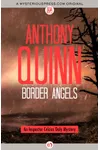
- Border Angels (2013) – In this second installment, Daly investigates the death of a young woman found dead in a frozen bog, which leads him into the dark underbelly of human trafficking and modern exploitation along the lawless Irish border. This entry shifts the focus toward the contemporary criminal enterprises thriving in the post-conflict vacuum.
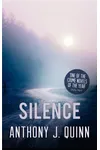
- Silence (2015) – When a priest is murdered, Daly is drawn back to his childhood home in the border country. He uncovers a secret map detail detailing a series of killings from the 1970s. The investigation forces him to confront the dark legacy of the historical collusion between security forces and loyalist paramilitaries.
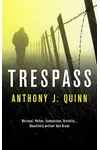
- Trespass (2017) – Daly investigates the kidnapping of a young boy from a local Traveller site, bringing him into conflict with a marginalized community and deep-seated local prejudices. The book highlights Daly's empathy for outsiders and his isolation within the police force.
- Undertow (2017) – The fifth novel begins with a dead Garda detective washing up on the shores of Lough Neagh. The investigation pulls Daly across the border into the depressed Monaghan village of Dreesh, exposing a web of diesel smuggling, corruption, and the political anxieties of the early Brexit era.
Why You Should Read the Series in Order
While each book in the Inspector Celcius Daly series features a self-contained crime investigation, the books are deeply tied together by Daly's internal journey and the evolving history of Northern Ireland. Reading them out of order will spoil significant developments in Daly's career, his mental state, and the fate of key recurring characters like Special Branch detective Robert Hunter.
Daly is not a conventional detective. He is a brooding, solitary figure who prefers the damp solitude of his family's cottage in County Tyrone to modern police stations. Over the course of the five books, his isolation deepens as his investigations repeatedly bring him into conflict with his superiors and intelligence agents who would rather keep the past buried. Following this slow descent into disillusionment makes the chronological path essential for readers who value deep character studies.
The Landscape as a Character
One of the most striking elements of Anthony J. Quinn's writing is his description of the environment. The series is set primarily in the damp, mist-shrouded borderlands of County Armagh and County Tyrone, near the shores of Lough Neagh. This area, historically referred to as "bandit country," is portrayed as a liminal space where the laws of Belfast or Dublin don't quite apply.
The fog, the bogs, the abandoned border checkpoints, and the crumbling cottages are not just background decoration; they mirror the psychological state of the characters who are unable to escape the ghosts of their past. The landscape is thick with secrets, much like the minds of the locals Daly must interrogate. Understanding this setting is crucial to understanding the slow, elegiac pacing of the books.
What to Know Before You Start
If you are coming to this series expecting a fast-paced, action-heavy police procedural, you may want to adjust your expectations. Anthony J. Quinn’s style is frequently compared to the poetic, literary crime writing of James Lee Burke or the psychological depth of Tana French. The mysteries unfold slowly, prioritizing mood, moral ambiguity, and the weight of history over quick resolutions.
Here are a few quick tips to keep in mind before diving in:
- The Historical Context: While the books are set in the modern era, they are saturated with the legacy of the Troubles (the late-20th-century conflict in Northern Ireland). A basic understanding of the historical divisions between nationalists and unionists, as well as the role of the security forces, will enrich your reading experience.
- Catholic in the PSNI: Daly’s position as a Catholic detective in a historically Protestant-dominated police force adds a layer of tension to his interactions with both his colleagues and the community he serves.
- The TV Adaptation: A television adaptation of Disappeared has been in development, set to bring Daly's atmospheric world to the screen.
Anthony J. Quinn's Adjacent Works
Once you finish the Celcius Daly series, you can explore Anthony J. Quinn's other novels, which share similar thematic ground but feature different protagonists:
- Turncoat (2021) – A standalone crime novel focusing on Desmond Maguire, a Catholic detective in the Royal Ulster Constabulary (RUC) during the height of the Troubles, dealing with paranoia, betrayal, and isolation.
- Murder Memoir Murder (2022) – A unique hybrid of personal memoir and investigative crime writing. Quinn explores a real-life armed home invasion his family experienced during the Troubles, alongside unsolved historical murders in South Tyrone.
- Historical Mysteries – Quinn has also written historical fiction, including The Blood-Dimmed Tide (2014) and Blind Arrows (2015), which feature poet W. B. Yeats and explore early 20th-century Irish political espionage.