




The Recommended Path: Publication Order
For the best experience, we strongly recommend reading the Laundry Files in publication order. Charles Stross built this universe with cumulative world-building, where the mundane technology of the early 2000s evolves alongside a slow-burn supernatural apocalypse known as Case Nightmare Green. Reading chronologically or skipping ahead will spoil character fates, major organizational shifts within the Laundry, and the escalation of global magical threats.
The Bob Howard Era (The Main Sequence)
The first movement of the series centers on Bob Howard, a tech-support specialist drafted into computational demonology. Here are the core novels and where the major novellas slot in chronologically:
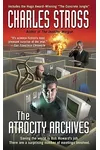
- The Atrocity Archives (2004): The perfect starting point. This volume includes the title novel and the Hugo Award-winning novella The Concrete Jungle, which should be read immediately after the main story.
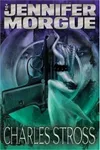
- The Jennifer Morgue (2006): A brilliant satire of Ian Fleming-style spy novels. The book also bundles the novella Pimpf, which follows Bob mentoring an intern.
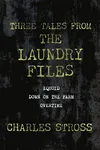
- Down on the Farm (2010): A novella set chronologically between The Jennifer Morgue and The Fuller Memorandum. Bob is sent to a creepy Laundry deprogramming facility.
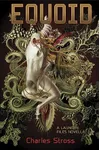
- Equoid (2010): A darker, Hugo Award-winning novella that also slots between books two and three, showing the gruesome reality of unicorns in Stross's universe.
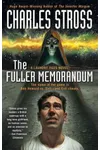
- The Fuller Memorandum (2010): The third novel, which pays homage to Len Deighton's gritty espionage style and raises the stakes significantly.
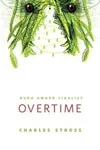
- Overtime (2010): A Christmas-themed short story set between The Fuller Memorandum and The Apocalypse Codex, featuring Bob on Christmas Eve duty.
- The Apocalypse Codex (2012): The fourth novel, where Bob is sent to investigate an American mega-church and its charismatic preacher.
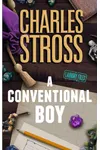
- A Conventional Boy (2025): A retro novella set during the 1980s Satanic Panic, but chronologically placed between The Apocalypse Codex and The Rhesus Chart. It follows a wrongly institutionalized gamer.
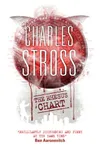
- The Rhesus Chart (2014): Book five, where Bob must deal with the bureaucratic nightmare of investment bankers who have become vampires.
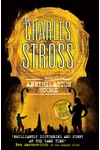
- The Annihilation Score (2015): Book six. The point of view shifts to Bob’s wife, Mo O'Brien, as she navigates a public superhero crisis and the Laundry's restructuring.
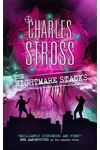
- The Nightmare Stacks (2016): Book seven. The narrative switches to Alex, a newly recruited vampire, during an elvish invasion of Leeds.
- Escape from Yokai Land (2022): A crucial novella (often labeled Book 7.5) set during Bob's absence in The Nightmare Stacks. It tracks his missions in Japan.
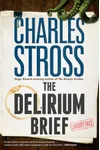
- The Delirium Brief (2017): Book eight. Bob returns as the main POV character, and the secret status of the Laundry is completely shattered.
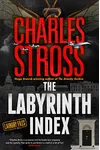
- The Labyrinth Index (2018): Book nine. The POV shifts to Mhari Murphy as the team travels to a creepy, altered United States where the President has disappeared.
The New Management Era (The Spin-Off Trilogy)
Following the earth-shattering events of The Labyrinth Index, the world enters the New Management era. The secret agency has been dissolved, and the public must live under the overt rule of eldritch horrors. This subseries shifts focus to new, younger civilian protagonists dealing with the street-level reality of a magical police state:
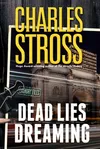
- Dead Lies Dreaming (2020): The first book of the New Management trilogy, introducing a group of rogue metahumans in a transformed London.
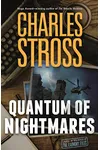
- Quantum of Nightmares (2022): The second book, exploring the dark corporate and social structures of the new regime.
- Season of Skulls (2023): The third book, continuing the street-level resistance and survival themes under eldritch rule.
What to Know Before You Start
Stross's magic system is strictly mathematical; computing power acts as the conduit for summoning cosmic entities. As you read, you will notice the technology upgrades from early dial-up and Palm Pilots to smartphones and cloud computing, which directly impacts how magic is used. While the early books are lighter and lean heavily on workplace humor, the tone turns progressively darker as the inevitability of the Cthulhu-esque apocalypse draws closer.