
Where to Start Reading the Lensman Series
For decades, science fiction readers have debated the best entry point into E.E. 'Doc' Smith's galaxy-spanning saga. Since the narrative evolved from magazine serials in the 1930s into structured novels in the late 1940s and 1950s, you have two primary options when beginning your journey: the chronological order or the original publication order.
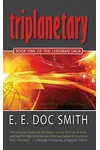
The Chronological Start (Triplanetary): If you want to follow the universe's history from its absolute beginning, you should start with Triplanetary. Originally published in 1934 as a separate serial and later heavily revised in 1948 to serve as the prequel to the Lensman series, this book introduces the two-billion-year cosmic struggle between the noble Arisians and the malevolent Eddorians. While it establishes crucial lore, some readers find its structure fragmented because it was retrofitted into the Lensman narrative after the core books were written.
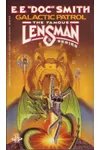
The Purist Start (Galactic Patrol): Many seasoned space-opera fans recommend starting directly with Galactic Patrol (originally serialized in 1937–1938 and published as a book in 1950). This is the book where 'Doc' Smith first introduced the Lens and the Galactic Patrol. Starting here allows you to experience the mystery of the Lens and the hierarchy of the Patrol just as readers did in the Golden Age of science fiction, without the heavy exposition of the Arisian-Eddorian war spoiling the mystery.
The Core Lensman Chronological Order
If you choose to read the series chronologically—which is the order 'Doc' Smith eventually preferred when the Fantasy Press book editions were released—the core saga flows through these seven volumes:
- Triplanetary (1948): Originally a standalone story in Amazing Stories, Smith expanded and rewrote this novel to act as Book 1. It details the early history of the conflict and introduces the genetic breeding program set up by the Arisians to produce minds capable of defending the cosmos.
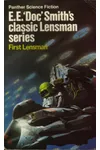
- First Lensman (1950): Written specifically by Smith to bridge the gap between Triplanetary and Galactic Patrol. It details the formation of the Galactic Patrol and the creation of the first telepathic Lenses given to worthy sentinels.
- Galactic Patrol (1950): The true beginning of the Kimball Kinnison story arc. Kinnison, a newly minted Lensman, battles the notorious space pirates of Boskone and discovers the terrifying scale of the enemy forces.
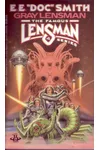
- Gray Lensman (1951): Kinnison takes on a covert, unattached role as a 'Gray' Lensman to search out the hidden leaders of the Boskone network, leading to massive fleet engagements and infiltration missions.
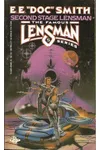
- Second Stage Lensmen (1953): Kinnison is joined by other powerful, non-human Second Stage Lensmen to strike directly at the heart of the Boskone empire in another galaxy.
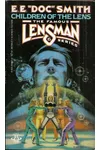
- Children of the Lens (1954): The grand finale of Smith's original narrative. Kinnison's five children, who possess unmatched mental abilities, coordinate the final assault to destroy the Eddorians once and for all.
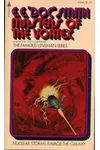
- Masters of the Vortex (1960): Also published under the title The Vortex Blaster, this side-story collection follows Neal 'Storm' Cloud as he travels the galaxy neutralizing runaway nuclear vortices. It takes place concurrently with or shortly after the main Kinnison saga and offers a closer look at the everyday operations of the Galactic Patrol.
Chronological vs. Publication Order
Understanding the difference between the serialization dates and the book publication dates is key to navigating the Lensman universe. E.E. 'Doc' Smith wrote the core stories in the late 1930s and early 1940s. When Fantasy Press decided to publish the series in hardcover between 1948 and 1954, Smith heavily revised the original magazine versions of Galactic Patrol, Gray Lensman, Second Stage Lensmen, and Children of the Lens to create a unified, continuous storyline. He also rewrote Triplanetary and wrote First Lensman from scratch to establish a chronological sequence. Reading in publication order means starting with the core Kinnison books and treating the prequels as retrospective backstory.
The Second Stage Lensman Trilogy by David A. Kyle
During the 1980s, science fiction author and prominent fan David A. Kyle wrote an authorized trilogy of 'in-fill' novels. These books take place during the events of the main series (specifically around the time of Second Stage Lensmen) and focus on the distinct non-human Lensmen who aided Kimball Kinnison. They are highly recommended for readers who want to explore the alien cultures of the Lensman universe in greater detail:
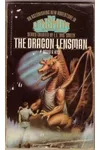
- The Dragon Lensman (1980): Focuses on Worsel, the winged, dragon-like Velantian who is one of the most popular characters in the series.
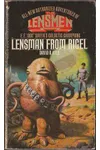
- Lensman from Rigel (1982): Follows Tregonsee, the calm, multi-pedal, dome-headed Rigellian who perceives the world through a non-visual sense.
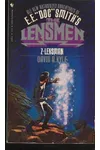
- Z-Lensman (1983): Focuses on Nadreck of Palain, a cold-loving, multi-dimensional alien whose mind operates on a completely different logic than humans.
Other Spin-offs and Supplementary Works
In addition to Kyle's trilogy, engineer and author William B. Ellern received permission from 'Doc' Smith before the creator's death to write stories in the Lensman universe. Ellern wrote the novel New Lensman (1976), which expanded upon his 1966 short story 'Moon Prospector' and was serialized in the English editions of the German sci-fi series Perry Rhodan. Ellern also penned 'Triplanetary Agent' (serialized in 1978). While these stories introduce more modern technological concepts like advanced computer systems that were absent from Smith's 1930s vision, they remain interesting artifacts of early authorized fan fiction.
What to Know Before You Start
The Lensman series is a product of its era. Written during the pulp magazine boom, the dialogue is famously bombastic, characterizations can be black-and-white, and the science is highly imaginative rather than hard. Smith coined or popularized many concepts that are now staples of modern science fiction, including inertialess drives, planet-busting weapons, and massive, multi-million-ship space battles. The influence of the Lensmen—interstellar peacekeepers selected for their incorruptibility and armed with power-granting badges—can be clearly seen in the creation of the Green Lantern Corps and the Jedi Order of Star Wars.